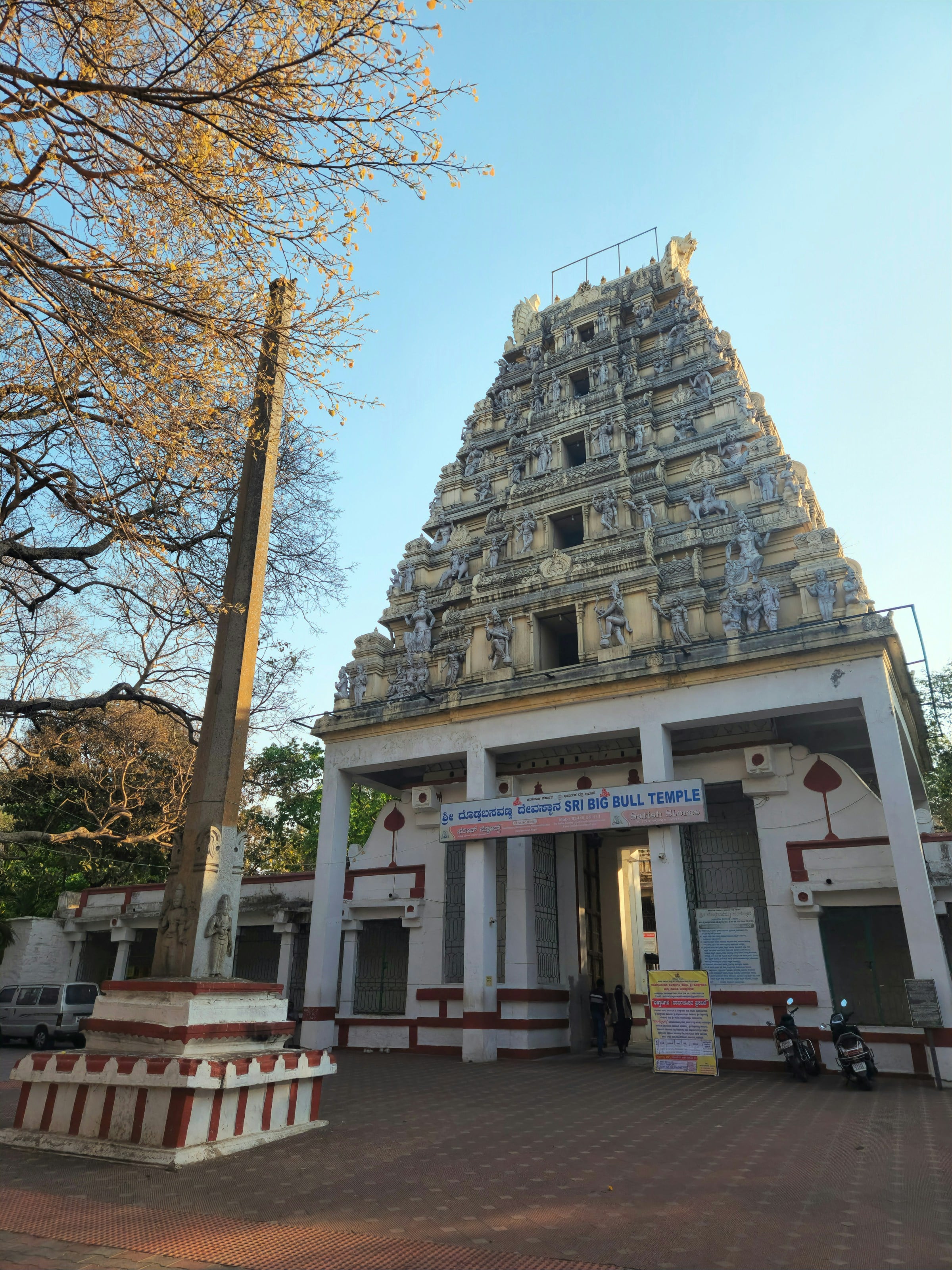
Multilingual AI audio guide exhibit on WOUDiO (PWA). WOUDiO pioneered the world’s first audio guide platform with built-in donation: listeners can support the cultural venue without leaving the listening experience. The text below is the localized description, details, and narration script for this audio guide stop.
Groundnut shells crack with a dry, hollow sound, and late in the year, in November or December, the streets of Basavanagudi are full of it. Heaps of groundnuts sit on sacking along the roadside, fresh from the harvest. By the last night of the fair, the shells lie so thick that the lanes crunch.
The story behind the heaps is a legend, and it is told with a straight face. Long ago, it is said, a bull came down onto the groundnut fields around this rocky hill on full-moon nights and ate the crop. The farmers chased it. On the hillock it vanished, and in its place a bull of stone appeared. The stone bull began to grow, and it kept growing until someone drove an iron peg into its head to stop it. Shaken, the farmers made a promise: every year, the first groundnuts of the harvest would go to Basavanna, the bull. That promise, the story goes, is how the fair began.
What is recorded is that in 1537, the same year he laid out his mud-walled town, Kempe Gowda built a temple on this hill under the Vijayanagara Empire. Inside it lies Nandi, the mount of Shiva, carved from a single mass of rock. The bull kneels in the half-dark, about fifteen feet high and twenty long, one body of stone from horns to tail.
The whole neighbourhood carries its name. Basava is the bull, gudi is the temple — Basavanagudi, the place of the bull's temple. A city of millions grew up around it, and still it is named for an animal that came to eat the crop.
The fair is called Kadalekai Parishe. It falls on the last Monday of the month of Karthika, and runs for a few days around it. The streets around the Bull Temple and the neighbouring Dodda Ganesha temple, beside the rocks of Bugle Rock park, turn into one long market of groundnuts. Five centuries after the first temple stones were set, the harvest still comes to the same hill, to the same bull, carried on the strength of a promise from a story.
When the stalls fold and the lamps go out, some people say the bull comes down in the dark to eat what is left in the lanes.
A short way to the northwest, a cave opens in the rock, and there the light itself has a path to follow.
Site: Dodda Basavana Gudi (Bull Temple), Basavanagudi, next to the Dodda Ganesha temple and Bugle Rock
Built: 1537 by Kempe Gowda under the Vijayanagara Empire
Key facts: Monolithic Nandi about 4.6 m high and 6.1 m long; Kadalekai Parishe groundnut fair on the last Monday of Karthika (Nov–Dec); the crop-eating bull is a legend
Map:
Bengaluru map
Official Site:
Karnataka Tourism
Photo: Zoshua Colah /
Unsplash (unsplash)