Multilingual AI audio guide exhibit on WOUDiO (PWA). WOUDiO pioneered the world’s first audio guide platform with built-in donation: listeners can support the cultural venue without leaving the listening experience. The text below is the localized description, details, and narration script for this audio guide stop.
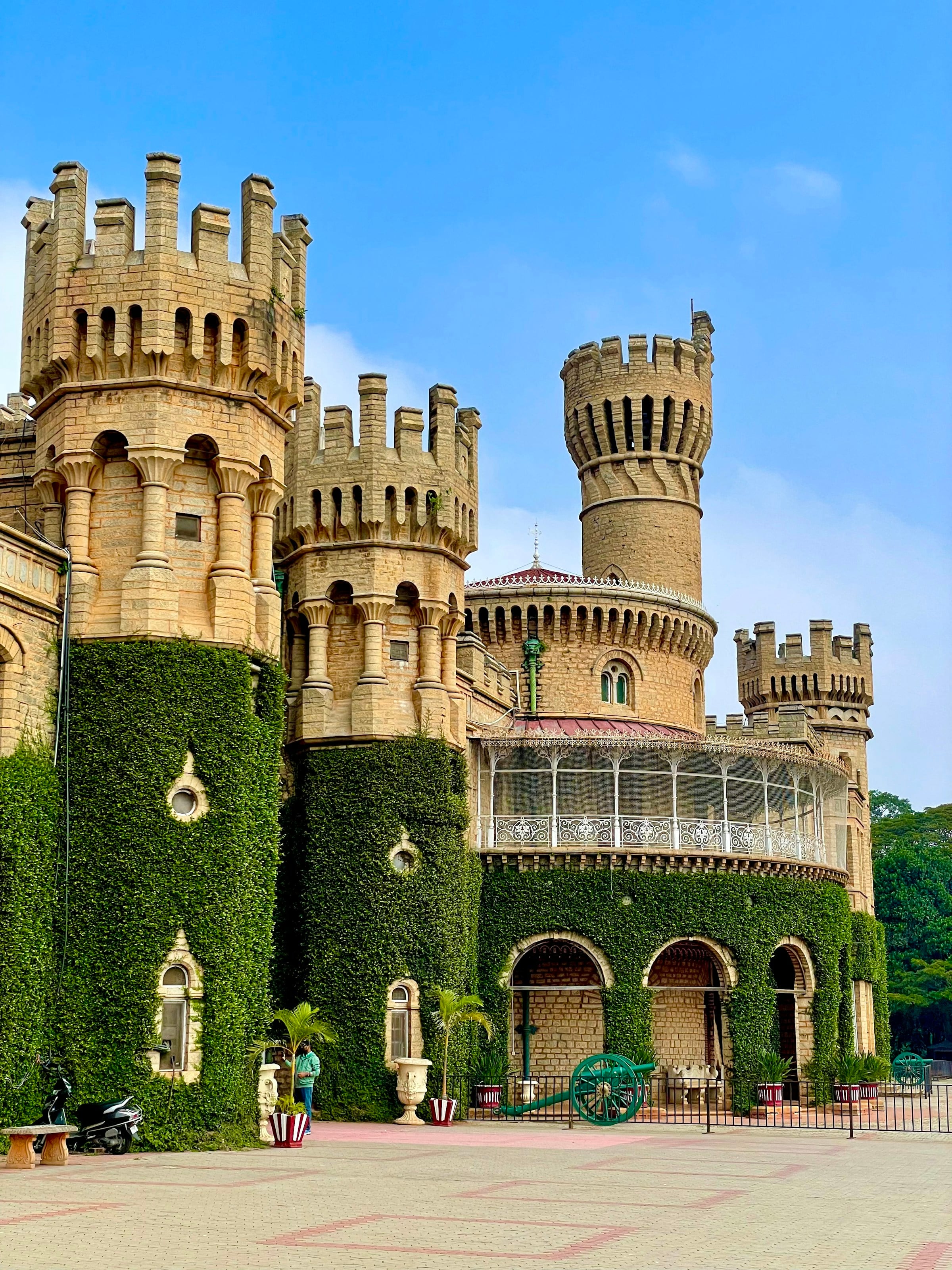
Turrets were made for archers. Their narrow tops and notched parapets belong to a cold, wet island where lords once needed to shoot down at men climbing their walls. On the Deccan Plateau, under a dry winter sky, the same turrets rise over wide open grounds, and no one has ever climbed them in anger.
The land came first, and it belonged to a scholar. Reverend John Garrett was a linguist and the principal of Central High School, the institution that would grow into Central College. His estate spread over hundreds of acres. In the 1870s the ground passed to the royal house of Mysore, and a palace began to rise there for Maharaja Chamarajendra Wadiyar the Tenth.
The model was Windsor Castle. An idea of what a royal house should look like had travelled from the Thames valley, across an ocean and up the ghats, to a Wadiyar king of Mysore. It arrived in Tudor Revival dress: fortified towers, crenellated walls, battlements with nothing to defend against. Inside, the answer came from this side of the sea — carved woodwork, dense and patient.
Across a few centuries, this ground tells a stranger story than the stone.
Not far from the palace grounds, near what is now Mekhri Circle, stands one of the four watchtowers of the Kempe Gowda family — a small, plain tower that once marked the northern reach of a mud-walled town. Within a short distance, two ideas of power sit side by side: a chieftain's lookout drawing a line around his city, and a maharaja's castle borrowed from a faraway crown, built long after the city had spilled past that line. Three hundred years of movement lie in the gap between them.
The castle kept its borrowed shape while the city changed around it. And the grounds found a new life. On concert nights the lawns fill with crowds, stages rise under the turrets, and amplified music rolls out over the same soil John Garrett once walked as a teacher.
The parapets are still waiting for an enemy who never came. South of the palace, the road dips back toward the older town, where a stone bull has been lying on its hill since the year the first earth wall went up.
Site: Bangalore Palace, on the former estate of Rev. John Garrett
Built: Begun in the 1870s for Maharaja Chamarajendra Wadiyar X
Key facts: Tudor Revival style inspired by Windsor Castle; fortified towers, turreted parapets and carved woodwork; the grounds host concerts and events
Map:
Bengaluru map
Official Site:
Karnataka Tourism
Photo: Yash Banka /
Unsplash (unsplash)