Multilingual AI audio guide exhibit on WOUDiO (PWA). WOUDiO pioneered the world’s first audio guide platform with built-in donation: listeners can support the cultural venue without leaving the listening experience. The text below is the localized description, details, and narration script for this audio guide stop.
On the bus boards in the north of the city, one stop still carries an old name: Tata Institute. Conductors shout it, autorickshaw drivers repeat it, more than a century after another name was written into law. The words have worn smooth, like a threshold crossed by too many feet.
The idea behind that name began at sea. In 1893 Jamsetji Tata was sailing home from Japan, and on the same ship was a young monk, Swami Vivekananda. What passed between them on deck is not recorded word for word, but five years later Tata wrote to the monk about a plan he called a Research Institute of Science for India. On the last day of 1898 the proposal reached the Viceroy, Lord Curzon.
Then the plan stalled in letters and committees. Jamsetji died in 1904 without seeing a single brick laid. The idea had to keep travelling without the man who first carried it.
It came to rest on this high, dry plateau, where the evenings turn cool even in the hot months. The Maharaja of Mysore, Krishnaraja Wadiyar the Fourth, gave about three hundred and seventy acres of land. The Tata family gave the money and the buildings. In May 1909 the order founding the institute was signed, and two years later the first students arrived.
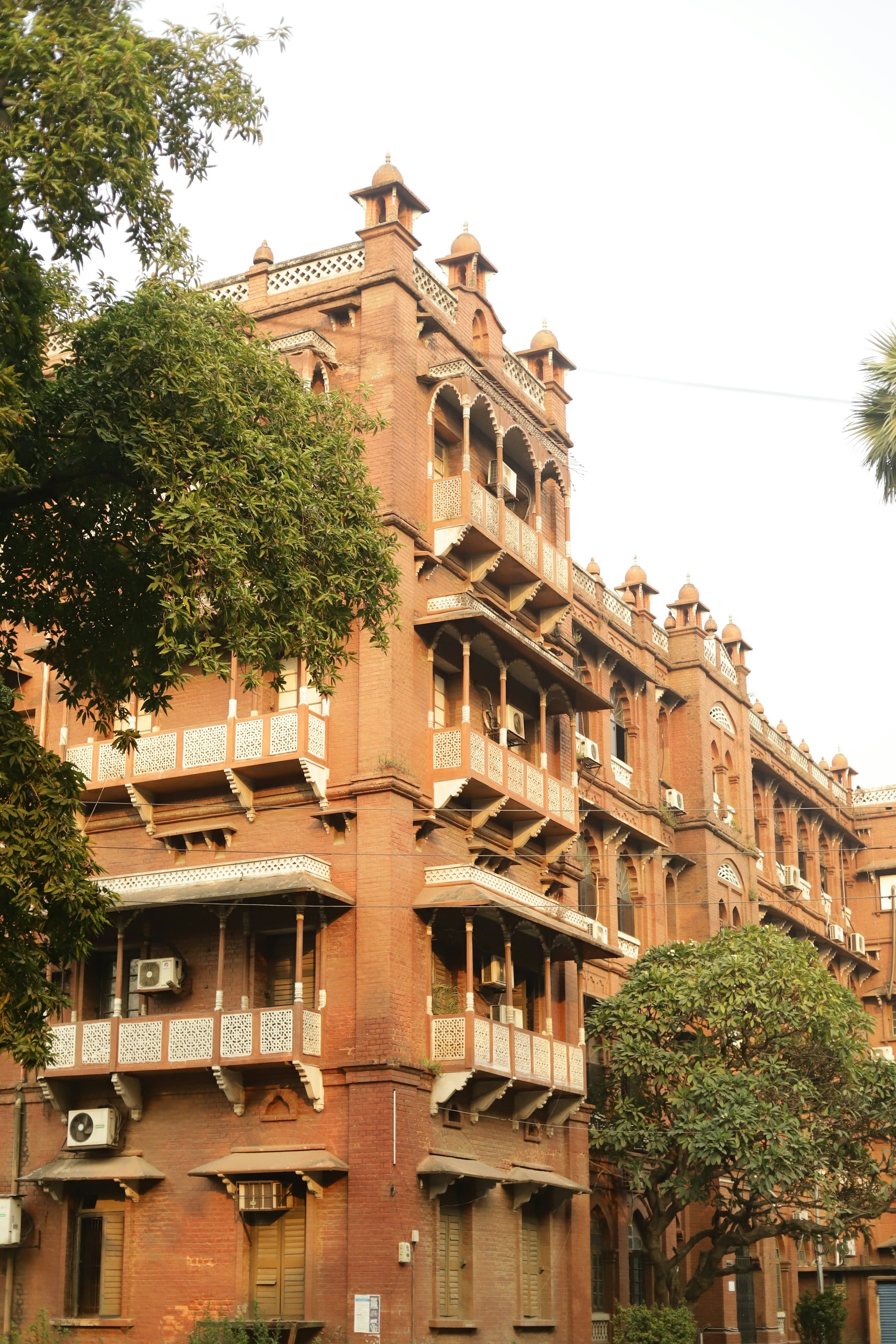
The first director had crossed an ocean to reach the plateau: Morris Travers from Britain, a chemist who had helped discover neon, krypton and xenon, gases that no eye can see and no nose can smell. The Main Building followed, a long stone front with a tower, its corridors soon ringing with footsteps and the dry tap of chalk.
Then, in 1933, the director's chair passed to C.V. Raman. He had won the Nobel Prize for Physics three years before. The institute an Indian had dreamed of on a ship at sea was, at last, led by an Indian scientist.
After him came chemists, physicists and engineers from every corner of the subcontinent, each one carrying a home language, a hometown and a notebook up to this plateau. Decade after decade, their daily walks between laboratory and lecture hall wore the campus paths into the ground.
Those paths do not stop at the campus gate. The trained hands and restless minds they produced flowed outward across the city, toward the runways and workshops rising on its eastern edge.
Site: Indian Institute of Science (locally "Tata Institute"), north Bengaluru
Founded: vesting order signed 27 May 1909; first students 24 July 1911
Key facts: proposed by Jamsetji Tata (1898); about 371 acres donated by Maharaja Krishnaraja Wadiyar IV; first director Morris Travers; C.V. Raman first Indian director (1933–1937)
Map:
Bengaluru map
Official Site:
Karnataka Tourism
Photo: Ankon Roy /
Unsplash (unsplash)