Multilingual AI audio guide exhibit on WOUDiO (PWA). WOUDiO pioneered the world’s first audio guide platform with built-in donation: listeners can support the cultural venue without leaving the listening experience. The text below is the localized description, details, and narration script for this audio guide stop.
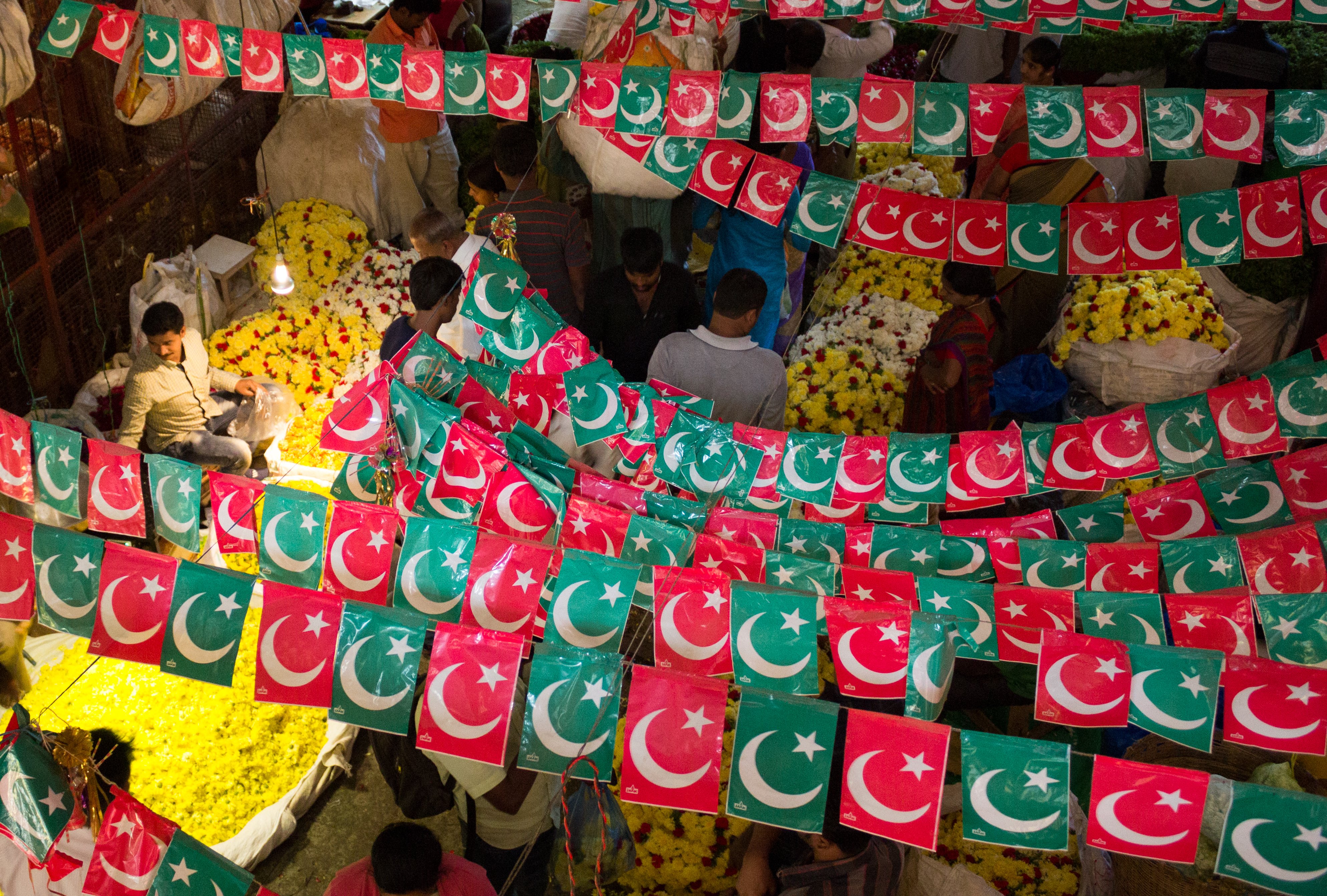
Long before sunrise, the air over KR Market is thick with scent: flowers heaped by the sackful, sweet and heavy, cut through by the sharper smell of wet leaves and bruised stems. Voices call out prices over the thud of loads being dropped. Much of the trading is done while the rest of the city is still dark.
The ground under all this was once water. A tank called Siddikatte lay in this low land just outside the old fort, named after a relative of Kempe Gowda. For generations it held water in a broad, shallow sheet at the foot of the fort.
Then, in 1791, came soldiers. When Lord Cornwallis's army besieged Bangalore, fighting spread across the land outside the fort walls, and this ground is said to have been one of its battlefields. Men of the siege army and the defenders of Tipu Sultan's fort met on soil where flowers would one day be sold by the armful.
In time the tank was filled. On the dry bed rose a shanty bazaar of zinc-roofed sheds known as Vandi Mode, where carts unloaded and traders bargained under hot metal roofs. It was crowded, makeshift and very much alive.
Then Maharaja Krishnaraja Wadiyar the Fourth commissioned a proper market hall. Its designer, Sri Lakshminarasappa, took Calcutta's Hogg Market as his model, and the building opened in the 1920s; the sources disagree on the exact year. It carried the Maharaja's name, Krishna Rajendra Market, and it grew into one of the largest flower markets in Asia.
Two of the early buildings still stand, with a concrete block from the 1990s wedged between them. Flowers and vegetables fill the lower floor; dry goods are sold on the floor above. The trade begins before dawn, and by the time office windows light up across the city, the day's heaps have already been weighed, bundled and sold on.
So the hollow that once gathered rain now gathers something else: the harvest of a whole countryside, flowing in every night. By full daylight the garlands have scattered into temples, homes and wedding halls across Bengaluru, and the empty trucks are already turning back toward the fields for tomorrow's load.
Site: Krishna Rajendra Market (KR Market / City Market), just outside the old fort
Built: market hall commissioned by Krishnaraja Wadiyar IV, opened in the 1920s (sources differ on the year)
Key facts: site of the former Siddikatte tank; said to have been a battlefield in the 1791 siege; designed by Sri Lakshminarasappa after Calcutta's Hogg Market; one of the largest flower markets in Asia; trading begins before dawn
Map:
Bengaluru map
Official Site:
Karnataka Tourism
Photo: Advay m /
Wikimedia Commons (CC-BY-SA-4.0)