Multilingual AI audio guide exhibit on WOUDiO (PWA). WOUDiO pioneered the world’s first audio guide platform with built-in donation: listeners can support the cultural venue without leaving the listening experience. The text below is the localized description, details, and narration script for this audio guide stop.
Engines idling, conductors calling out destinations, the endless scuff of feet on concrete. Majestic, the city's great bus station, never really goes quiet. Underneath all that noise lies a lake.
It was called Dharmambudhi, and it held water from at least the sixteenth century. By the early twentieth century it had dried up, and from 1965 the bus station rose on its bed. The name Majestic came from a nearby cinema. The lake's own name slipped out of everyday speech.
Why there was a lake at all comes down to the shape of the ground. This plateau has no great river. So its rulers did something patient and practical: they threw earthen banks across the shallow valleys and caught the rain. When one tank, one kere, filled, it spilled into the next one down the slope, a chain of held water running through the land. Around Bangalore and Mysore, such tanks once numbered in the thousands, and the Kempe Gowda family built them alongside their temples and towers.
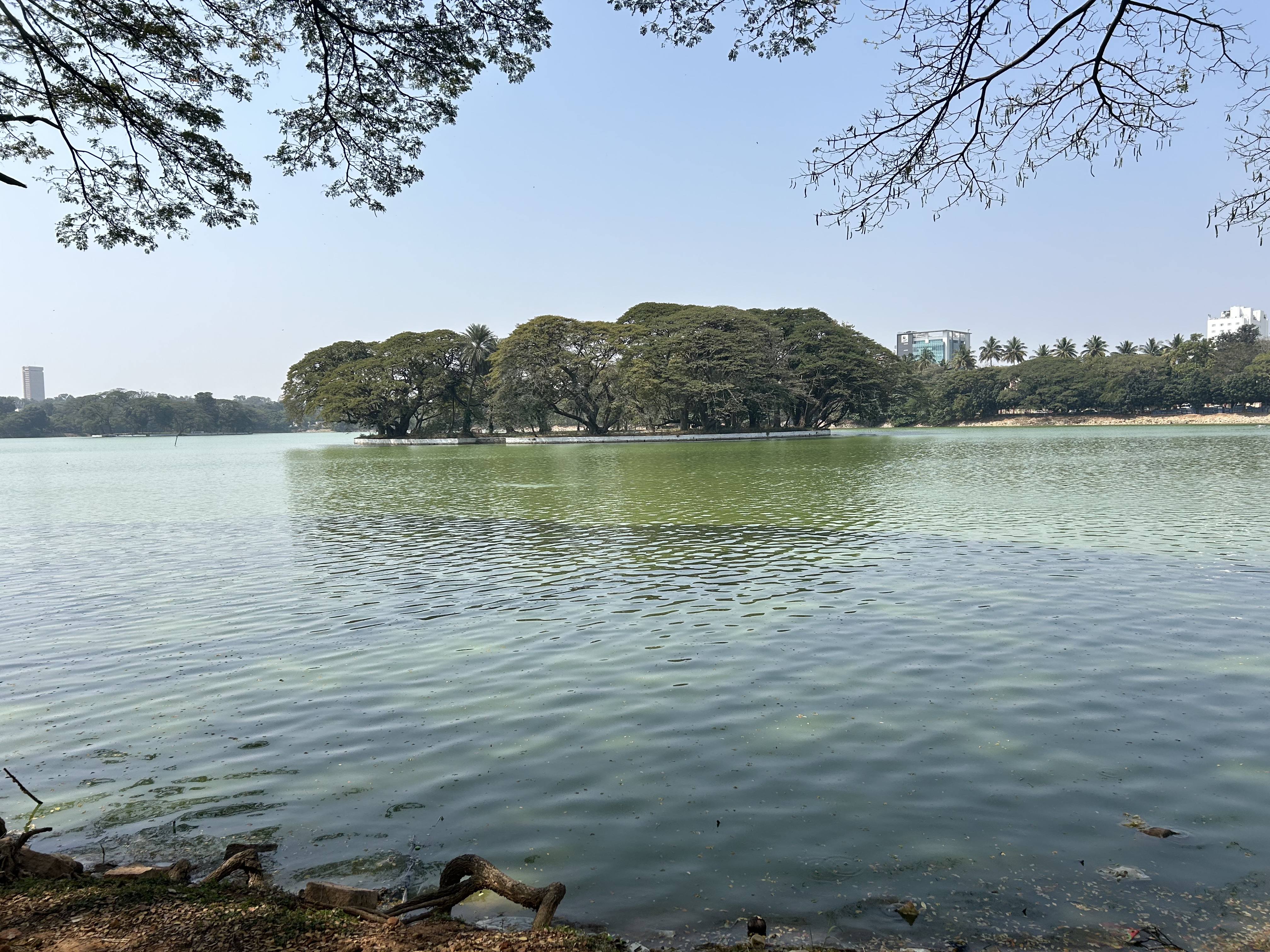
Ulsoor Lake, in the east, goes back to Kempe Gowda's time. A British commissioner, Lewin Bowring, gave it its present shape, with four small islands scattered across the water. Part of the lake is controlled by the army's Madras Sappers, and their museum keeps a Chinese bell, cast in 1741, that was once kept at the lake. A bell from China, beside a tank dug in a Kannada chief's time, in the keeping of an Indian army regiment! Held water has always drawn travellers of every kind.
Some tanks were born of disaster. After the Great Famine of 1876 to 1878, Colonel Richard Hieram Sankey of the Madras Sappers built a new reservoir in 1882 to secure the city's supply. Locals still call Sankey Tank by its own name, Gandhadakoti kere, after the government sandalwood depot that once stood nearby. A fragrance, kept alive in a name.
Other lakes vanished once piped water came. Sampangi lake was drained in 1937, and in 1946 a stadium opened on its bed.
And some lakes remain, but changed. Bellandur, the largest, now takes in something like forty percent of the city's sewage. Since at least 2003, a toxic white froth has risen from it and drifted out across the streets. More than once the lake has caught fire. In 2018 it burned for over thirty hours. Water, burning.
The old chain of kere is broken in many places, its links paved over or poisoned. Yet the valleys still slope the way they always did, and each monsoon the rain runs downhill as before. The water's journey is not finished; it keeps moving, still searching for the tanks it once filled.
Site: Ulsoor (Halasuru) Lake, about 50 ha with four islands; also Sankey Tank, Bellandur Lake, and the former lakebeds under Kempegowda (Majestic) Bus Station and Sree Kanteerava Stadium
Built: Tank network from the Kempe Gowda era onward; Sankey Tank 1882
Key facts: Valleys dammed into chains of connected tanks. Dharmambudhi lake became the Majestic bus station (from 1965); Sampangi lake, drained in 1937, became the stadium (1946). Bellandur, the largest lake, has produced toxic froth and has caught fire several times.
Map:
Bengaluru map
Official Site:
Karnataka Tourism
Photo: Harvinder Chandigarh /
Wikimedia Commons (CC-BY-4.0)