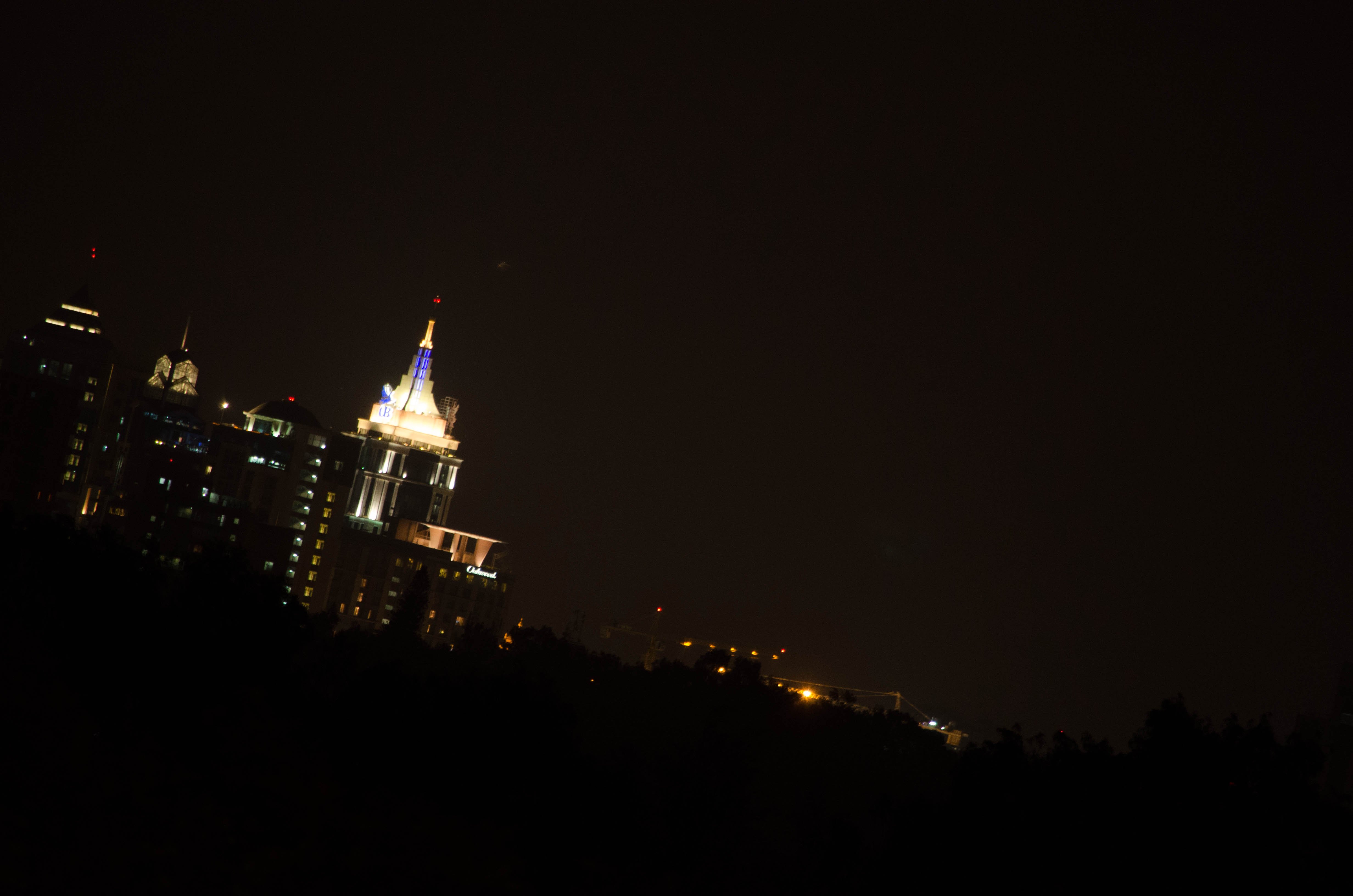
Multilingual AI audio guide exhibit on WOUDiO (PWA). WOUDiO pioneered the world’s first audio guide platform with built-in donation: listeners can support the cultural venue without leaving the listening experience. The text below is the localized description, details, and narration script for this audio guide stop.
A bus conductor in Bengaluru can change languages three times between two stops. A fare in Kannada, a joke in Tamil, directions in Hindi, a quick word of English for the passenger who hesitates. The words shift as easily as the gears, and nobody on the bus seems to notice.
Kannada is the language of the state, and a little over four in ten people in the city grew up speaking it at home. The rest of the city's first languages read like a map of the roads that lead up to this plateau.
Telugu came early. Chiefs and traders who spoke it moved through this country in the days of the Vijayanagara Empire. Urdu arrived with the Deccan sultanates and grew stronger under Hyder Ali and Tipu Sultan, whose soldiers and officials filled the fort and the markets around it. In the eighteenth century the Thigala gardeners walked up from the Tamil country to tend the royal gardens, and in the nineteenth, workers from the Arcot districts followed the British to the Cantonment, bringing more Tamil with them. In the twentieth century cooks came from the Udupi coast. After the 1940s engineers came from every corner of India for the aircraft and machine factories. And from the 1980s, programmers came in numbers no one had seen before.
None of these languages replaced the others. They piled up, layer on layer, like silt in the old tanks, so that one street can hold a Kannada signboard, a Tamil temple song, an Urdu shop name and English office talk, all within a single breath of warm plateau air.
For a long time the city carried another name as well: the Garden City. The reputation is said to have taken hold around 1927, during the silver jubilee of Maharaja Krishnaraja Wadiyar the Fourth, the same year Cubbon Park was given its official name, Sri Chamarajendra Park. A German superintendent, Gustav Krumbiegel, planted many of the trees that shaped those avenues. Broad canopies still arch over some of the old roads, shading traffic that their planter could never have pictured.
Newcomers keep arriving. Every train into the city, every late flight into the airport on the northern plain, sets down someone carrying a language, a recipe, a skill, or only a hope. The chief with his mud fort, the gardener, the soldier, the engineer and the coder all took the same road up this plateau. It has never been closed. Somewhere beyond the last flyover, its next stretch is already being walked.
Site: Bengaluru, city-wide
Key facts: Kannada is Karnataka's official language (about 42% of city residents' first language, 2011 census); Tamil, Telugu and Urdu are the next largest; "Garden City" reputation associated with the 1927 silver jubilee of Krishnaraja Wadiyar IV
Map:
Bengaluru map
Official Site:
Karnataka Tourism
Photo: Ashwin Kumar from Bangalore, India /
Wikimedia Commons_(8082053923).jpg) (CC-BY-SA-2.0)