Multilingual AI audio guide exhibit on WOUDiO (PWA). WOUDiO pioneered the world’s first audio guide platform with built-in donation: listeners can support the cultural venue without leaving the listening experience. The text below is the localized description, details, and narration script for this audio guide stop.
At the Silk Board junction the horns never quite stop. Buses, scooters and cabs lock together in the heat, engines idling, and above them a concrete road runs off on pillars toward the south. Every weekday morning, a river of commuters squeezes through this knot of roads toward their desks.
The flow that feeds those jams began with a few crates. In 1985 Texas Instruments, the American chip maker, chose Bangalore for a research centre, the first multinational to open one in India. Other states had said no; Karnataka's government said yes. The team set up in Sona Towers on Millers Road and needed a direct data link to the United States, so they brought in a private satellite dish, the first in the country. The story goes that the crates holding it arrived on a bullock cart, rolling slowly through city streets toward the age of software.
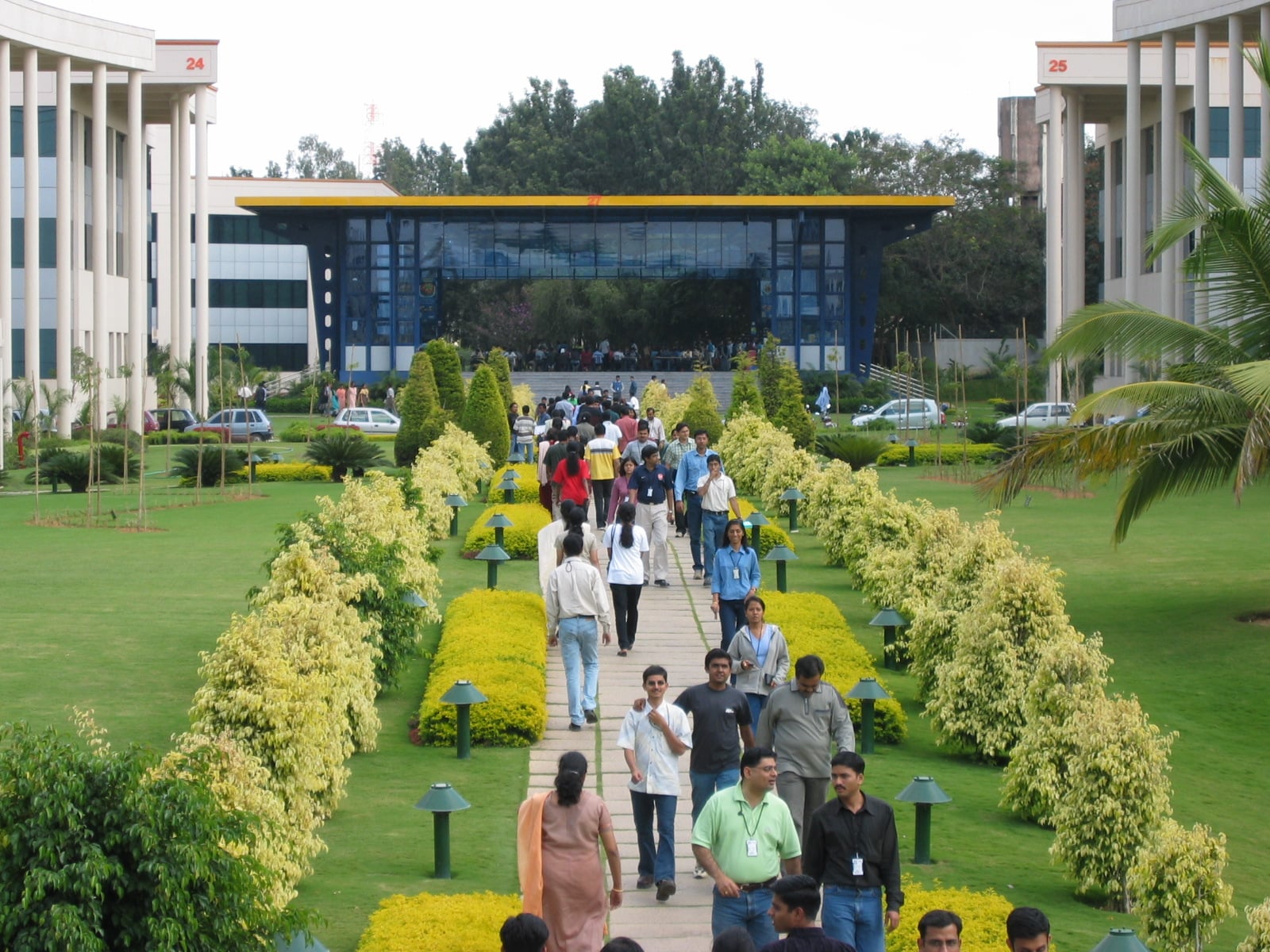
Others were already on the move. Infosys had been founded in 1981 in Pune by seven engineers, among them N.R. Narayana Murthy and Nandan Nilekani. In 1983 they carried the young company south to Bangalore. Their headquarters now stands in Electronic City, on the southern edge of the city, first laid out in 1978 by R.K. Baliga of the state electronics corporation.
Then the trickle became a flood. From every state of India, young graduates packed a bag, took the overnight train, and stepped out onto this plateau with a job offer and not much else. In 1994 a tech park rose at Whitefield, far to the east, built by a Singapore consortium, the Tata Group and the state together. Glass towers climbed out of the red earth, a whole working world set down on the plateau. Bengaluru became the country's largest exporter of software, and its IT companies came to employ around a million people.
A city growing that fast strains at every joint. The roads could not keep up, and traffic became part of daily life. In October 2011 the first stretch of Namma Metro opened, a short run from Baiyappanahalli to MG Road. The trains hum on elevated track now, and in 2025 a line finally reached Electronic City, above the same roads where the jams begin.
Every new line on the map is an old route redrawn, a path from a hometown somewhere in India to a desk on this plateau. And every evening, those same people carry their hunger home through the streets, toward kitchens and canteens that have been waiting for travellers for a hundred years.
Site: Electronic City (south) and ITPL Whitefield (east)
Key dates: Electronic City founded 1978 (R.K. Baliga, KEONICS); Texas Instruments R&D centre 1985; Infosys moved to Bangalore 1983; ITPL Whitefield 1994; Namma Metro first stretch 20 October 2011
Key facts: Texas Instruments was the first multinational R&D centre in India; the city is India's largest IT exporter
Map:
Bengaluru map
Official Site:
Karnataka Tourism
Photo: Zondor at English Wikipedia /
Wikimedia Commons (CC-BY-SA-3.0)