Multilingual AI audio guide exhibit on WOUDiO (PWA). WOUDiO pioneered the world’s first audio guide platform with built-in donation: listeners can support the cultural venue without leaving the listening experience. The text below is the localized description, details, and narration script for this audio guide stop.
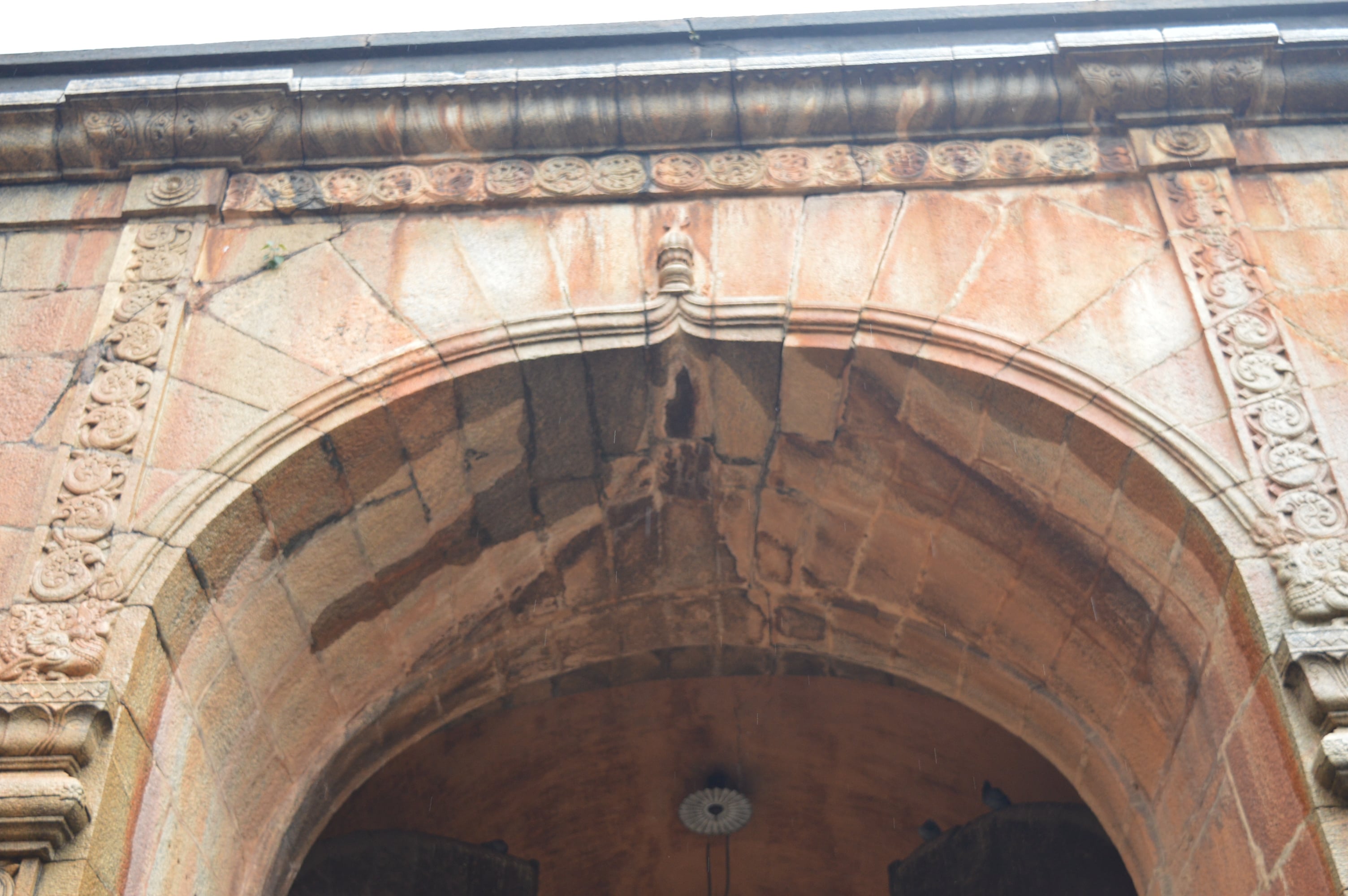
Stone takes the heat of the day and gives it back slowly after dark. The blocks of the Delhi Gate are dressed stone, fitted edge to edge, and along the curve of the arch the surface has been rubbed smooth by more than two centuries of weather and passing shoulders.
The first wall on this ground was not stone at all. In 1537 Kempe Gowda raised a fort of packed earth, with a moat around it, to guard the new town he had laid out on the plateau. More than two centuries later, in 1761, Hyder Ali rebuilt it in stone, and his son Tipu Sultan strengthened it further. Earth gave way to cut blocks.
Then, in the first days of March 1791, an army came up the plateau under Lord Cornwallis. On the seventh the British stormed the market town that spread outside the walls. In the days that followed, the besiegers worked at one stretch of wall near the Delhi Gate. Somewhere out on the plain, Tipu's own field army watched and manoeuvred, and could not break through to relieve the men inside. Their commander, the killedar Bahadur Khan, stayed with them.
On the night of 21 March, the breach was open.
The men who went up first carried ladders. They were the Madras Pioneers, and leading them was an engineer, Lieutenant Colin Mackenzie. The officer who climbed into Bangalore's broken wall that night would later become India's first Surveyor General — a man who would give his working life to measuring this land. Bahadur Khan died in the defence. By morning the fort had fallen.
A marble plaque now marks the place of the breach. Of a wall that once ran for about a kilometre, only the Delhi Gate and the remains of two bastions still stand. Much of the old ground lies under Victoria Hospital. And inside the surviving walls, one thing still keeps its place. A small Ganapathi temple has outlasted the siege, the breach, and the hospital wards that followed.
The stone keeps its warmth into the evening. North of the old town, a later Mysore king would raise a very different kind of fortress — one built for show rather than siege.
Site: Bangalore Fort, Delhi Gate and two bastion remnants
Built: 1537 mud fort by Kempe Gowda I; rebuilt in stone by Hyder Ali in 1761
Key facts: Fell to Lord Cornwallis's army on the night of 21 March 1791 through a breach near the Delhi Gate (marked by a marble plaque); a Ganapathi temple survives inside the walls; protected by the ASI
Map:
Bengaluru map
Official Site:
Karnataka Tourism
Photo: Jitu Tiwary /
Wikimedia Commons_05.jpg) (CC-BY-SA-4.0)