Multilingual AI audio guide exhibit on WOUDiO (PWA). WOUDiO pioneered the world’s first audio guide platform with built-in donation: listeners can support the cultural venue without leaving the listening experience. The text below is the localized description, details, and narration script for this audio guide stop.
On the southern edge of the city, in a temple yard at Begur, stands a slab of grey stone a little over a metre tall. It is a hero stone, raised for men who fell in a fight. Cut into its face, among the old Kannada letters, is a word that would outlive every one of them. Bengaluru.
The stone dates from the late ninth century, more than eleven hundred years ago. It records a battle, the battle of Bengaluru, in which the sons of a man named Nagattara were killed. What stood around it then, no one can say. A village, perhaps, a scatter of fields. But the name was already in people's mouths, centuries before there was a city to carry it.
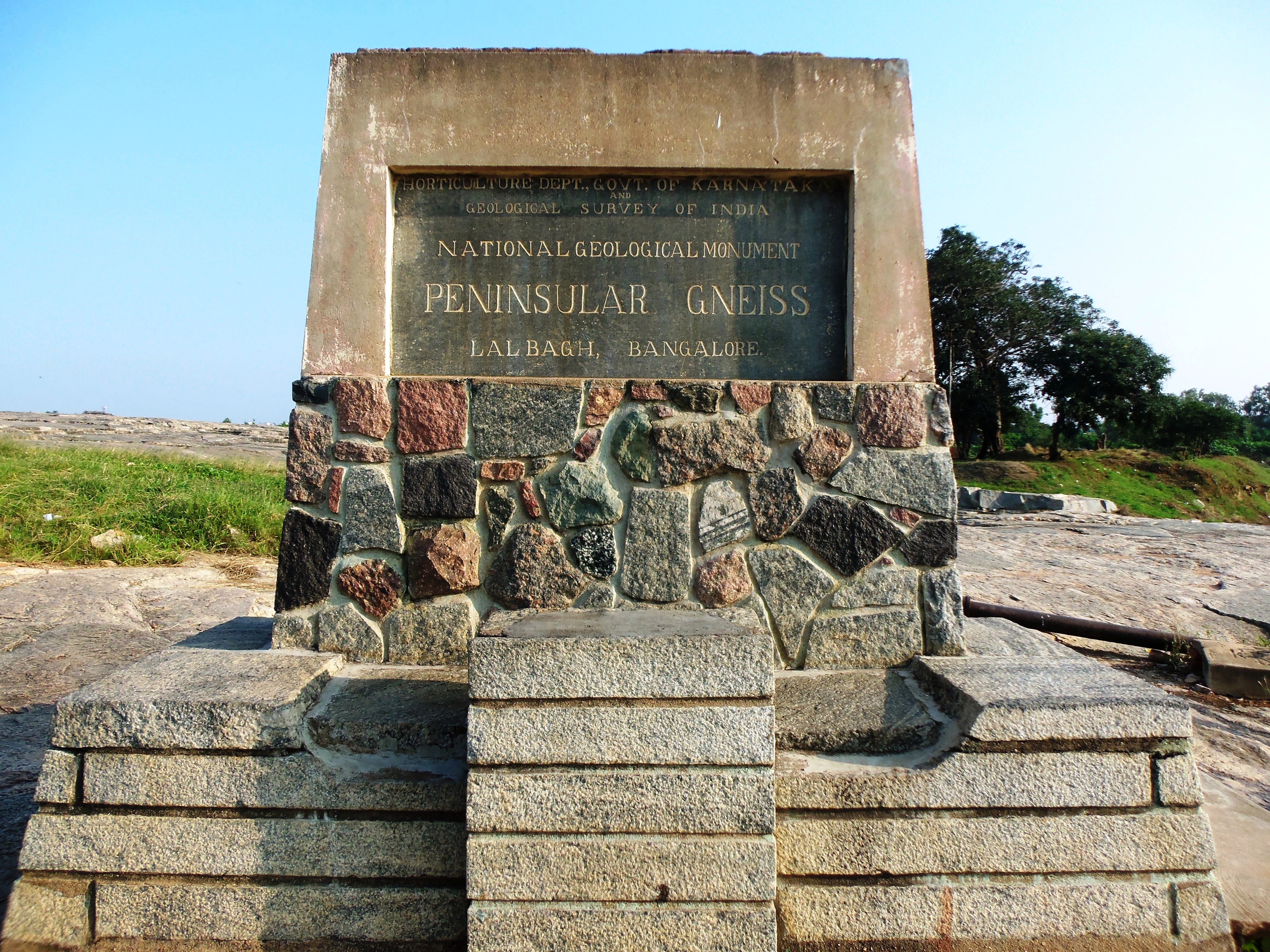
The land explains much of what came after. The city sits on the Deccan Plateau, about nine hundred metres above the sea. Even in April, the hottest month, the air stays gentler than across much of India. There is no great river. Instead the ground rolls in low ridges and shallow valleys, and every valley is a place where running water can be stopped by an earthen bank and held. Everyone who climbed onto this plateau had to learn to read that slope.
Wherever the name comes up, a story tends to follow. The story goes that in the twelfth century a Hoysala king, Veera Ballala the Second, lost his way while hunting. Hungry and exhausted, he reached the hut of a poor old woman, who gave him the only food she had: boiled beans. In gratitude, it is said, he named the place Benda-kaal-uru, the town of boiled beans.
The story has lasted for generations. But the stone at Begur carries the name some three hundred years before that king's time! The legend came after the word, not before it. Scholars have proposed other roots, a forest tree called benga, a "town of guards", and none has closed the question.
What is certain is that the name kept moving. It passed through chieftains and sultans, through the English spelling "Bangalore" that the world used for generations, through wave after wave of newcomers from across India. Then, on the first of November 2014, the state's own founding day, the old Kannada form returned to official use: Bengaluru, the word the hero stone had held all along.
More than eleven centuries of monsoon rain have run down the face of that stone.
The name it guards has travelled much further than the fallen ever walked. From Begur, the old road bends north, toward a young chieftain with a plan for a mud fort.
Site: Bengaluru, on the Deccan Plateau; the Begur inscription stands in the Nageshvara temple complex at Begur
Elevation: about 900 m
Key facts: The Begur hero stone (late 9th century) is the earliest known written record of the name "Bengaluru". The "town of boiled beans" origin is a legend. Officially renamed from Bangalore on 1 November 2014.
Map:
Bengaluru map
Official Site:
Karnataka Tourism
Photo: Ramyajagadish /
Wikimedia Commons (CC-BY-SA-4.0)