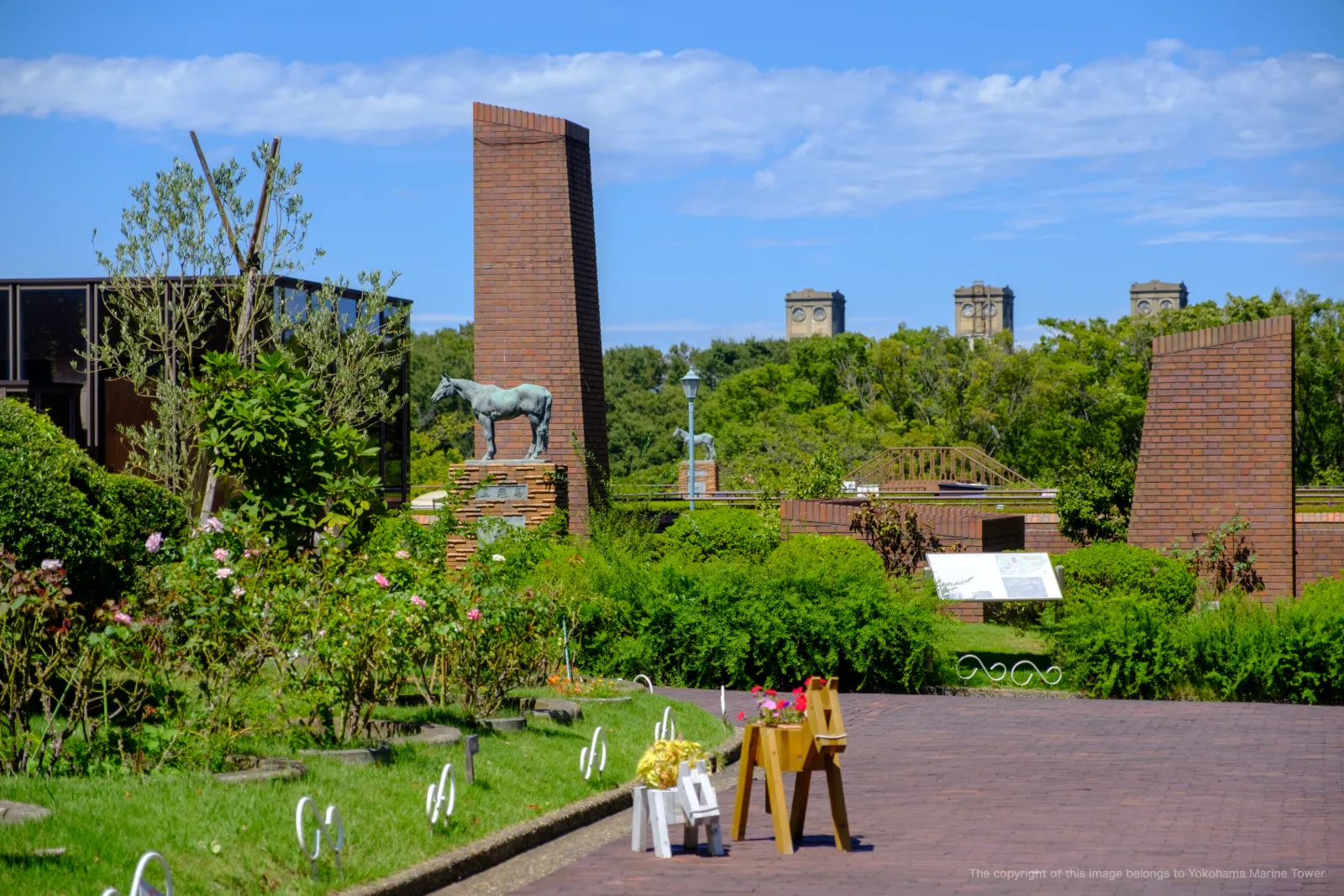
Negishi Forest Park stands on hallowed ground — the very birthplace of modern horse racing in Japan. To the south of Marine Tower, gentle green hills roll…
Multilingual AI audio guide exhibit on WOUDiO (PWA). WOUDiO pioneered the world’s first audio guide platform with built-in donation: listeners can support the cultural venue without leaving the listening experience. The text below is the localized description, details, and narration script for this audio guide stop.
Negishi Forest Park stands on hallowed ground — the very birthplace of modern horse racing in Japan. To the south of Marine Tower, gentle green hills roll quietly into the distance. Beneath that serene, grassy expanse, the thunder of hooves once echoed across the land. In 1866, at a time when most people in Japan had yet to encounter the concept of horses racing in competition, the foreign residents of Yokohama opened a racecourse on these very hills. The Negishi Racecourse — the true starting line of modern horse racing in Japan. Only seven years had passed since the port first opened to the world, and already the Westerners who had settled here were bringing not only their trade, but their pleasures. Horse racing was among the most emblematic of them all. In time, the culture of horse racing took root among the Japanese people as well, and Negishi Racecourse grew into an indispensable part of Yokohama life — a grand stage for socializing and excitement alike. Most remarkable of all was the First-Class Grandstand, constructed in 1930. Designed by the American architect J. H. Morgan, it was a commanding structure that embodied the most progressive modernism of its era. Then the Second World War drew the curtain on this brilliant stage. The racecourse was seized by the military, and in the postwar years it fell under the administration of American forces. When the land was at last returned, after long years of waiting, the people did not choose to revive the racecourse. Instead, they chose transformation — a forest and an open park, given freely to its citizens. Today, children run laughing across those green hills, and families spread their picnic blankets beneath the open sky. And quietly, in one corner of it all, the remnants of that First-Class Grandstand still stand — like a sentinel keeping watch over the memories of another age. Ivy climbs the weathered concrete walls; the wind passes through window openings long emptied of their glass. This is not a building falling into ruin. It is a testament to the transformations this city has lived through. From racecourse to citizen's forest. From a place of excitement to a place of rest. The purpose has changed — and yet, the essence has not. For more than one hundred and fifty years, people have been drawn to this hill. And they are still coming.
Opened: 1866 (Keiō 2)
Location: Negishidai, Naka Ward, Yokohama
First-Class Grandstand architect: J. H. Morgan (completed 1930)
Closed: 1942 (wartime requisition)
Park opened: 1977 (developed following return from U.S. military administration)
Note: Birthplace of modern horse racing in Japan; ruins of the First-Class Grandstand remain on site
Venue-official content of Yokohama Marine Tower. Supervised by: 横浜マリンタワー 360°.