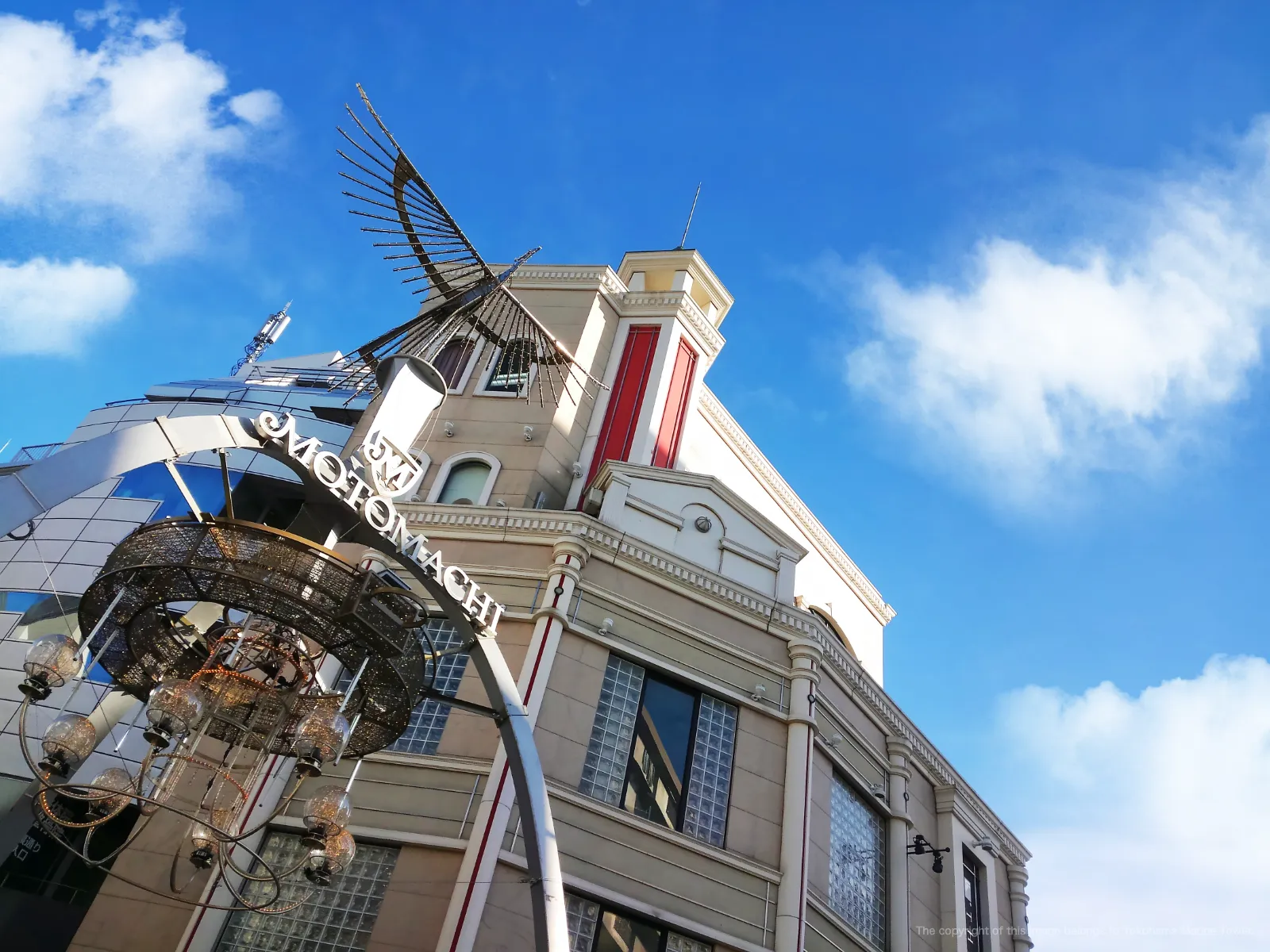
Who was the Motomachi Shopping Street originally created for? The answer is the foreigners who lived on the bluffs of Yamate. After the opening of the port, a…
Multilingual AI audio guide exhibit on WOUDiO (PWA). WOUDiO pioneered the world’s first audio guide platform with built-in donation: listeners can support the cultural venue without leaving the listening experience. The text below is the localized description, details, and narration script for this audio guide stop.
Who was the
Motomachi Shopping Street originally created for? The answer is the foreigners who lived on the bluffs of Yamate. After the opening of the port, a residential quarter for foreign nationals — known as the
Yamate Foreign Settlement — took shape on the hills above the city. The British, French, and Americans who made their homes there had no intention of leaving their way of life behind. They wanted bread made with butter. They wanted clothes cut to fit their bodies. They wanted their parlors furnished in the Western style. To meet those needs, a single shopping street was born at the foot of the bluffs. That street was Motomachi. Running in a long, narrow line along a valley just below the Yamate hills, the street came to be lined with craftsmen who answered the foreigners' every request — bakers who fired their ovens to foreign recipes, furniture makers who built Western pieces entirely by hand, tailors who cut fabric to European patterns. At first, they learned by watching and imitation, feeling their way into an unfamiliar culture. But Japanese craftsmen were never content to simply copy. As they absorbed Western techniques, they began weaving them together with their own tradition of meticulous, refined handiwork. A Japanese softness crept into the bread that appeared on foreign tables; the precise joinery of Japanese carpentry quietly found its way into Western furniture. And so Motomachi transformed — from a service district catering to foreigners into something altogether its own: a cultural world where the aesthetics of East and West dissolved into one another. That lineage would eventually blossom in the 1970s and '80s into what became known as "Hama-Tra" — the Yokohama Traditional style. It was the look favored by young women attending Ferris and Yokohama Futaba schools: an air at once refined and effortlessly free. A blazer, a checked skirt, a branded tote bag. It was a sophistication unmistakably different from Tokyo fashion — something that could only have emerged from a port city like this one. It was the natural inheritance, passed down across generations, of a spirit first nurtured along these shop fronts: the spirit of embracing a foreign culture and reimagining it through one's own sense of beauty. Today, that slender street continues to draw visitors as a promenade where the memory of the open port and the sensibility of the present day move side by side.
Origins: 1860s (during the formation of the
Yamate Foreign Settlement)
Location: Motomachi, Naka Ward,
Yokohama
Length: Approximately 600 meters
Character: Grew from shops supplying foreign residents with daily necessities (bread, clothing, furniture, and more)
Cultural legacy: Birthplace of "Hama-Tra" (Yokohama Traditional style), which flourished in the 1970s–80s
Today: An active shopping street with approximately 200 businesses
Venue-official content of Yokohama Marine Tower. Supervised by: 横浜マリンタワー 360°.