What made the hills of Yamate so singular was that this land had once been set apart — carved out as a foreign settlement, a world unto itself. In 1867, the…
Multilingual AI audio guide exhibit on WOUDiO (PWA). WOUDiO pioneered the world’s first audio guide platform with built-in donation: listeners can support the cultural venue without leaving the listening experience. The text below is the localized description, details, and narration script for this audio guide stop.
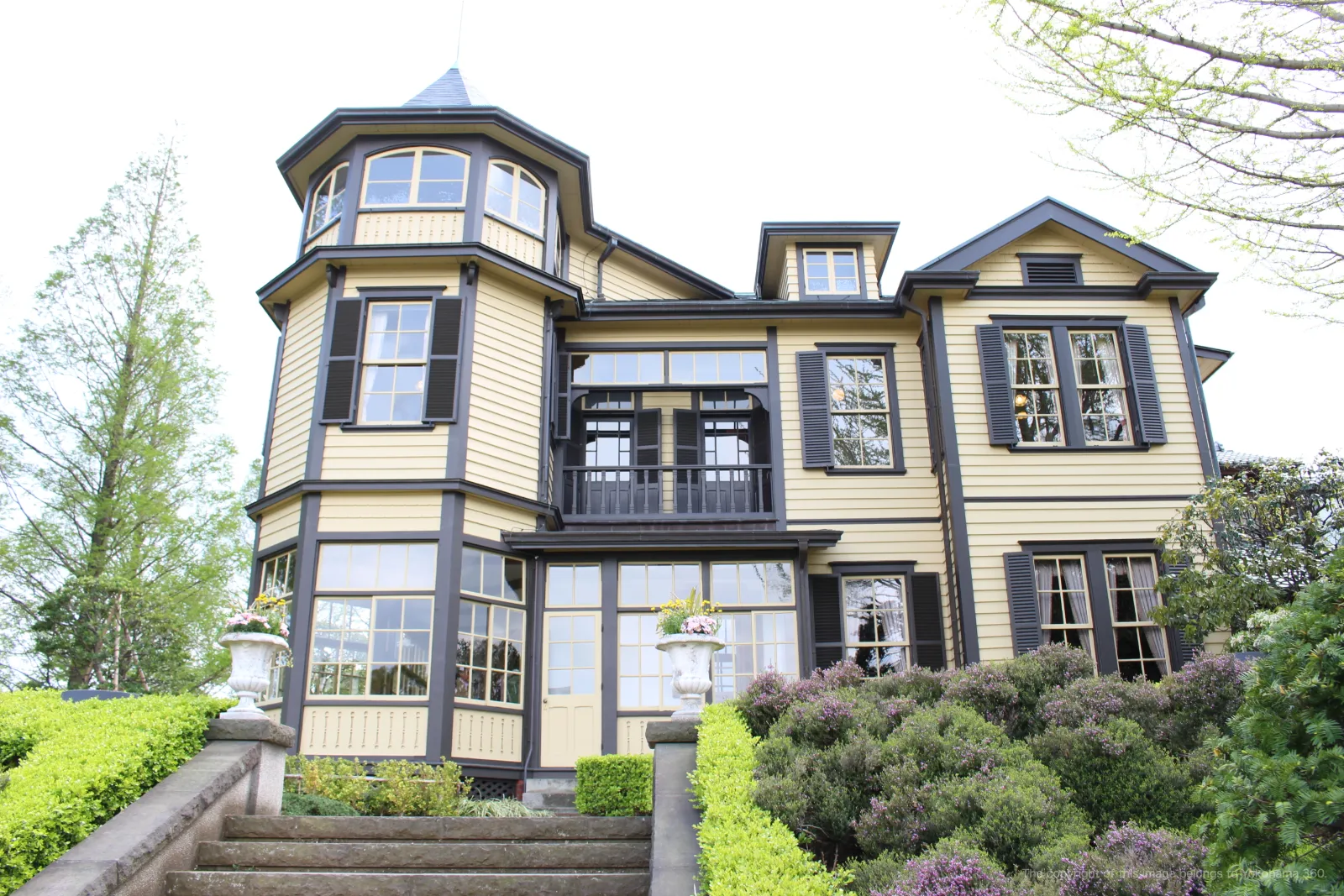
What made the hills of Yamate so singular was that this land had once been set apart — carved out as a foreign settlement, a world unto itself. In 1867, the Tokugawa shogunate designated the Yamate district of Yokohama as an exclusive enclave for foreign residents. Spread across the heights above the city, it became a peculiar space: Japanese soil on which Japanese people were not free to live. To the south of Marine Tower, a ridge of deep green hills rolls gently into the distance. Beyond that skyline, Western-style mansions once stood in rows, and the air carried the sounds of English and French. Churches and schools rose within the settlement, and the foreigners who lived there brought their whole world with them. They baked bread, brewed beer, played tennis, and delighted in horse racing. It was an entirely different way of life — a parallel world existing alongside the Japan of its time. The turning point came in 1899, the thirty-second year of the Meiji era. The revision of the unequal treaties brought the foreign settlement system to an end, and the hills of Yamate were at last returned to Japan. Yet the traces of that foreign life did not simply vanish. They lingered on, pressed into the very fabric of this place. Today, seven Western-style houses in the Yamate district are open to the public — among them the Ehrismann Residence, Berrick Hall, the Diplomat's House, and Bluff No. 18. All were built between the late Taisho and early Showa periods, and several were reconstructed in the aftermath of the Great Kanto Earthquake. That people chose to rebuild their Western homes on this hill, even after such destruction, tells us something profound: Yamate was never merely a place of residence. It was a place where the memory of a foreign way of life had taken root. These hills are, in a sense, Yokohama's archive of cultural memory. In every plastered wall, every window frame, every brick set into a fireplace, the lives of those who crossed the sea are quietly preserved. As you gaze out now over that green ridge, take a moment to imagine the other world that once existed there — and the people who called it home.
Period: 1862 (establishment of the foreign settlement) – 1899 (return of the settlement to Japan)
Location: Yamatecho, Naka Ward, Yokohama
Main
open houses: Ehrismann Residence, Berrick Hall, Diplomat's House, Bluff No. 18, Yamate No. 111, Yamate No. 234, British House
Construction period: Late Taisho – early Showa era (including post-Great Kanto Earthquake reconstructions)
Admission: Free (all seven houses open to the public)
Designation: City of Yokohama Certified Historic Building
Venue-official content of Yokohama Marine Tower. Supervised by: 横浜マリンタワー 360°.