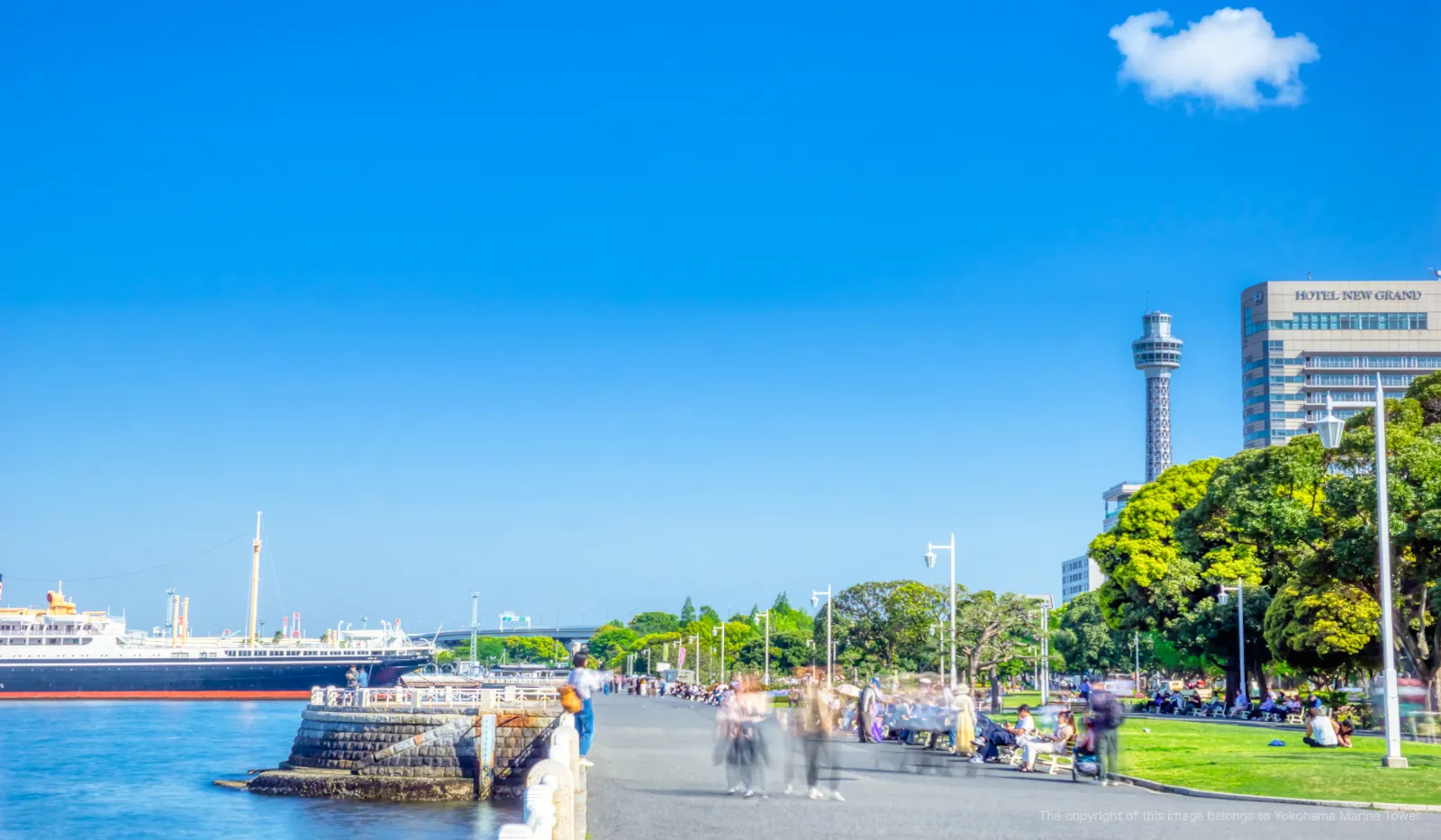
Spread out below you, that quiet ribbon of green. Yamashita Park. Along its seaside lawn, people come today as they do every day — to linger, to walk their dogs, to settle onto a bench and let the salt breeze move through them. But do you know what lies buried beneath that beautiful ground? Rubble. On the first of September, 1923, the
Great Kantō Earthquake struck Yokohama. Magnitude 7.9. Close to the epicenter, Yokohama suffered devastation beyond measure — the heart of the city was nearly obliterated. Brick
Western-style buildings crumbled to the ground, harbor warehouses were swallowed by fire, and the reclaimed land liquefied beneath its buildings, pulling them down into the earth. Within the city of Yokohama alone, some 26,000 lives were lost. In the aftermath, an immense weight of wreckage remained. Bricks from collapsed buildings, charred timber, shattered glass, iron frames twisted beyond recognition. What was to be done with it all? The city of Yokohama made its choice: the rubble would be used to reclaim land along the shoreline, and upon it, a new park would be built. In 1930, seven years after the earthquake, Yamashita Park was completed. Over the remains of a shattered city, flower beds were laid out, lawns were spread, and roses were planted. A place where visitors could spend their hours in joy was raised upon a foundation of grief. Today, beneath the feet of those who stroll through the park, the old city of Yokohama lies sleeping. The walls of homes where someone once lived. The pillars of shops where someone once made their living. They rest quietly under the soil, while new life takes root above them. Yamashita Park is not beautiful simply because the sea is visible from its edge. It is beautiful because a city that once lost everything chose to rise again — using even its own pain as the ground on which to stand. That resolve breathes steadily beneath the green. When the wind stirs the trees in the park, perhaps it is the sigh of a buried city, remembering.
Opened: March 15, 1930 (Shōwa 5)
Location: 279 Yamashitachō, Naka-ku, Yokohama
Area: Approximately 7.4 hectares
Construction method: Land reclamation using rubble from the
Great Kantō Earthquake (1923)
Deaths in Yokohama from the Great Kantō Earthquake: Approximately 26,000
Key distinction: One of Japan's first seaside public parks