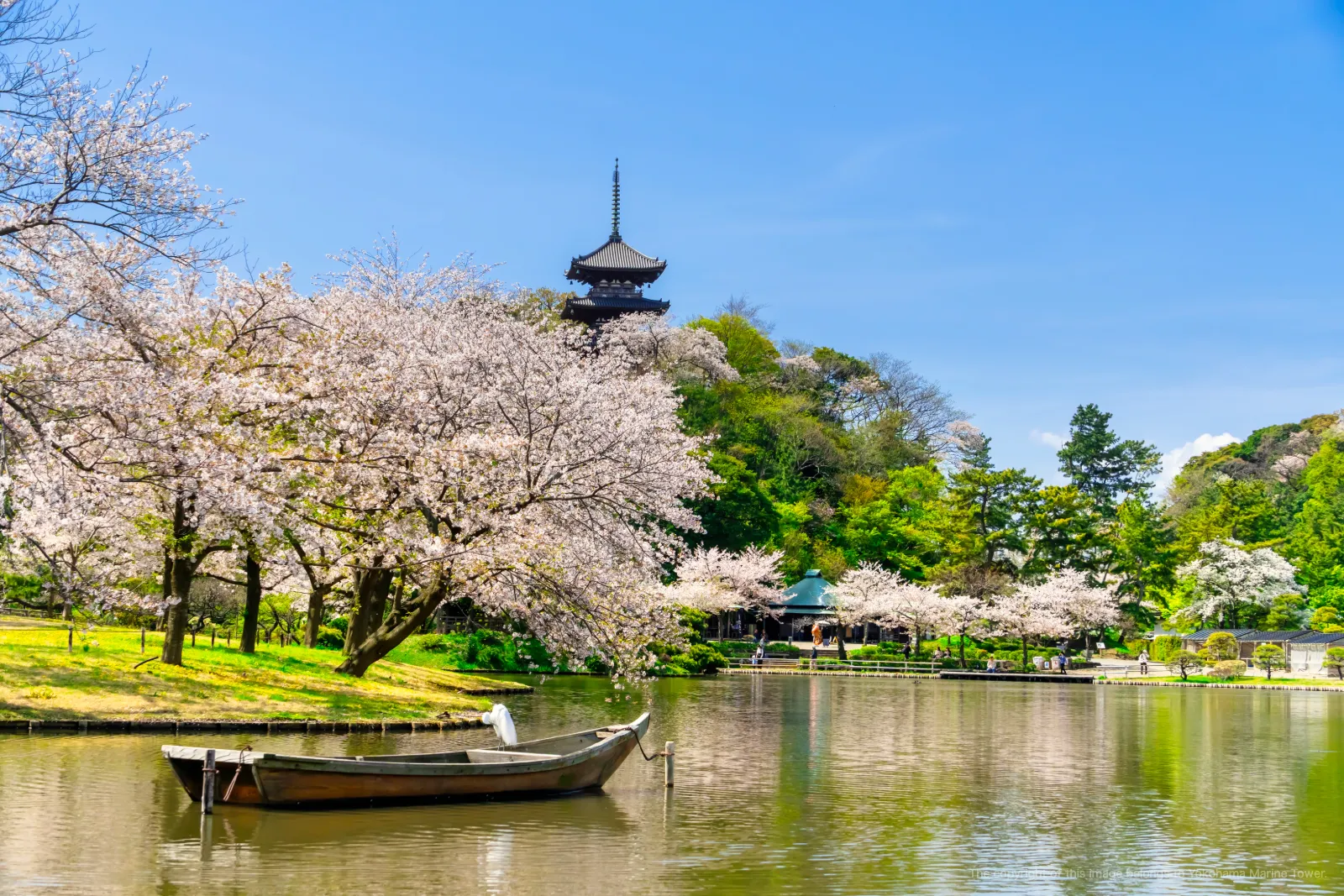
The reason so many historic buildings have been brought together at Sankeien Garden is that one man — the industrialist Hara Sankei — was determined to protect…
Multilingual AI audio guide exhibit on WOUDiO (PWA). WOUDiO pioneered the world’s first audio guide platform with built-in donation: listeners can support the cultural venue without leaving the listening experience. The text below is the localized description, details, and narration script for this audio guide stop.
The reason so many historic buildings have been brought together at
Sankeien Garden is that one man — the industrialist Hara Sankei — was determined to protect Japanese architecture from disappearing forever. From Kyoto, from Kamakura, from Kishū — temples, teahouses, and thatched farmhouses were carefully dismantled and carried to this place in Honmoku, Yokohama. The man who made it all possible was Hara Sankei, who had built his fortune in the raw silk trade. His given name was Hara Tomitarō. He was far more than a collector. From the Meiji era through the Taishō period, he used his own wealth to purchase historic structures across Japan that stood on the brink of demolition, then had them reconstructed and preserved within his expansive private garden. Today, seventeen historic buildings are scattered throughout Sankeien. Among them is the old Tōmyōji three-story pagoda, built during the Muromachi period, and the teahouse known as Shunsōro, said to have been built by Urakusai — the younger brother of Oda Nobunaga. Buildings that by rights should still stand in Kyoto, Kamakura, or some other distant corner of Japan — and yet here they remain, in Yokohama. Behind that improbable fact lies the vision and sense of purpose that defined Hara Sankei. Hara Sankei was also celebrated as a patron of the arts. He lent his support to the great painters of modern Japanese-style painting — Yokoyama Taikan, Shimomura Kanzan, Maeda Seison — inviting them to Sankeien and offering them a place in which to work and create. This garden was not only a garden; it was a place where Japanese art was nurtured and allowed to flourish. Sankeien lies to the south of Marine Tower, near the water's edge beyond Honmoku, set within a belt of greenery. From here, it may be difficult to make it out directly. Yet the cultural depth of a city cannot always be measured by what the eye can see. Yokohama is well known as a city that opened itself to Western culture through its port. But it was also a city that was home to someone who sought to protect Japan's traditional culture — to gather it, preserve it, and pass it on to the future. To rescue what was fading, and give it new roots in a new place. Sankeien speaks to another kind of richness that Yokohama holds within itself — quietly, and with enduring strength.
Location: 58-1 Honmoku Sannotani, Naka Ward, Yokohama
Opened: 1906 (outer garden opened to the public)
Founder:
Hara Sankei (Hara Tomitarō, 1868–1939)
Site area: Approx. 175,000 ㎡
Historic buildings: 17 structures (including 10 Important Cultural Properties and 3 Yokohama City Designated Tangible Cultural Properties)
Key structures: Old Tōmyōji Three-Story Pagoda (Muromachi period), Rinshunkaku (Edo period), Shunsōro (Momoyama period)
Designation: National Site of Scenic Beauty
Venue-official content of Yokohama Marine Tower. Supervised by: 横浜マリンタワー 360°.