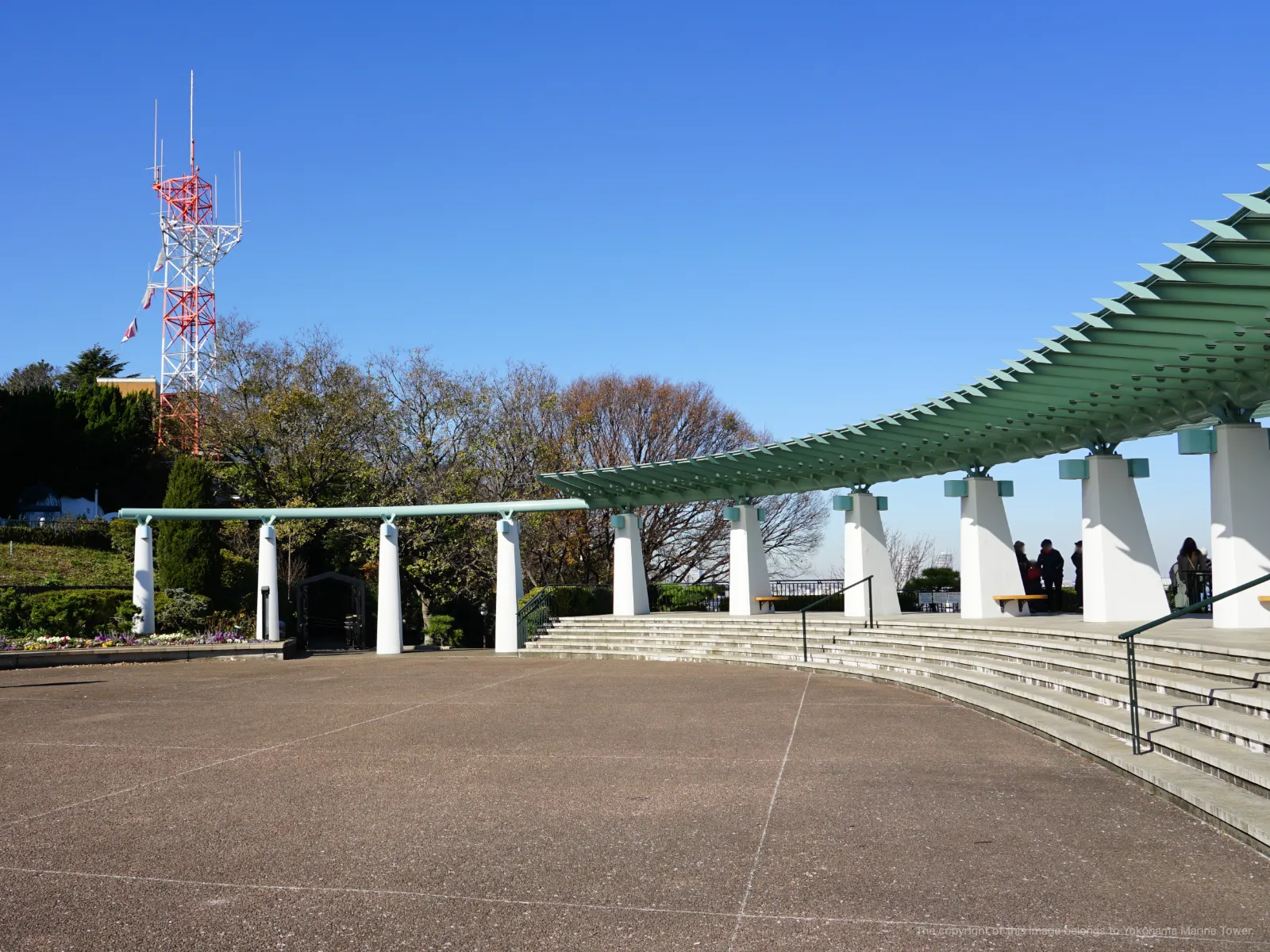
That hill became a watchtower because of its commanding view over the harbor. From its crest, one could readily track every vessel entering and departing —…
Multilingual AI audio guide exhibit on WOUDiO (PWA). WOUDiO pioneered the world’s first audio guide platform with built-in donation: listeners can support the cultural venue without leaving the listening experience. The text below is the localized description, details, and narration script for this audio guide stop.
That hill became a watchtower because of its commanding view over the harbor. From its crest, one could readily track every vessel entering and departing — making it a critically important observation point in the early days of Yokohama's opening to the world. In 1862, not long after Yokohama opened its port, British forces established a garrison on this hill. Officially, their purpose was to protect their own citizens living in the settlement. Yet behind that justification lay a far more calculated motive: the immense strategic value of a position that looked down upon the harbor. For any military power, a hilltop with such an unobstructed view of the port's movements was an extraordinarily prized vantage point. Before long, French forces, too, set up their own military post on an adjacent plot of land. The Yokohama of the treaty-port era was, in truth, a tense frontier where the great powers jostled against one another in pursuit of trading advantages. Behind the beauty of the harbor's scenery lay the cold, unflinching calculations of international politics. Time passed, and when the Second World War came to an end, the hill was taken over by American forces. Like so many corners of Yokohama, this ground became a place where ordinary citizens were denied free access — and so it remained for many long years. Then, in 1962, it was opened to the public as Minato no Mieru Oka Park — the Park of the Hill Overlooking the Harbor. Nearly a full century after the port first opened, the hill at last passed out of soldiers' hands and was reborn as a place where anyone might feel the breeze and gaze out over the sea. Look now toward that hill from the observation floor. You may find a tranquil scene spread before you — roses blooming with the seasons, people strolling at a leisurely pace. And yet, within that quiet hillside, memories of more than a hundred years of tension and liberation lie quietly at rest. The history that Yokohama has lived through — every turn of it — is surely inscribed in the very strata of that hill.
Location: 114 Yamatecho, Naka Ward, Yokohama
Opened: 1962 (Showa 37)
Area: Approx. 5.7 hectares
History: British military garrison from 1862; later occupied by French forces
Postwar: Requisitioned by U.S. forces; subsequently returned
Designation: Park administered by the City of Yokohama
Venue-official content of Yokohama Marine Tower. Supervised by: 横浜マリンタワー 360°.