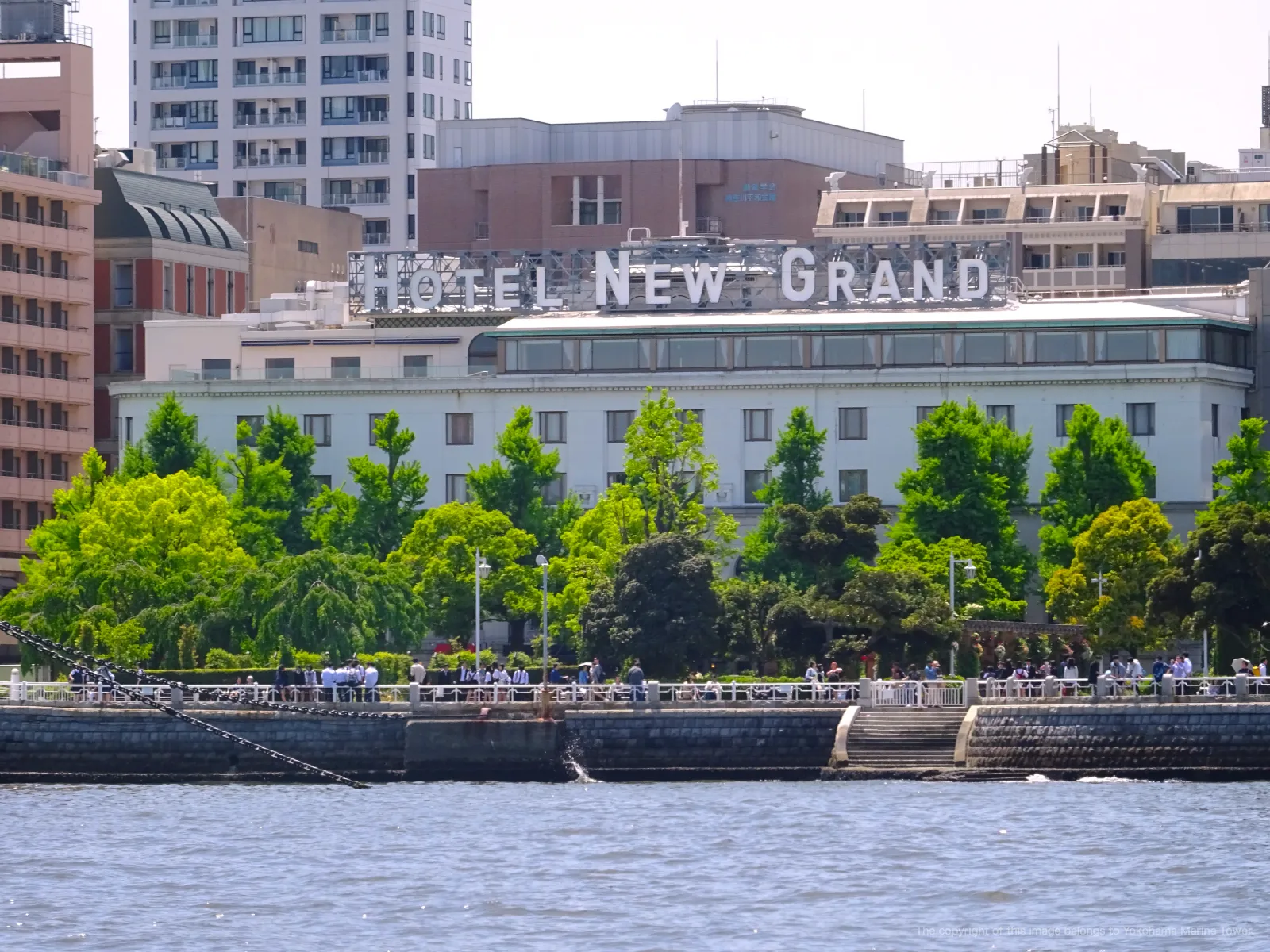
What is 'new' about that hotel? The answer is nothing less than Yokohama's own resolve, rising from the rubble. Across the street from Yamashita Park, a…
Multilingual AI audio guide exhibit on WOUDiO (PWA). WOUDiO pioneered the world’s first audio guide platform with built-in donation: listeners can support the cultural venue without leaving the listening experience. The text below is the localized description, details, and narration script for this audio guide stop.
What is 'new' about that hotel? The answer is nothing less than Yokohama's own resolve, rising from the rubble. Across the street from
Yamashita Park, a stately cream-colored building stands in quiet dignity. This is the Hotel New Grand, which opened in 1927 — just four years after the Great Kanto Earthquake. Before the disaster, Yokohama had the Grand Hotel, the social heart of the
foreign settlement. But on that terrible day, the tremors and the fires that followed reduced the Grand Hotel to nothing — as though the city's very pride as an international port had been buried beneath the ruins along with it. Yet the people of this city refused to give up. They would build an entirely new hotel, one that honored the spirit of the old Grand Hotel while standing as a symbol of recovery. And so it was named the New Grand. In that single word — 'new' — lay both a reverence for what had been lost and an unbroken will toward the future. Step into the lobby of the main building, and you will soon notice the phoenix motif woven throughout the décor. That legendary bird, reborn from the ashes — it was, in every sense, a portrait of Yokohama itself, rising from the scorched earth. The hotel has also played its part on the stage of history. In 1945, in the immediate aftermath of the war, General Douglas MacArthur made this hotel his first destination after landing at Atsugi Airfield, and it is well known that he used Room 315 as his office. And there is one more legacy that must not be forgotten: the mark Hotel New Grand left on Japan's culinary culture. The hotel is celebrated as the birthplace of doria, Napolitan spaghetti, and pudding à la mode. Dishes now enjoyed in every corner of the country were, in truth, born in the kitchens of that very building. Behind that cream-colored façade visible from the observation floor, the rebirth of Yokohama and a quiet revolution in the Japanese dining table were unfolding side by side. Somehow, knowing that, the hotel seems to carry itself just a little differently, doesn't it?
Opened: December 1, 1927 (Showa 2)
Architect: Hitoshi Watanabe (main building)
Architectural style: Classical style
Number of rooms: Approx. 240 (main building and tower wing combined)
Location: 10 Yamashitacho, Naka-ku, Yokohama
Associated figures: Douglas MacArthur (used Room 315); Saly Weil (first head chef)
Dishes originated here: Napolitan spaghetti, pudding à la mode, doria
Venue-official content of Yokohama Marine Tower. Supervised by: 横浜マリンタワー 360°.