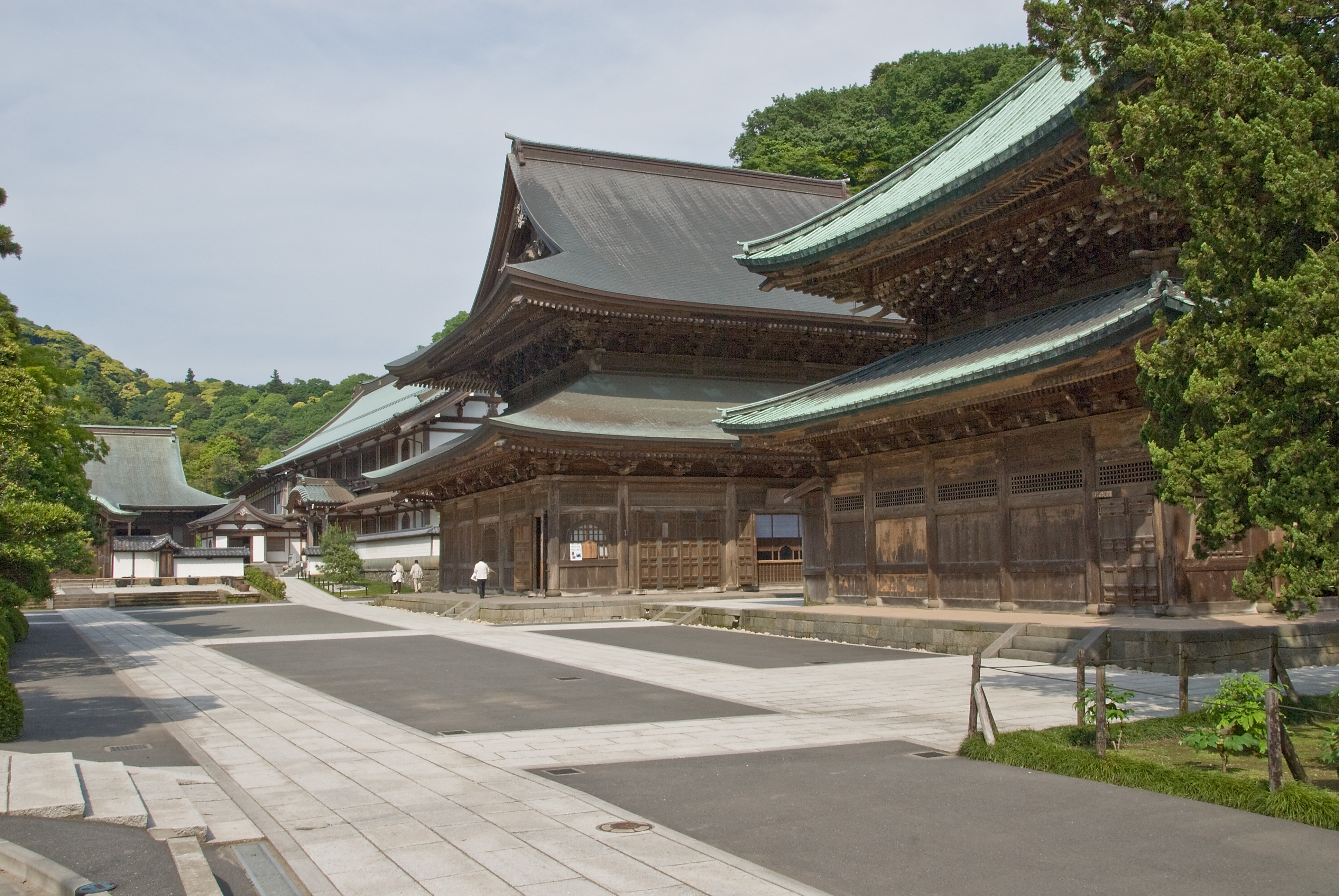
North of Kamakura, in a valley beyond the Kobukurozaka pass, stands a great temple. Kencho-ji. Founded in 1253, it was Japan's first full-fledged training monastery for Zen.
Its founder was Lanxi Daolong, a monk who crossed the sea from Song-dynasty China. With a handful of disciples he crossed the East China Sea, landed in Kyushu, and after passing through Kyoto was invited to Kamakura. The man who invited him was Hojo Tokiyori, regent of the shogunate.
Lanxi brought the way of life of the Song Zen monasteries with him, unchanged. The hour of rising, the posture of sitting, the manners of eating. Chinese was spoken all around the temple, and here in this valley, the warriors of Kamakura learned for the first time a discipline from across the sea.
The way the main gate, the Buddha Hall and the Dharma Hall line up in a single straight row, running toward the back of the valley, also follows the Song Zen temples. Before the Buddha Hall, a great juniper spreads its branches; it is said to have grown from seeds Lanxi brought from China.
There is even a dish said to have been born at this temple: kenchin-jiru. According to tradition, it began when the monks in training at Kencho-ji, rather than throw away vegetable scraps and broken tofu, fried them in oil and made them into a soup. Kencho-jiru, the story goes, was worn down over time into kenchin-jiru.
In the temple grounds in the morning, the sweep marks of the monks' brooms remain, neatly combed into the gravel.
Zen, which had crossed the sea, spread from this valley over the hills and throughout Japan. Beyond the Dharma Hall, a path continues on up the mountain to Hansobo.