Multilingual AI audio guide exhibit on WOUDiO (PWA). WOUDiO pioneered the world’s first audio guide platform with built-in donation: listeners can support the cultural venue without leaving the listening experience. The text below is the localized description, details, and narration script for this audio guide stop.
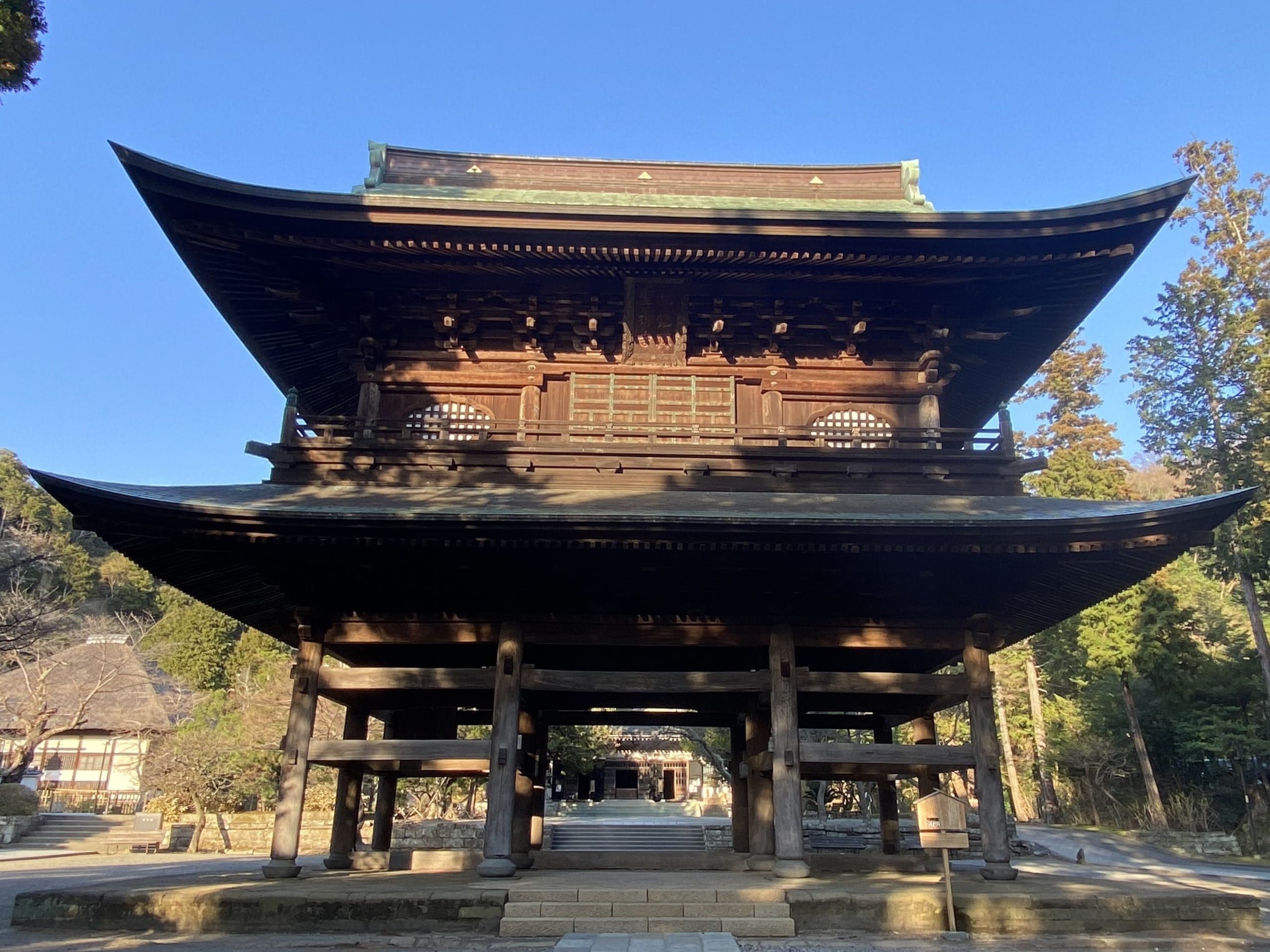
Just north of Kita-Kamakura Station, at the top of stone steps surrounded by cedar trees, rises the main gate of Engaku-ji, a Zen temple founded in 1282.
The man who built it was Hojo Tokimune, regent of the shogunate. Tokimune was the one who met the two Mongol invasions of Japan head-on. When the fighting was over, he built a temple to mourn those who had died in it. And it was not only Japanese warriors he mourned. The soldiers of the Mongol Yuan dynasty, who had crossed the sea to attack, were mourned too, it is said, without distinction.
The monk invited to found the temple was Mugaku Sogen, who had come from Song-dynasty China. His homeland, the Song, was at that very moment being conquered by the same Yuan. A story is told of him that, even with a Yuan soldier's sword held to him, he did not flinch. Here, one monk who had crossed the sea mourned, in a single temple, the people of two nations who had both been parties to the war.
In the middle of the Meiji era, a young man of letters came to this temple to sit in Zen meditation. It was Natsume Soseki. That experience later found its way into his novel, The Gate.
On a hilltop at the back of the temple grounds hangs a great bell from the Kamakura period, the Ogane. Its low tone trails on and on as it is drawn into the cedar groves of the valley.
A monk who came from across the sea, and enemies who came from across the sea. From a gate open to both, the road crosses the hills to the valley of Kencho-ji.