Multilingual AI audio guide exhibit on WOUDiO (PWA). WOUDiO pioneered the world’s first audio guide platform with built-in donation: listeners can support the cultural venue without leaving the listening experience. The text below is the localized description, details, and narration script for this audio guide stop.
From Fujisawa to Kamakura, about ten kilometers. The Enoden is a train that threads its way between the eaves of houses and the seashore. It began running in 1902, linking Fujisawa and Katase. Little by little, its tracks were then extended eastward until they reached Kamakura.
Near Gokurakuji Station is a brick tunnel dug at the end of the Meiji era, the only tunnel on the Enoden line. Through this tunnel, the train passes beneath the hill of the Gokurakuji-zaka pass, the slope that Ninsho is said to have improved long ago.
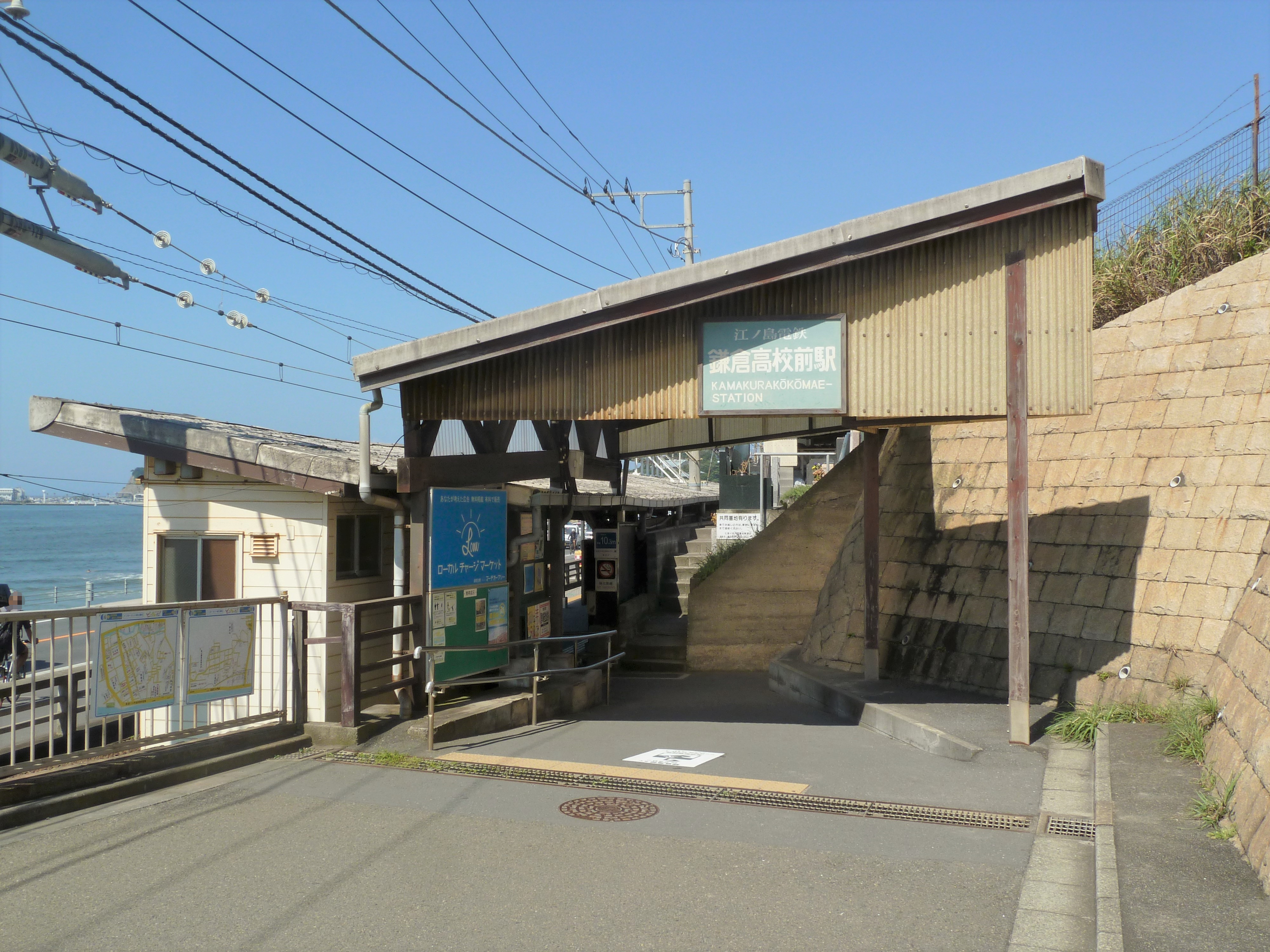
Past Koshigoe, the line comes out along the coast. From Shichirigahama to Kamakurakokomae, Sagami Bay fills the train windows, and on clear days Enoshima and, beyond it, Mount Fuji appear side by side. The level crossing at Kamakurakokomae is known for the sight of trains passing with the sea behind them, and today it draws many visitors from overseas as well.
The houses along the line have their front doors right beside the tracks, and the trains brush past eaves where laundry flaps in the breeze. In the morning, high school students on their way to class; at midday, travelers; in the evening, local people carrying shopping bags. This train carries both journeys and everyday life.
On the single-track sections, while a train waits at a station for the one coming the other way, the only sounds are the bell of a level crossing and the murmur of the waves.
The Enoden line runs from the town of Kamakura along the seashore to Enoshima, and on to the town of Fujisawa.