Multilingual AI audio guide exhibit on WOUDiO (PWA). WOUDiO pioneered the world’s first audio guide platform with built-in donation: listeners can support the cultural venue without leaving the listening experience. The text below is the localized description, details, and narration script for this audio guide stop.
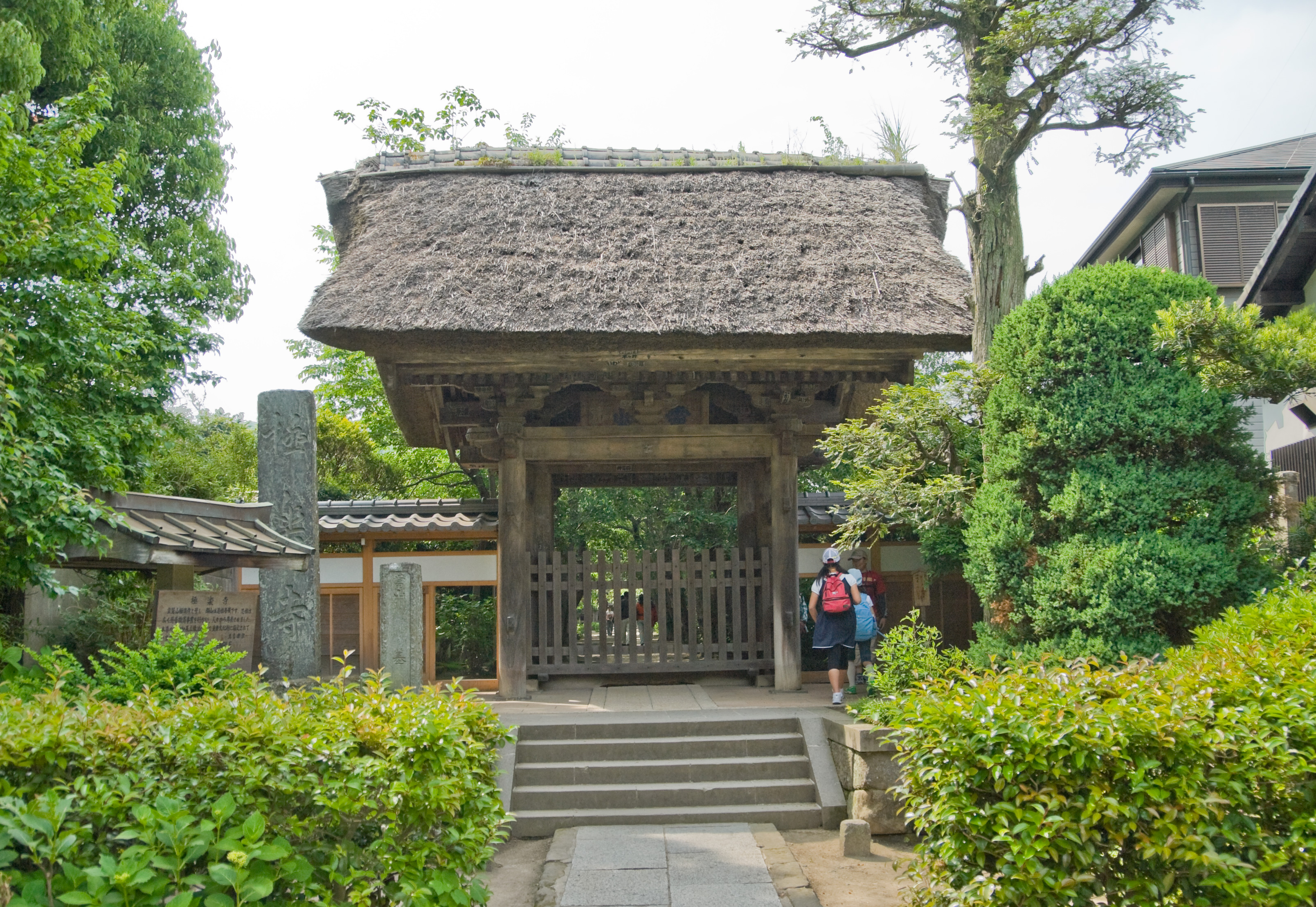
Near Gokurakuji Station on the Enoden line, across a small bridge, stands a thatched-roof temple gate. This is Gokuraku-ji, a temple founded in the middle of the Kamakura period by Hojo Shigetoki, a member of the Hojo clan.
The one who made this temple grow was a monk named Ninsho. He had studied at Saidai-ji in Nara and, together with his teacher Eison, placed the care of the sick and the poor at the heart of his religious practice. Ninsho traveled from Nara down to the Kanto region and in time came to this valley in Kamakura.
Ninsho was not a monk who only prayed. Within the temple grounds, it is said, there were a hospice for the sick, a place for giving out medicine, and even a place for treating sick horses. He opened roads, built bridges and dug wells. The Gokurakuji-zaka pass, which links Kamakura to the lands to the west, is also said to have been improved by Ninsho.
In the temple grounds there remains a large stone bowl said to have been used to grind medicine. There is also a stone mill called the Thousand-Cup Tea Mill; tradition says it ground enough tea for a thousand people at a time. In those days, tea was taken as medicine.
In spring, cherry trees bloom around the temple gate. Across the small grounds drift the calls of birds and, now and then, the sound of a passing Enoden train.
The sick and the poor came over the pass to this valley. The slope that Ninsho improved still runs down from Gokuraku-ji to Hase, and on to the sea.