Multilingual AI audio guide exhibit on WOUDiO (PWA). WOUDiO pioneered the world’s first audio guide platform with built-in donation: listeners can support the cultural venue without leaving the listening experience. The text below is the localized description, details, and narration script for this audio guide stop.
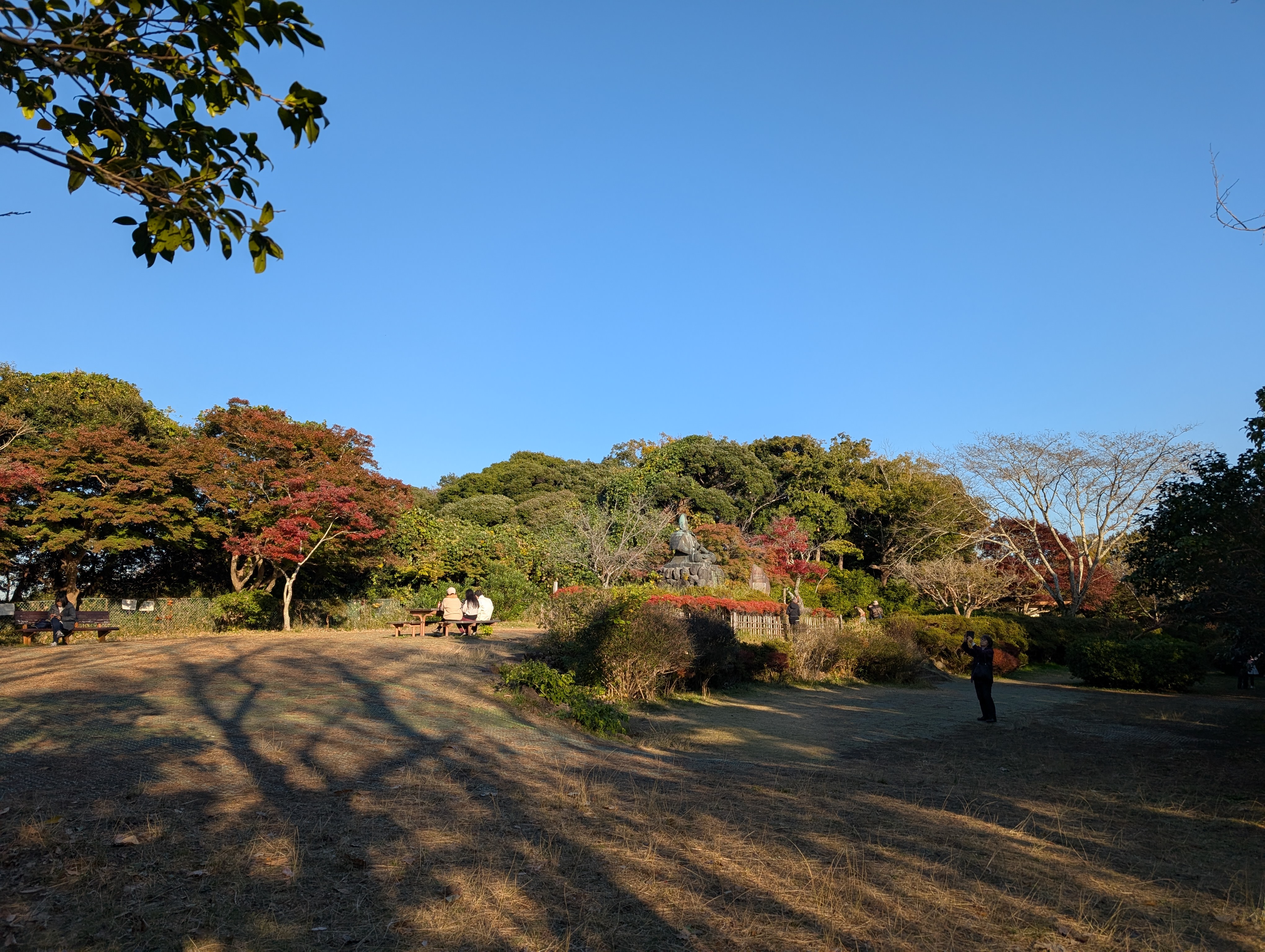
Kamakura is enclosed by hills on three sides, north, east and west, and opens to the sea only on the fourth, to the south. From the ridge of Mount Genji, that shape is easy to read. Between the trees, the valley held in the arms of the hills and, beyond it, the sea at Yuigahama come into view as one continuous scene.
Minamoto no Yoritomo chose this land for his capital because it was easy to defend. Any enemy would have to come over the hills or in from the sea. The ridges are steep, and the routes a large army could cross were few.
The Minamoto had ties to this land even before Yoritomo. His ancestor Minamoto no Yoriyoshi had enshrined the god Hachiman here, and his father, Yoshitomo, is said to have kept a residence here as well. Yoritomo raised an army in Izu, was defeated once and fled across the sea, then built up his strength in Boso, passed through Musashi, and entered this valley. A man who had crossed the sea in defeat came over the hills to become master of a capital.
Land that is easy to defend is also land that is hard to live in. Flat ground was scarce, and as the population grew, houses and temples pushed deep into the narrow valleys between the hills, the yato. And a capital ringed by hills was pressed to cut through those hills to open roads to the outside world.
The wind that crosses the ridges blows up from the sea and falls quiet deep inside the yato.
The roads carved through the hills, the kiridoshi, still lead out of the capital from many points along these ridges.