Multilingual AI audio guide exhibit on WOUDiO (PWA). WOUDiO pioneered the world’s first audio guide platform with built-in donation: listeners can support the cultural venue without leaving the listening experience. The text below is the localized description, details, and narration script for this audio guide stop.
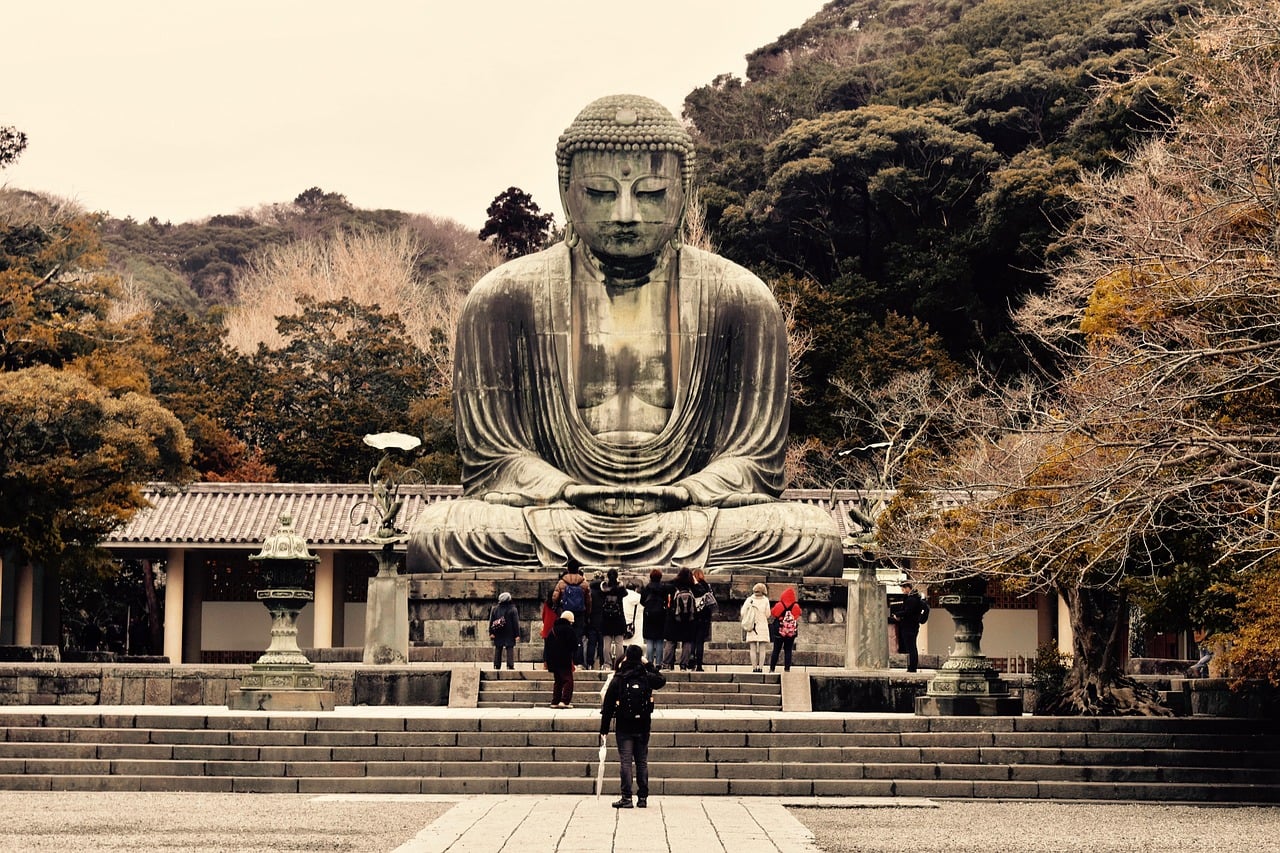
In the valley of Hase, a great bronze Buddha sits. The Great Buddha of Kamakura. About eleven meters tall, it is a statue of Amida Buddha.
The records say work on the Great Buddha began in 1252. The funds were gathered by a monk named Joko. It is said he sought donations not only from people of high rank but a little at a time from a great many people, and so brought the Great Buddha into being.
Long ago, the Great Buddha was housed inside a great hall. But that building was destroyed again and again by storms and earthquakes, and during the Muromachi period it was lost and never rebuilt. One theory holds that it was swept away by a tsunami after the great earthquake of the Meio era, but nothing is known for certain. For some five hundred years since, the Great Buddha has sat on without a roof, in the rain and the salt wind. Huge foundation stones still in the temple grounds tell of how large the hall once was.
The Meiji-era poet Yosano Akiko wrote of this Buddha: "Kamakura: though he is a holy Buddha, Shakyamuni is a handsome man, amid the summer trees." But the Great Buddha is not Shakyamuni. It is Amida. A famous poem, with a famous mistake.
Across the bronze skin, a patina of green, etched by rain and wind, spreads in patches. Across the back run a number of horizontal seam lines, left from the casting. They are the traces of the gifts of many people, cast a little at a time and stacked one upon another.
Above the Buddha that lost its roof, the sky still stretches wide. From the valley of the Great Buddha, a road crosses the Daibutsu Kiridoshi pass and continues on beyond the hills.