Multilingual AI audio guide exhibit on WOUDiO (PWA). WOUDiO pioneered the world’s first audio guide platform with built-in donation: listeners can support the cultural venue without leaving the listening experience. The text below is the localized description, details, and narration script for this audio guide stop.
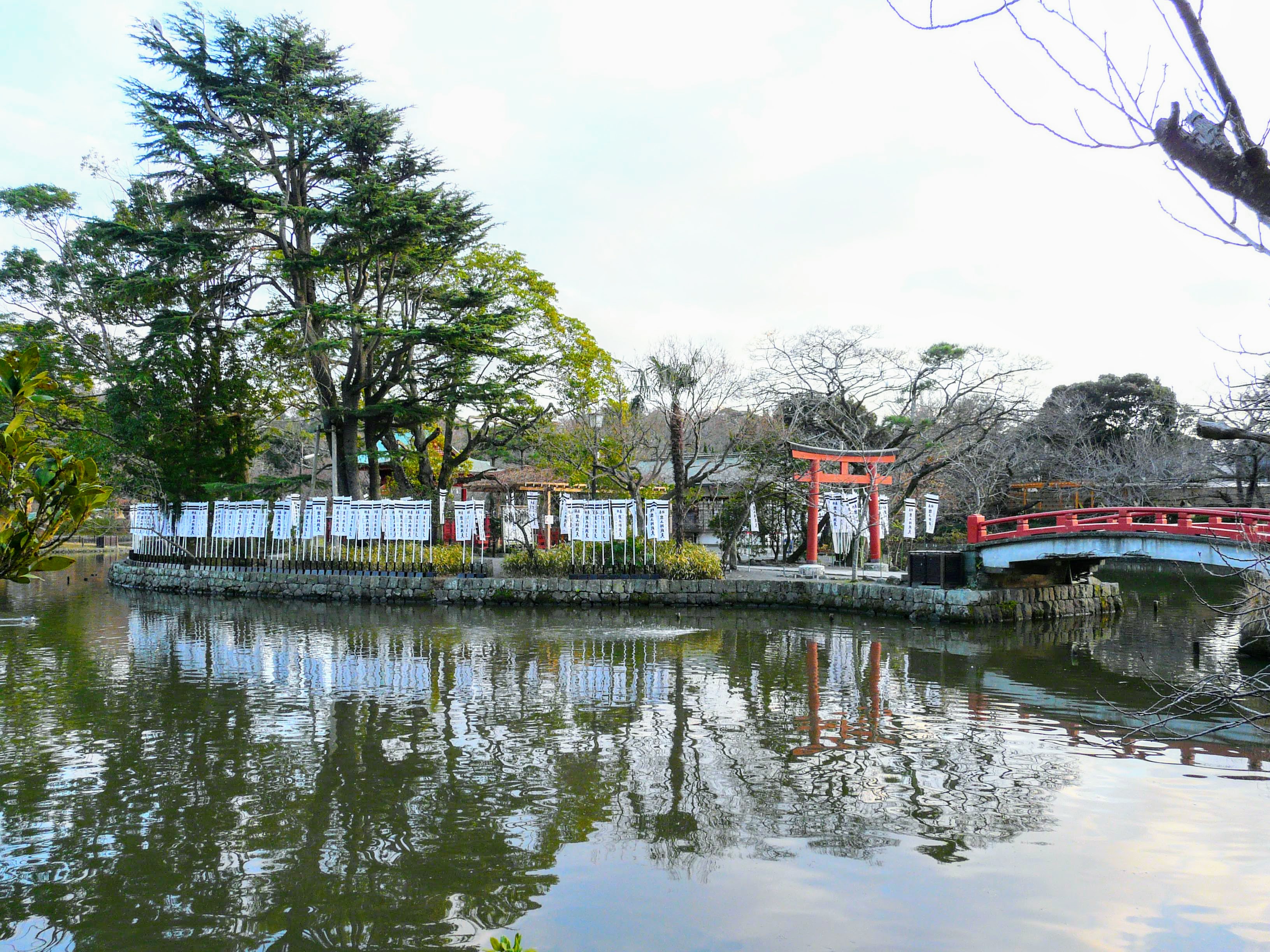
On either side of the approach to Tsurugaoka Hachimangu lie two large ponds. This is the Genpei Pond, said to have been made at the wish of Hojo Masako, Yoritomo's wife.
The arched Taiko Bridge on the approach divides it into an eastern pond and a western pond. The eastern pond holds three islands; the western pond, four.
These numbers, it has long been said, carry a meaning. The eastern pond stands for the Minamoto, the Genji; the western pond for the Taira, the Heike. In Japanese, three, san, sounds like the word for birth, and so stands for flourishing. Four, shi, sounds like the word for death, and so stands for ruin. It is also said that white lotuses were once planted in the Minamoto pond and red lotuses in the Taira pond. The Minamoto banners were white, the Taira banners red. The colors of war, so the story goes, reached even the flowers of the ponds.
Where history ends and later storytelling begins, no one can say. Yet in the capital of the house that fought its way through the Genpei War, a story has been handed down of both the victors and the vanquished being left behind as ponds. That the story was passed on at all shows the shape this city's memory has taken.
On summer mornings, lotus leaves spread across the whole surface of the ponds, and the flowers open. The wind coming down from the hills stirs small ripples on the water. On an island in the western pond stands a shrine to Benzaiten, goddess of water.
Beyond the Taiko Bridge, the path between the two ponds passes the dance pavilion and continues on to the Great Stone Steps.