Multilingual AI audio guide exhibit on WOUDiO (PWA). WOUDiO pioneered the world’s first audio guide platform with built-in donation: listeners can support the cultural venue without leaving the listening experience. The text below is the localized description, details, and narration script for this audio guide stop.
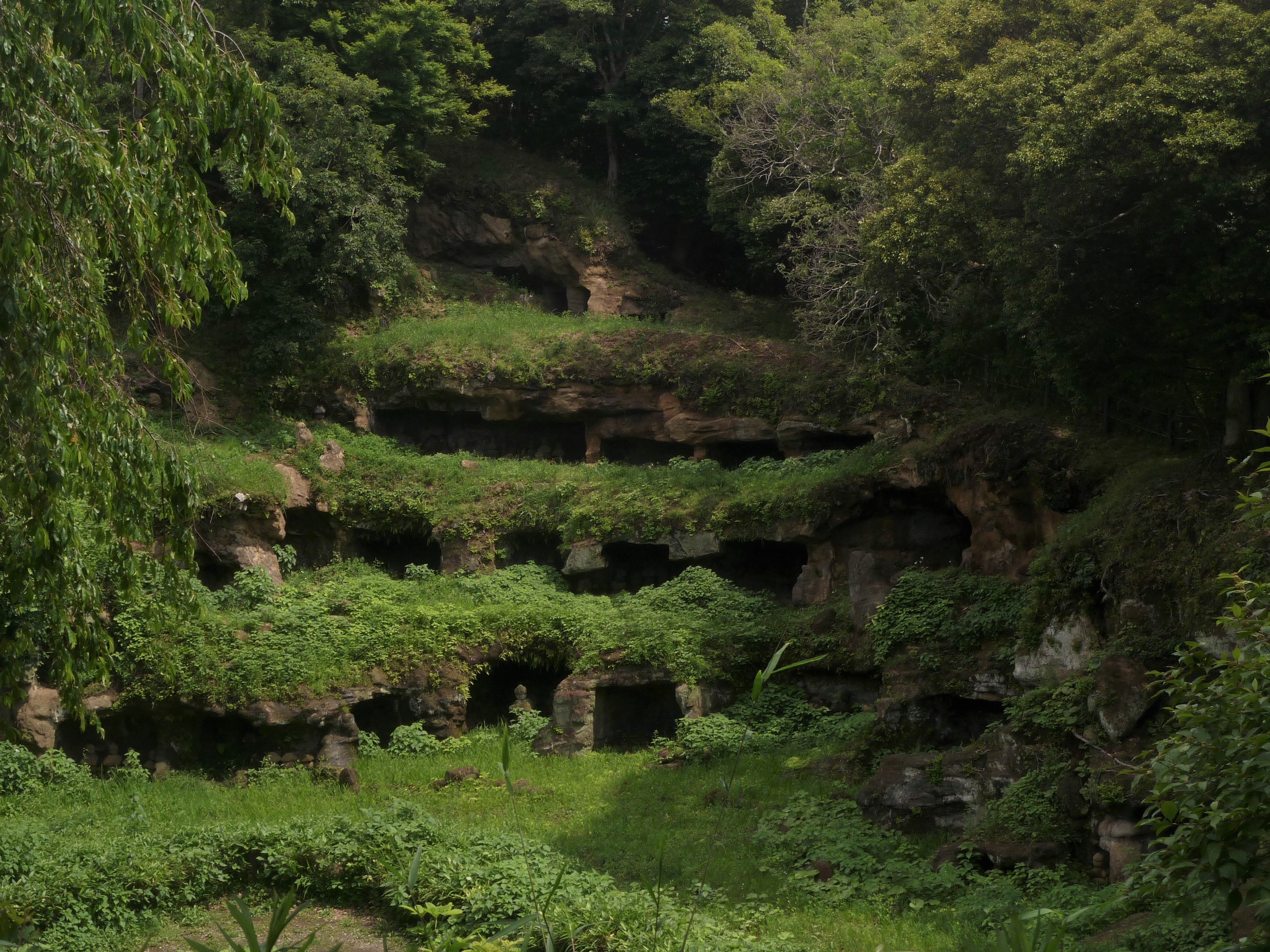
In the cliffs of Kamakura's hills, square openings have been carved out, row upon row. These are yagura, tombs and memorial chambers cut into the rock between the Kamakura and Muromachi periods.
Why dig graves into cliffs? In Kamakura, surrounded by hills on three sides, flat land was scarce. Warriors, monks and the people who kept pouring into the city soon filled the valleys. So people looked for places to lay their dead inside the cliffs of the hills.
The rock of Kamakura's hills is formed from sand and mud pressed together, and it is fairly soft. Precisely because it can be cut with a chisel, this land gave rise to both the kiridoshi passes and the yagura. The skill of opening roads and the skill of carving tombs spread from the same rock and the same tools.
At the Mandarado Yagura cluster, deep in the hills of Nagoe, more than a hundred yagura are stacked tier upon tier along the cliff. At the back of the openings stand five-tiered stone stupas and small stone Buddhas, and some figures are carved right into the walls. Many people, whose names are lost, left their prayers here.
Water running down the face of the cliff keeps the mouths of the openings always damp. Over eight hundred years, the carved corners have worn round, and moss and ferns are slowly returning the rock to the mountain.
The last resting places of the people who lived in the capital still run from deep in the yato valleys, along the ridges, and on into the hills.