Multilingual AI audio guide exhibit on WOUDiO (PWA). WOUDiO pioneered the world’s first audio guide platform with built-in donation: listeners can support the cultural venue without leaving the listening experience. The text below is the localized description, details, and narration script for this audio guide stop.
Deep in a valley in Kita-Kamakura, at the top of mossy stone steps, stands Jochi-ji. It was ranked fourth among the Five Great Zen Temples of Kamakura, and was founded in the latter half of the Kamakura period by members of the Hojo clan.
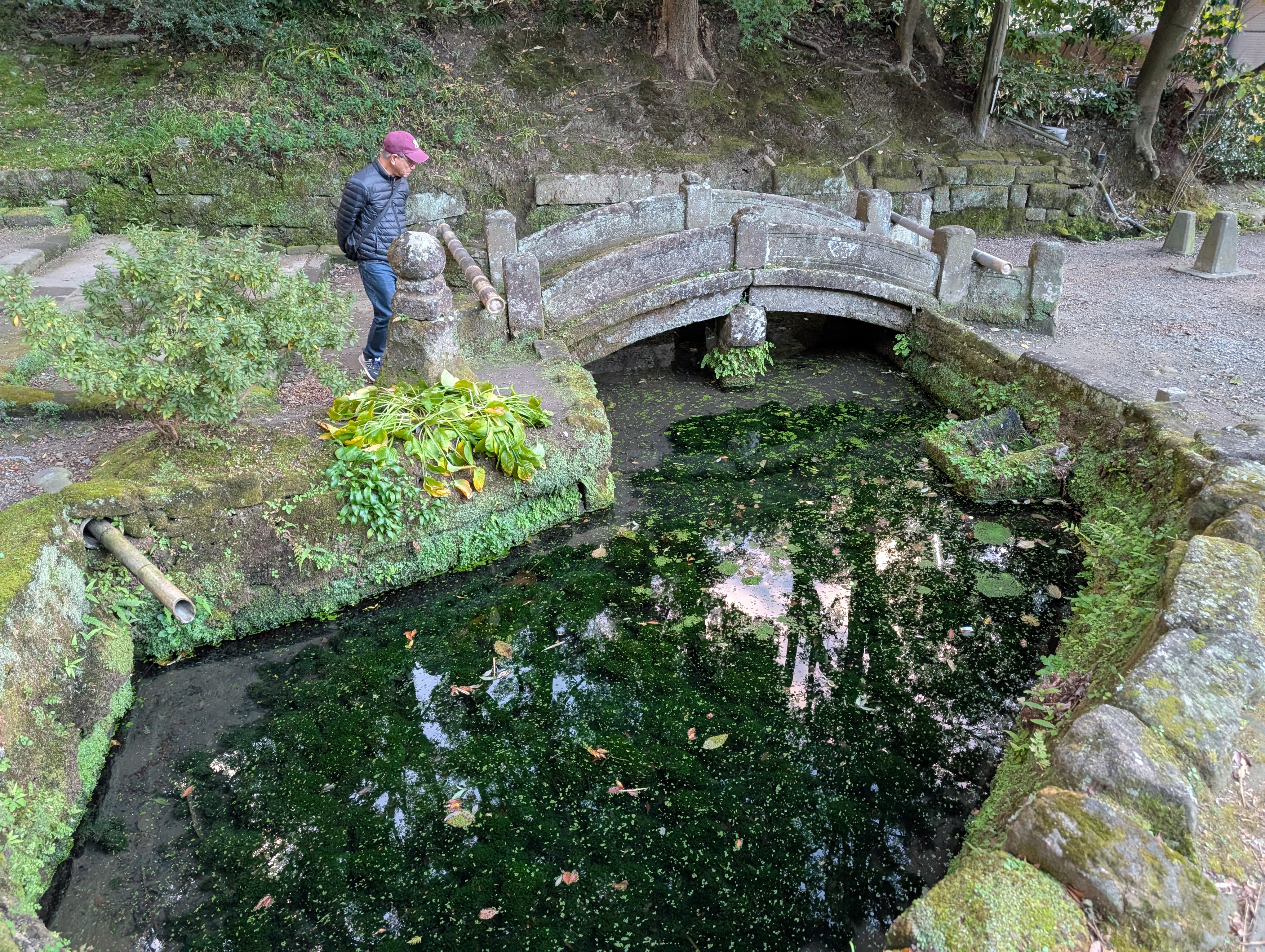
At the entrance to the approach is a small well brimming with spring water. The Kanro no I, the Well of Sweet Dew, one of the Ten Wells of Kamakura. In Kamakura, where flat land was scarce, good water was precious. Part of the reason a temple was built deep in this valley was the water that welled up from the hills.
The gate at the top of the steps is a bell-tower gate, with a bell hung in its upper story. Modeled on the architecture of Song-dynasty China, the gate itself bears the weight of the bell, and people pass beneath that bell to enter the temple grounds.
At this temple, garden, buildings and hillside flow into one another without borders. Trees left not too neatly trimmed, moss and fallen leaves, yagura tombs carved into the cliffs. Zen gardens have been made less by adding than by paring away. Here, the very shape of the valley was kept as the garden.
In the cliff at the back of the grounds sits a stone statue of Hotei, the god of good fortune. His belly, stroked by countless visitors, shines with a smooth gloss.
Apart from the sound of wind passing through the tops of the cedars, the valley holds almost no sound at all.
From the hill behind the temple, a hiking trail begins, climbing along the ridge. The trail crosses the hills to Mount Genji, and on to the Hase valley, home of the Great Buddha.