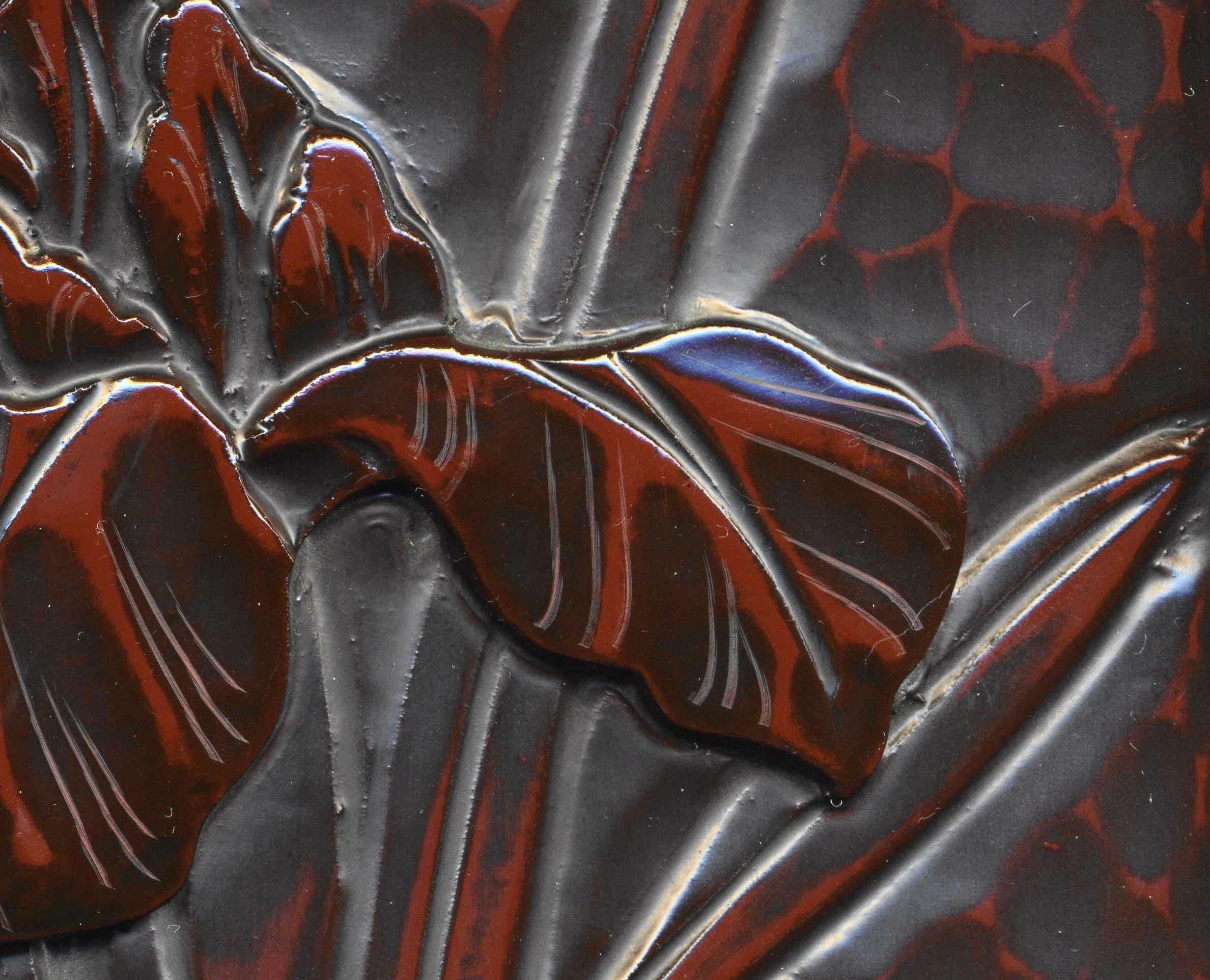
The town of Kamakura is home to a handcraft that has lasted for nearly eight hundred years. Kamakura-bori, a craft in which patterns are carved into wood and then coated with layer upon layer of lacquer.
It began in the Kamakura period. From Song-dynasty China, together with Zen Buddhism, came vessels carved from thickly layered lacquer. The Buddhist sculptors of Kamakura, it is said, set out to express them in carved wood, and began making ritual implements and incense boxes for use in temples. The form of a vessel that had crossed the sea became, in the hands of Kamakura's craftsmen, a skill of this land.
In the early Meiji era, amid the movement to separate Shinto gods from the Buddha, orders from temples fell sharply. The families of Buddhist sculptors, on the verge of losing their work, began carving decoration into the tools of daily life: trays, saucers for teacups, hand mirrors. A skill made for temples moved to the family dining table. The more it is used, the deeper the color of the lacquer grows, and the edges of the carving take on a soft sheen. That is a Kamakura-bori vessel.
Near Kamakura Station there is a market where Kamakura's farmers lay out vegetables from their own fields. It has been running since the early Showa era, and locally it is known as Renbai. Even in the small fields squeezed between the hills and the sea, vegetables grow in soil that takes the salt wind. On the stalls sit carrots of every shape, daikon radishes still dusted with soil and the leafy greens of the season. The first bite raw, the next quickly boiled, the last with nothing but salt. In that order, the sweetness of the vegetable itself grows clearer, little by little.
The skill of the Buddhist sculptors, and the fields of the farmers. The handwork of this town carries on today, on a small piece of land between the hills and the sea.
From the market, the road returns to Wakamiya Oji, stretching toward the sea, and toward Hachimangu.