Multilingual AI audio guide exhibit on WOUDiO (PWA). WOUDiO pioneered the world’s first audio guide platform with built-in donation: listeners can support the cultural venue without leaving the listening experience. The text below is the localized description, details, and narration script for this audio guide stop.
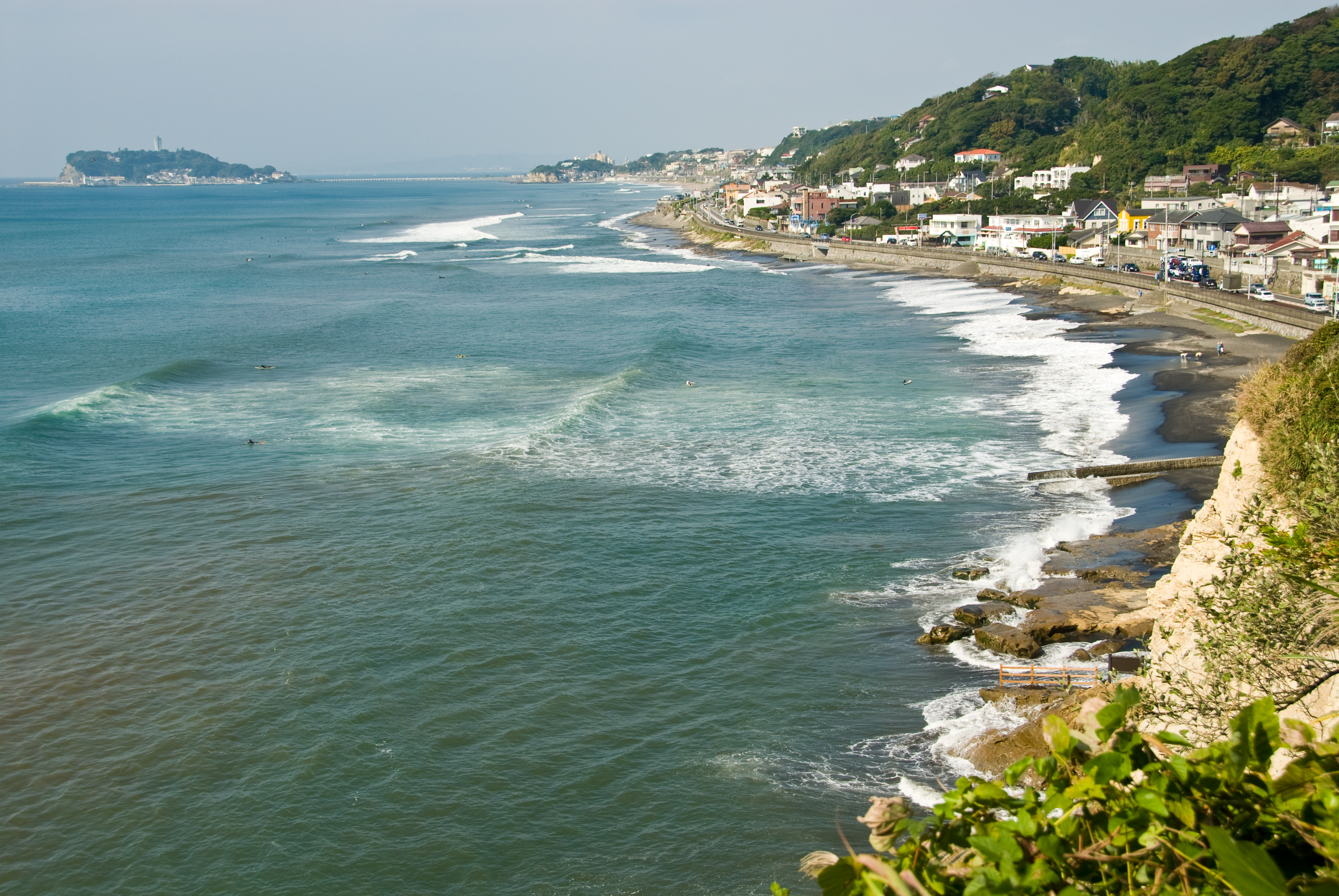
From Inamuragasaki to Koshigoe, a sandy beach runs for about three kilometers. Shichirigahama, the Seven-Ri Beach. There are several theories about where the name comes from; one says it was counted in an old, shorter unit of ri.
In January 1910, a boating accident happened off this shore. A boat carrying students of Zushi Kaisei Middle School and a young boy, twelve in all, capsized in the strong winds and waves of winter, and not one of them came home.
After the accident, a song was written to mourn their deaths: Mashiroki Fuji no Ne, The Pure White Peak of Fuji. Written by a teacher, Misumi Suzuko, the song was sung at the memorial and in time spread throughout the country. On the cape at Inamuragasaki stands a memorial statue of two brothers holding close to each other.
More than a hundred years have passed, and today Shichirigahama is known as a surfing beach. On clear winter mornings, boards dot the water, waiting for waves, with Enoshima and Mount Fuji side by side beyond them.
The same sea has at one time taken young lives, and at another given people play and joy. The sound of the waves carries the memory of both.
The beach ends just past the fishing harbor at Koshigoe, and from there, the road continues on to the bridge that crosses to Enoshima.