Multilingual AI audio guide exhibit on WOUDiO (PWA). WOUDiO pioneered the world’s first audio guide platform with built-in donation: listeners can support the cultural venue without leaving the listening experience. The text below is the localized description, details, and narration script for this audio guide stop.
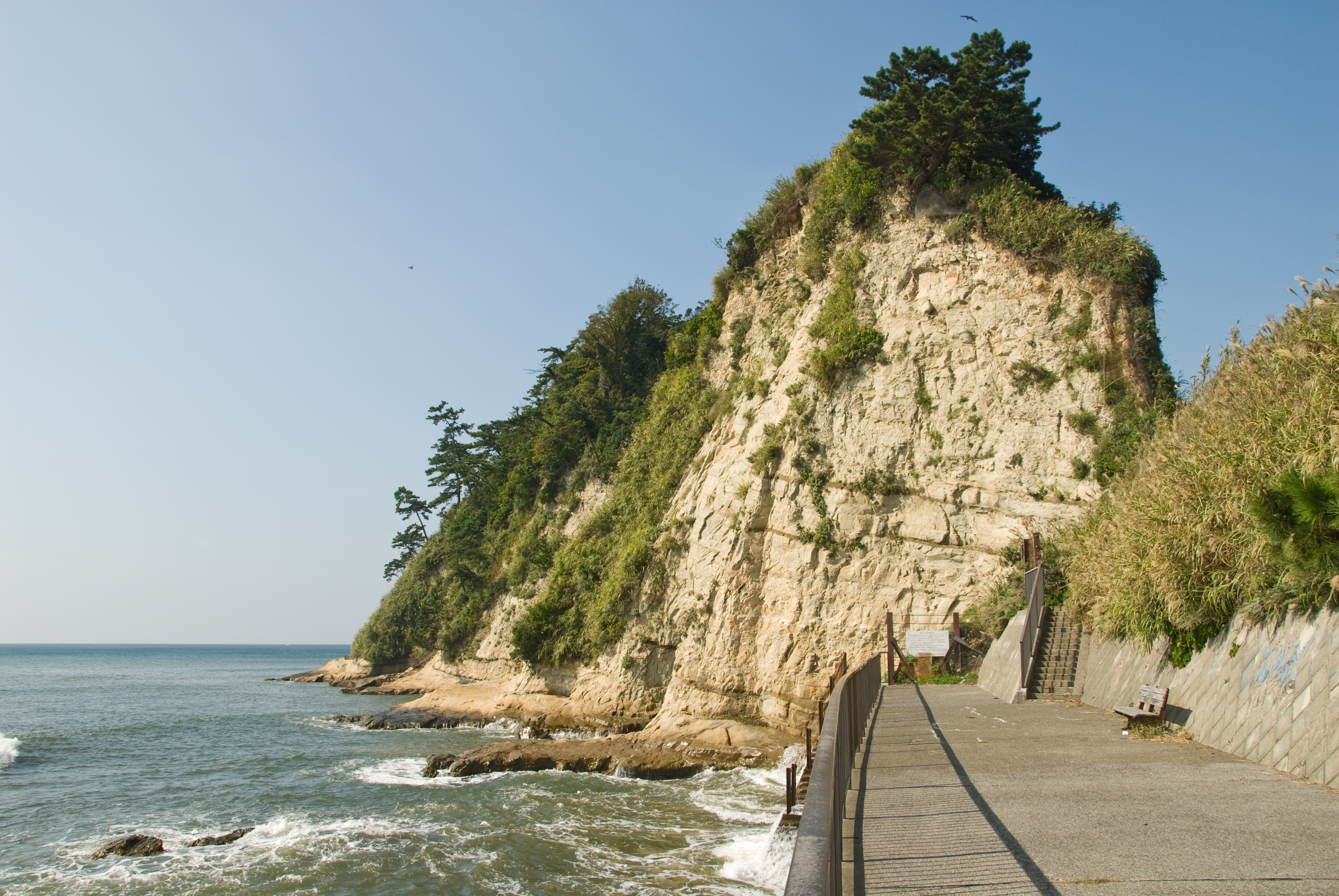
Between Yuigahama and Shichirigahama, a small cape juts out into the sea. Inamuragasaki. The name is said to come from its shape, like an inamura, a stack of harvested rice sheaves.
In 1333, Nitta Yoshisada, marching on Kamakura from the northern Kanto, found his way blocked at this cape. Its cliffs dropped straight into the sea, leaving no road for an army to pass. The Taiheiki chronicle tells how Yoshisada cast his golden sword into the sea and prayed, and the tide drew far out, and his army crossed the exposed beach and stormed into Kamakura.
From the tip of the cape, Enoshima floats on the sea to the west, and on clear days Mount Fuji stands beside it in the distance. From the observation lighthouse on Enoshima, too, this cape appears small, off to the east. Across the bay, the two places have long served as landmarks for each other. Pilgrims heading for Enoshima and travelers bound for Kamakura alike passed back and forth along the beach below this cape.
The sand on the cape's beach has a dark tint, because it contains a great deal of iron sand.
In the evening, as the sun sinks toward Mount Fuji, the silhouettes of Enoshima and Fuji stand side by side against a madder-red sky.
From the tip of the cape, the coastal road runs west, past Shichirigahama, to Enoshima.