Multilingual AI audio guide exhibit on WOUDiO (PWA). WOUDiO pioneered the world’s first audio guide platform with built-in donation: listeners can support the cultural venue without leaving the listening experience. The text below is the localized description, details, and narration script for this audio guide stop.
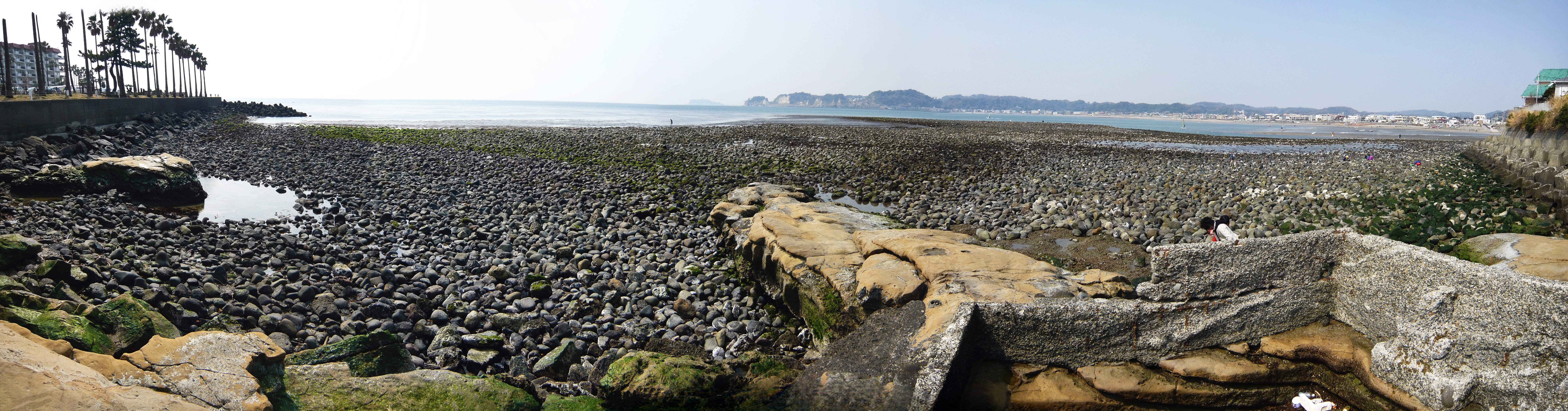
At the eastern end of Zaimokuza Beach, when the tide goes out, a cluster of rounded stones emerges from the sea. This is Wakaejima, the remains of a harbor built in 1232. It is said to be the oldest surviving harbor works in Japan.
The sea off Kamakura is shallow far out from shore, and large ships could not come close to the beach. Transferring cargo to small boats offshore took great effort, and ships sometimes ran aground. So a monk named Oamidabutsu petitioned to build a harbor, and the regent Hojo Yasutoki gave his support.
According to tradition, people carried rounded stones from the Sagami River, the Sakawa River, the coast of Izu and elsewhere, and piled them up in the sea to make an island that would hold back the waves. The records say the work was finished in only about a month. Ships from all over the country called at the harbor that resulted, and timber, rice and goods from Song-dynasty China were brought ashore. The place name Zaimokuza, too, is said to come from the za, the guild, of the merchants who dealt in zaimoku, timber.
Washed by nearly eight hundred years of waves, the stones have lost their edges and are now covered in seaweed and shells. When the tide comes in, the cluster of stones slips back beneath the sea.
Beyond the harbor remains that appear only at low tide, the sea lanes that ships once traveled stretch out into the open waters of Sagami Bay.