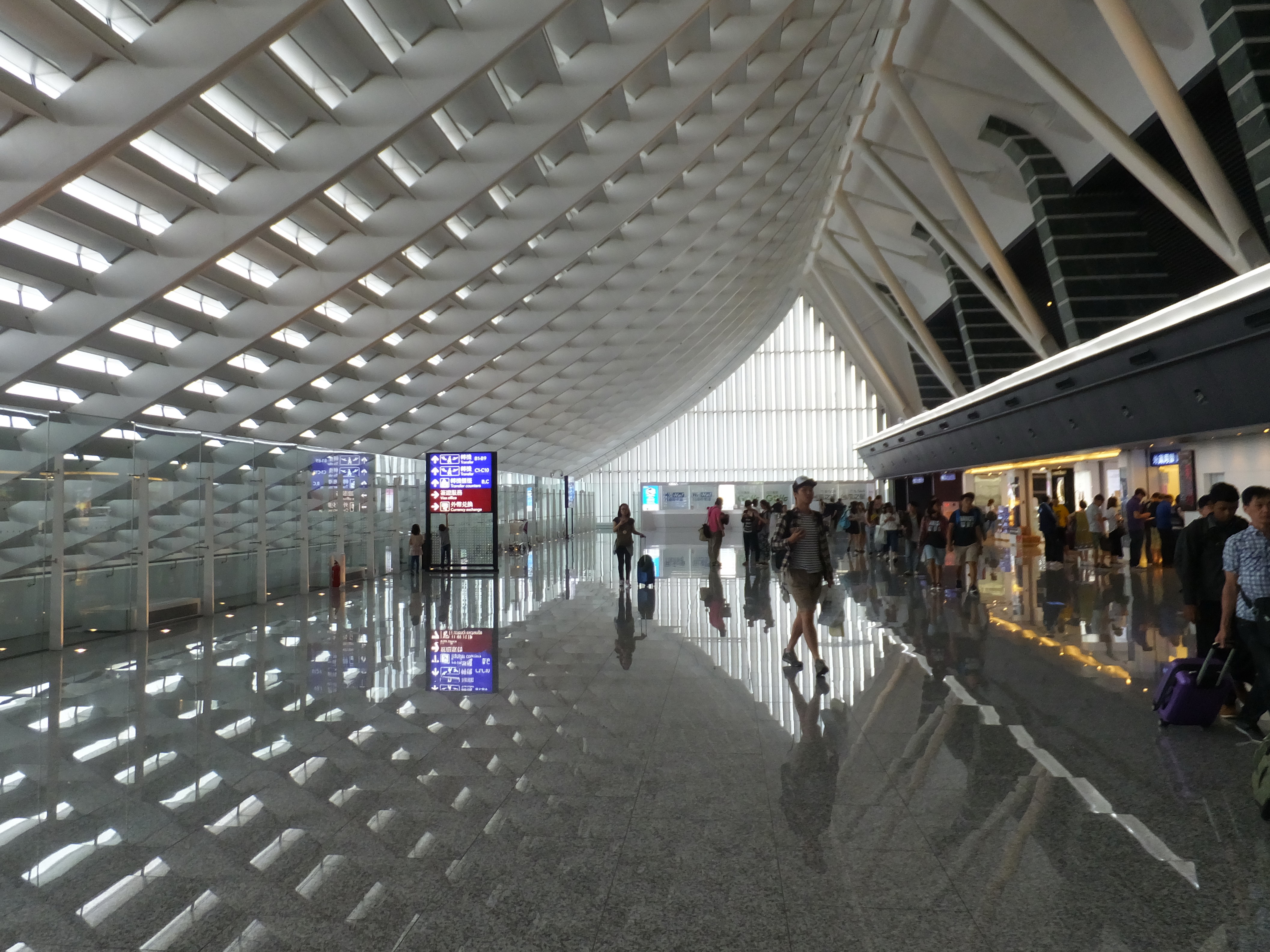
Before this airport opened, this place was the edge of a plateau swept by sea winds, a land dotted with fields and ponds that held water. For many travelers,…
Multilingual AI audio guide exhibit on WOUDiO (PWA). WOUDiO pioneered the world’s first audio guide platform with built-in donation: listeners can support the cultural venue without leaving the listening experience. The text below is the localized description, details, and narration script for this audio guide stop.
Before this airport opened, this place was the edge of a plateau swept by sea winds, a land dotted with fields and ponds that held water.
For many travelers, Taoyuan is a "place to pass through." They land, and head straight on to Taipei. On the day of their return, they pass through again.
And yet, this name has an origin. Taoziyuan — "Peach Orchard." It is said to have been called so because peach trees once grew abundantly across this stretch of land.
This land has always welcomed people. In the mountains, the Atayal people have lived since ancient times. In the eighteenth century, people from Fujian and Guangdong crossed the sea to open up the plateau. After the war, soldiers and their families came from the mainland; people unable to return from the Yunnan-Burma border settled here too; and in recent years, workers from Southeast Asia have come to make this city their home.
The airport, too, is an extension of this. It opened in 1979 as Chiang Kai-shek International Airport, and in 2006 was renamed Taoyuan International Airport.
This land has a certain habit. Because water is scarce, it is gathered and stored. Because people come, they are welcomed.
Looking down from an airplane window, you can see the plateau dotted with small ponds, square and round, catching the light. That is the first story of this land.