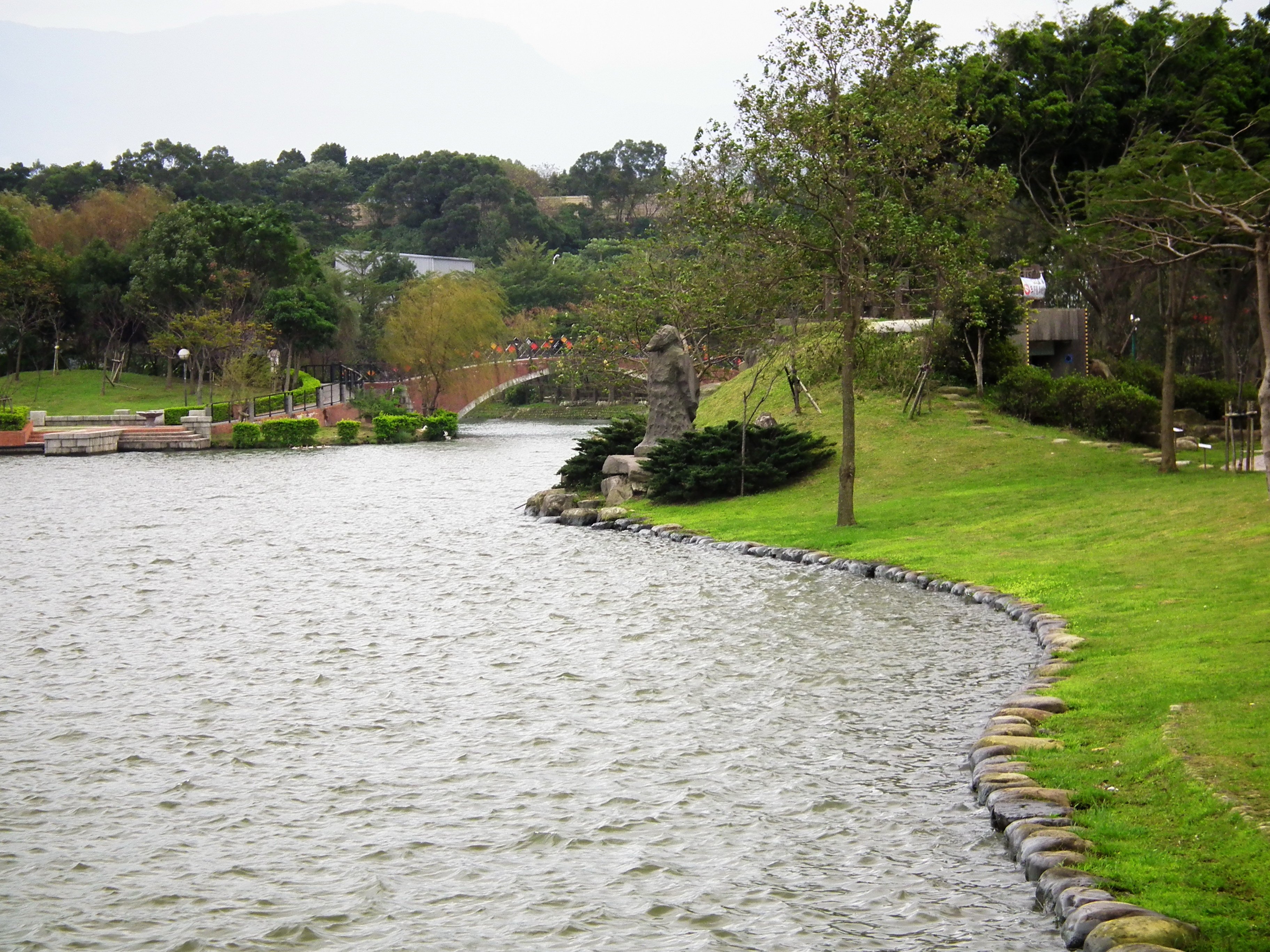
This pond was a great reservoir, built by the farmers of the plateau to gather the rain. The name of the town Longtan comes from this very pond. There is a…
Multilingual AI audio guide exhibit on WOUDiO (PWA). WOUDiO pioneered the world’s first audio guide platform with built-in donation: listeners can support the cultural venue without leaving the listening experience. The text below is the localized description, details, and narration script for this audio guide stop.
This pond was a great reservoir, built by the farmers of the plateau to gather the rain.
The name of the town Longtan comes from this very pond. There is a legend that a dragon dwells within its waters, and it is said that this became the place's name.
Embankment ponds are built so that their water sits a little higher than the surrounding fields. Open the sluice gate, and the water flows down to the paddies under its own weight. In an age without pumps, this simple difference in height was, in itself, the whole system of irrigation.
Sharing the pond's water required careful arrangement — which field would receive it, when, and how much. For each pond there was a keeper of the water, who saw to it that the order was followed. In years of drought, it is said, disputes over water sometimes arose.
This area is also home to many Hakka people. On this hilly plateau, they gathered water and raised rice — a way of life that has continued across many generations.
Nowadays, along the pond's edge, one sees people out for a morning walk, others casting a fishing line. In the evening, on days when there is no wind, the trees of the far shore are mirrored clearly upon the water's surface.
On a plateau that waited for rain, the first thing its people built was a place to keep the water.