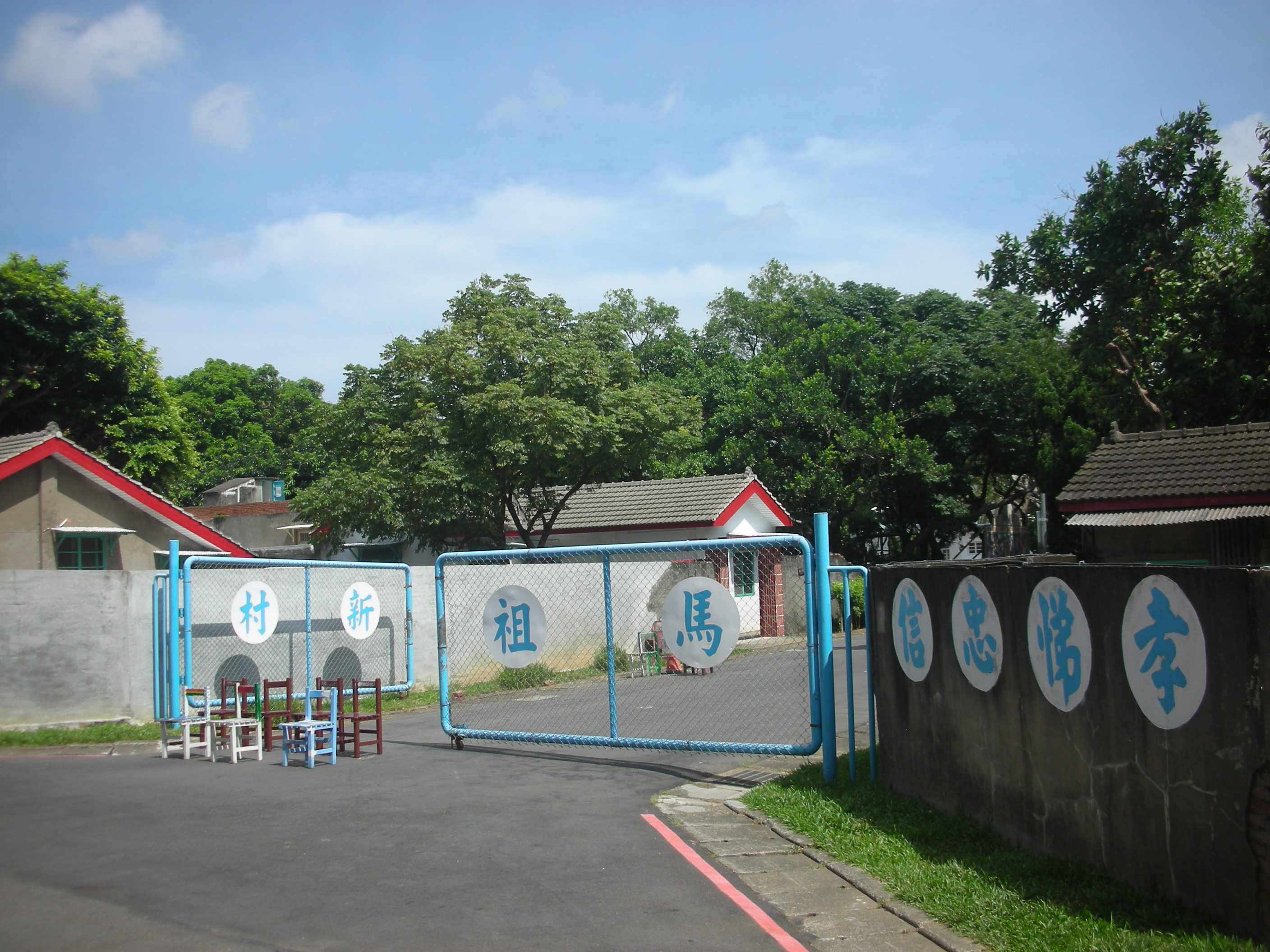
This row of low, single-story houses was built after the war as a village meant to house soldiers and their families — but only "for a while." Around 1949,…
Multilingual AI audio guide exhibit on WOUDiO (PWA). WOUDiO pioneered the world’s first audio guide platform with built-in donation: listeners can support the cultural venue without leaving the listening experience. The text below is the localized description, details, and narration script for this audio guide stop.
This row of low, single-story houses was built after the war as a village meant to house soldiers and their families — but only "for a while."
Around 1949, following the Nationalist government's defeat in the Chinese Civil War, vast numbers of soldiers and their families crossed from the mainland to Taiwan. The dwellings built for them across the island became known as juancun — military dependents' villages.
Ma Tsu New Village was one such village, located in Zhongli. Its name comes from the Matsu Islands, scattered across the Taiwan Strait.
The houses of a juancun were built on the assumption that their residents would one day return to the mainland. That is why they were so simply made — thin walls, low roofs. But the day of return never came.
The residents came from many different provinces — Sichuan, Shandong, Hunan, Guangdong. Along a single lane, many dialects mingled, and many different kitchen aromas drifted together. It is said that some of the beef noodle soups so familiar in Taiwan today first spread from the kitchens of villages like this one.
Many such villages have since been torn down, but Ma Tsu New Village was preserved, and today it serves as a cultural site.
A home built to be temporary still stands here, more than seventy years later.