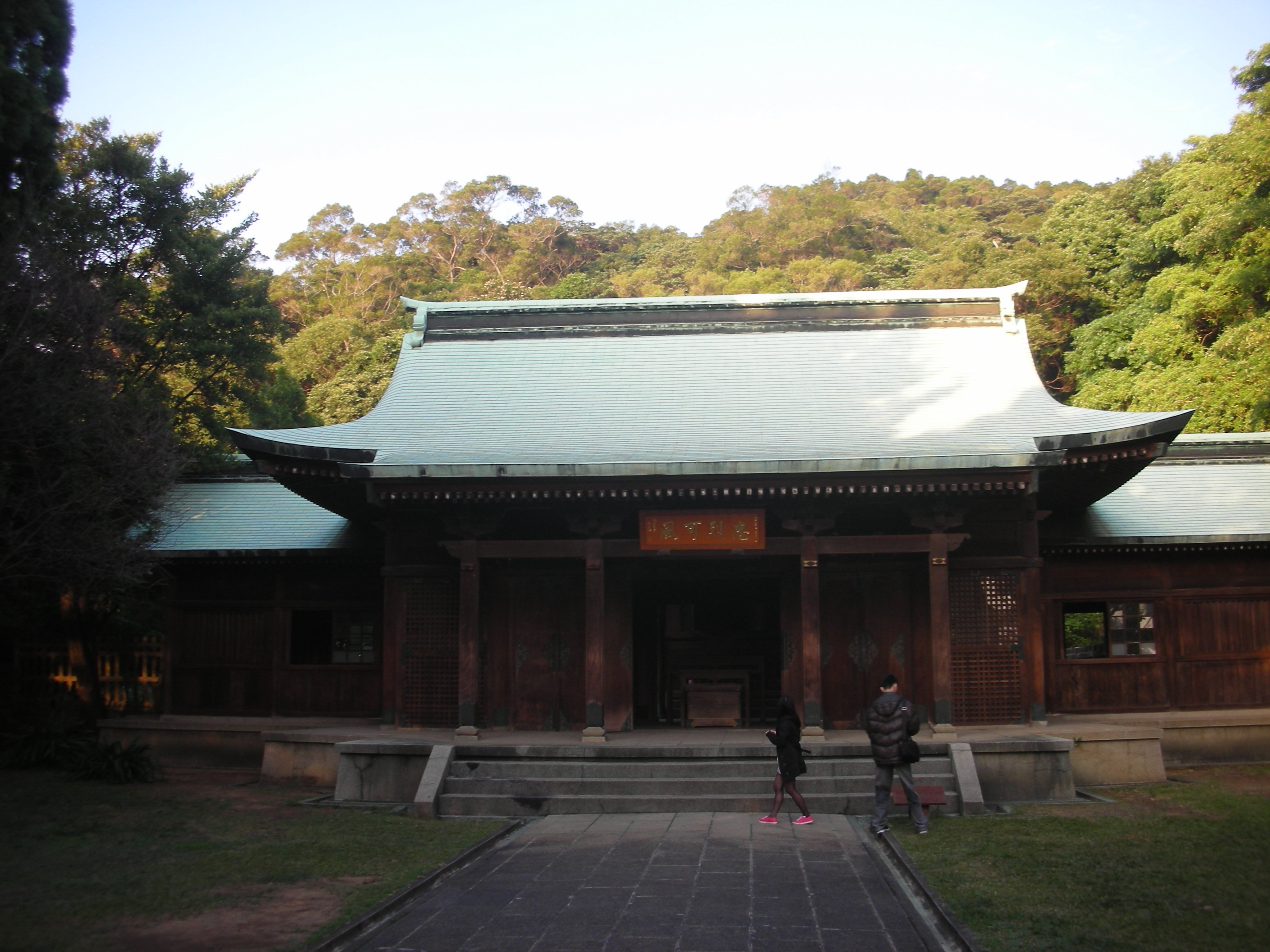
The shrine hall atop this hill was built during the period of Japanese rule as a Shinto shrine, and after the war, it came to be used as a Martyrs' Shrine…
Multilingual AI audio guide exhibit on WOUDiO (PWA). WOUDiO pioneered the world’s first audio guide platform with built-in donation: listeners can support the cultural venue without leaving the listening experience. The text below is the localized description, details, and narration script for this audio guide stop.
The shrine hall atop this hill was built during the period of Japanese rule as a Shinto shrine, and after the war, it came to be used as a Martyrs' Shrine honoring the war dead.
Built in 1938, Taoyuan Shrine preserves the style of Japanese shrine architecture almost exactly as it was. The main hall is framed in cypress wood, and its roof traces a gentle curve. While most shrines built in Taiwan were demolished after the war, this building survived precisely because it came to be used as a Martyrs' Shrine.
The stone steps of the approach, the guardian lion-dogs, the stone lanterns—behind this familiar shrine facade now rest the martyred heroes of the Republic of China. The building itself remains unchanged, yet what is enshrined within it has been exchanged between two eras.
In the 1980s, a plan arose to tear the building down as a symbol of Japanese colonial rule. In response, voices rose in defense of its architectural value, and after much debate, its preservation was decided upon.
How one views this building differs from person to person. Some see it as a memory of colonial rule, while others accept it as part of Taiwan's own history.
Today it is open to the public as a cultural park, and within its grounds, one can see young people dressed in yukata, taking photographs.
The same pillars, even now, continue to support the prayers of two different eras.