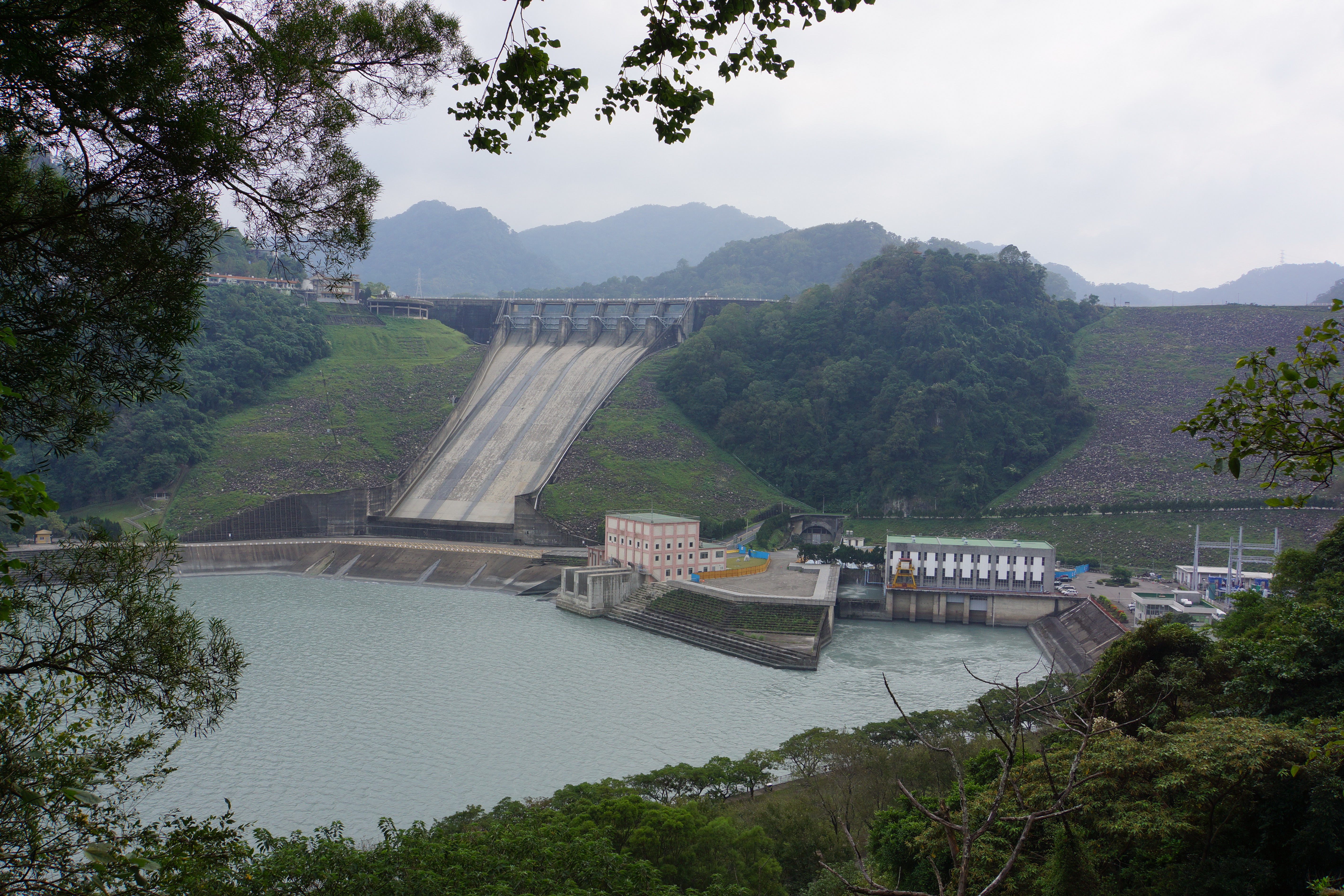
Beneath this lake's surface once lay a deep valley through which the Dahan River flowed. Shimen Reservoir was completed in 1964. Where the Dahan River emerges…
Multilingual AI audio guide exhibit on WOUDiO (PWA). WOUDiO pioneered the world’s first audio guide platform with built-in donation: listeners can support the cultural venue without leaving the listening experience. The text below is the localized description, details, and narration script for this audio guide stop.
Beneath this lake's surface once lay a deep valley through which the Dahan River flowed.
Shimen Reservoir was completed in 1964. Where the Dahan River emerges from the mountains onto the plain, the rocks on both banks pressed together like a gate — and it is from this that the name "Shimen," meaning "Stone Gate," was born.
From atop the dam, you can see the lake on one side, and on the other, far below, the river still flowing. The difference in height between them is the very weight of water this dam holds back.
The dam was built to carry water to the Taoyuan plateau, to prevent floods, and to generate electricity. More than thirty years had passed since the Taoyuan Canal first drew water from the river — and now, the river itself would be dammed. Its construction was a major undertaking for postwar Taiwan, carried out with the support of American aid.
With the creation of the lake, the settlements of the valley sank beneath the water, and the people who had lived there were forced to relocate.
After heavy rain, the lake's surface turns muddy brown, as soil washes down from the mountains. Even as the dam holds back water, it also holds back earth.
Along the lake's shore, restaurants serving live fish line the waterside. Enjoying the lake's fish fried, simmered, or made into soup, in countless different ways, is one of the great pleasures of this place.
The story of water, which began in the ponds of the plateau, has now traced its way back here, into the very embrace of the mountains.