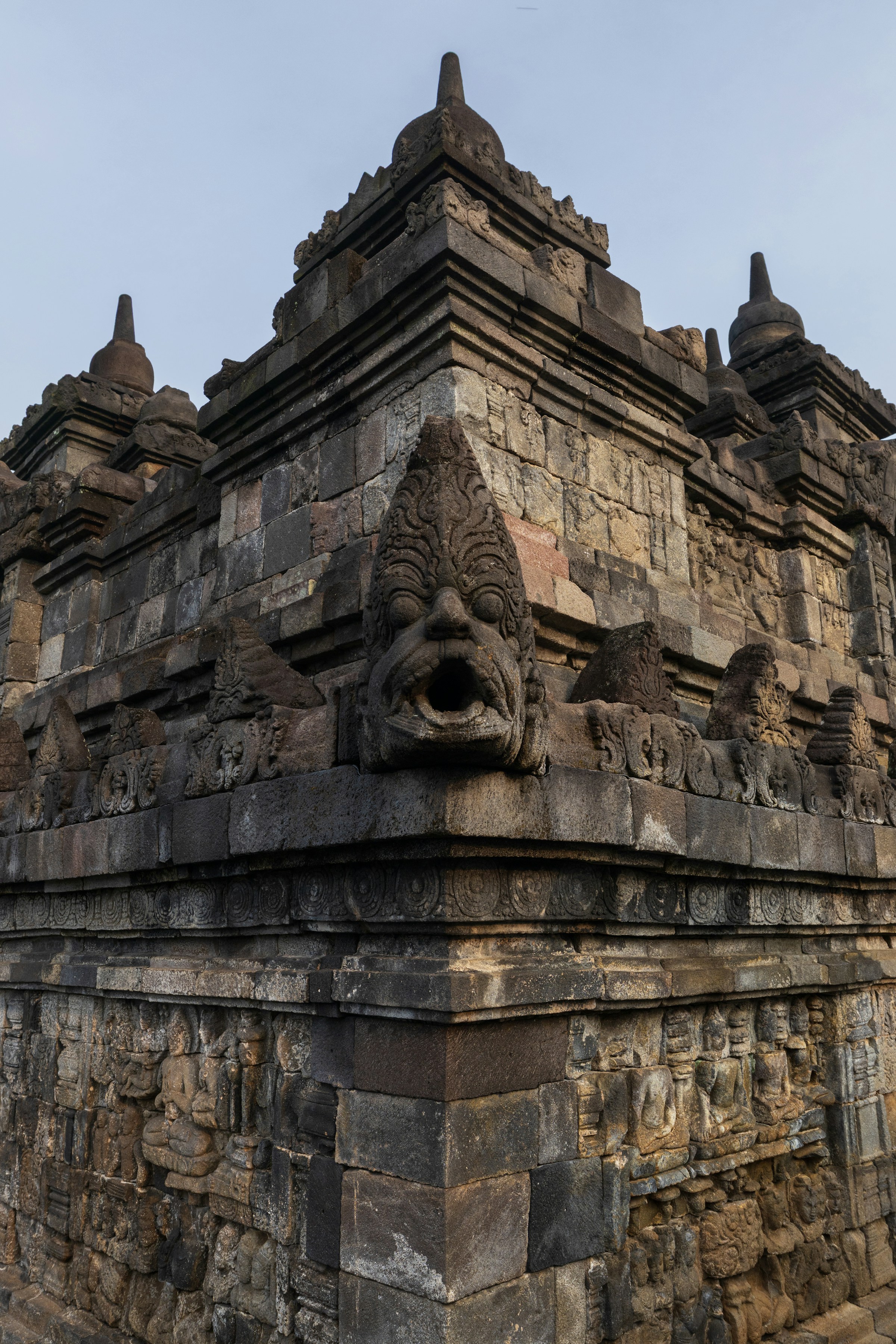
Gnarled, knotted hands are splitting stone. It was hands like these that cut the stone of Borobudur, carried it, and set it in place. The records keep none of…
Multilingual AI audio guide exhibit on WOUDiO (PWA). WOUDiO pioneered the world’s first audio guide platform with built-in donation: listeners can support the cultural venue without leaving the listening experience. The text below is the localized description, details, and narration script for this audio guide stop.
Gnarled, knotted hands are splitting stone.
It was hands like these that cut the stone of
Borobudur, carried it, and set it in place. The records keep none of their names. The name of the king, the name of the learned monk who presided over the design — a few of those have come down to us. But the hundreds, the thousands of hands that assembled this vast sanctuary vanished without leaving a single name behind.
What they worked was
andesite, delivered by the nearby rivers and volcanoes. They cut it with iron tools, moved it by river, and raised it tier by tier with nothing but human backs and rope. There is no mortar. Each stone was shaped to bite into the next, and they hold one another up by weight and precision alone.
Some 2 million blocks, by one estimate, pressing against each other, have stood for more than a thousand years.
The reliefs were carved by other hands again. Into the hard face of the stone went the folds of a robe, the swell of a wave, the lowered eyelids of a bodhisattva — a fingertip's delicacy, felt out with the point of a chisel as the work went on. A day's progress was perhaps no wider than the palm of a hand. The same spot, again and again, and again.
At the end of each day, the hand that set down the chisel must have been white with stone dust. Here was someone working not to leave a name, but simply to meet the stone in their hands. The warmth of that hand is long gone, yet on the surface of the stone the marks of the chisel remain, unmistakable.
Hands without names, reaching past their names, are touching this place still.
Subject: The work of the stonemasons and carvers who built Borobudur Temple
Material: Andesite (volcanic rock), dry-stone construction without mortar
Stone blocks: About 2 million (estimated)
Period: 8th–9th century, Shailendra dynasty
Location:
Borobudur Temple (Central Java)
Official Site:
Borobudur Park
Photo: Rowan Heuvel /
Unsplash (unsplash)