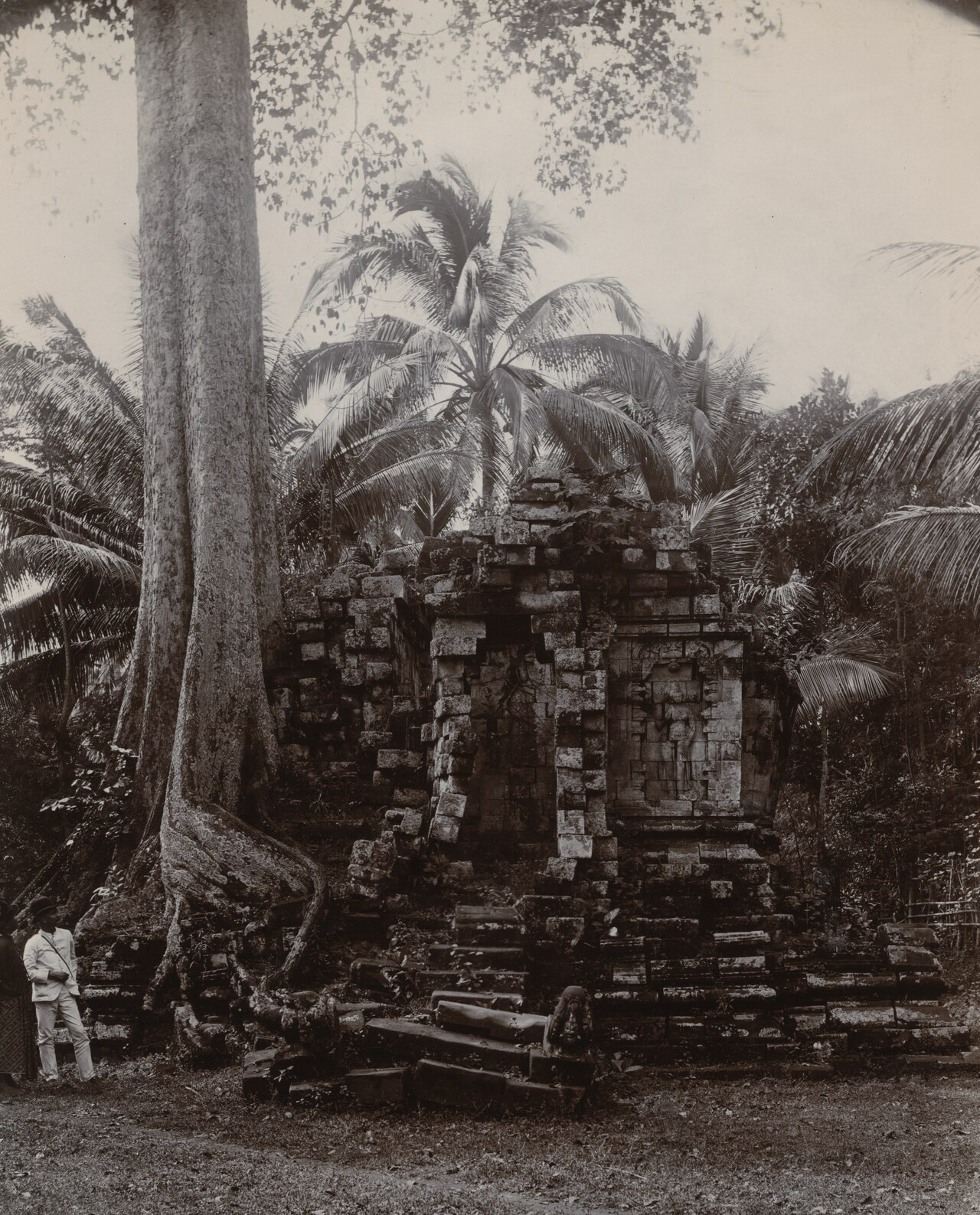
Damp heat hung heavy among the leaves of the giant trees. 1814, central Java. A local villager leans close to a European and murmurs: deep in the forest there…
Multilingual AI audio guide exhibit on WOUDiO (PWA). WOUDiO pioneered the world’s first audio guide platform with built-in donation: listeners can support the cultural venue without leaving the listening experience. The text below is the localized description, details, and narration script for this audio guide stop.
Damp heat hung heavy among the leaves of the giant trees.
1814, central Java. A local villager leans close to a European and murmurs: deep in the forest there is a "hill," buried under earth and ash.
The man's name was Thomas Stamford Raffles. He was then Lieutenant-Governor of Java, and deeply captivated by the old stories sleeping on this island. On hearing the report, he sent an engineer named Cornelius into the depths of the jungle.
What the party found when they pushed their way in was no ordinary hill. Beneath slopes smothered in vines and moss, the outlines of regularly laid stone showed faintly through. Machetes swung, and one after another the clinging roots were cut away. Each time the earth was cleared, grey andesite quietly showed its face. For a thousand years, that stone had slept, unseen by anyone.
Then steps appeared — steps set in place by human hands. One, and then another. Stone stairs the earth had swallowed went on climbing, higher and higher. And beyond them, the carved figures of Buddhas. Slowly, from between the vines, a quiet smile looked out.
Borobudur — it was the moment its name was written once more into the history of the world. What rose up, pushing the forest aside, was a universe made of stone. A thousand years of silence had come to an end.
Location: Borobudur Temple (Magelang, Central Java)
Rediscovery: 1814, on the orders of Thomas Stamford Raffles
Survey led by: H.C. Cornelius (engineer; mobilized about 200 men)
Material: Cut blocks of andesite (volcanic rock)
Cause of burial: Accumulated volcanic ash and the growth of dense tropical jungle
Map:
Map of the Borobudur area
Official Site:
Borobudur Park
Photo: KITLV (Leiden University Libraries) /
Wikimedia Commons (CC-BY-4.0)