A single stone rests on a craftsman's knees. A block of greyish
andesite. Its surface still bears the fine grooves etched by centuries of rain, and the blue-black stains of moss. The craftsman takes up a brush and wipes the stains away, little by little, peeling off, layer by layer, the memory of the earth where the stone once slept. No hurry. A single stone can take half a day.
At the start of the twentieth century,
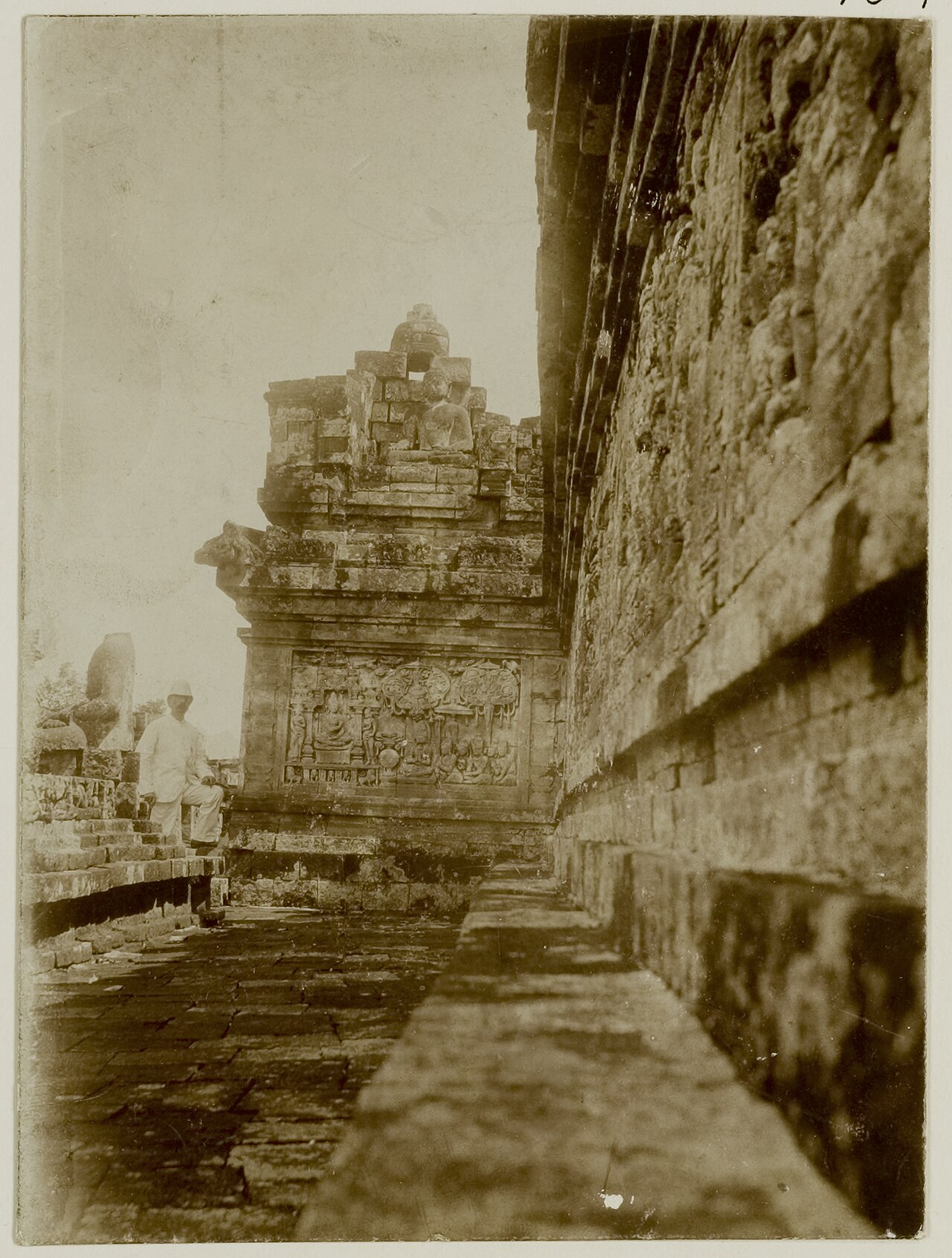
Borobudur was quietly falling apart. Long exposed to volcanic ash and tropical rain, the stacked stone monument was bulging from within, the gallery walls were leaning, and the Buddhas of the reliefs were having their faces dissolved by rainwater. The first major restoration was carried out from
1907 to
1911, at the hands of the Dutch engineer
Theodoor van Erp. He reassembled the collapsed summit and set the bell-shaped
stupas upright again, one by one. But the water running hidden beneath the stones — that, no one could yet stop.
In time, the stones began to loosen once more. From
1973 to
1983,
UNESCO and the government of
Indonesia joined hands and embarked on work humankind had never attempted before. Roughly a million stones from the lower half were numbered, every last one, taken down and washed; a new drainage layer was laid behind them, and each was returned to its original place. A million stones. One number confused, and the story of the Buddha could never be restored.
There were people bent over worktables, fitting broken fragments of stone together like a jigsaw, searching for each piece's partner by the shape of a chipped edge. Many of them were craftspeople born and raised in the villages nearby. The stone had once been laid by someone's hands, beaten by the rain, nearly returned to the earth — and then given a number by another pair of hands. How much time has flowed, quietly, across the surface of this stone.
Perhaps restoration is not about making something new, but the work of hands that ask whatever is crumbling to stay here, just once more.
Subject: The restoration history of Borobudur Temple
First Restoration: 1907–1911, led by Theodoor van Erp
Second Restoration: 1973–1983, large-scale dismantling and restoration by UNESCO and the Government of Indonesia
Material: Andesite (volcanic rock), an estimated 2 million blocks
Main Challenge: Swelling and collapse of the stonework caused by poor drainage; weathering of the reliefs
Location:
Magelang Regency, Central Java
World Heritage: Inscribed 1991
Official Site:
UNESCO World Heritage Centre
Photo: KITLV (Leiden University Libraries) /
Wikimedia Commons (CC-BY-4.0)