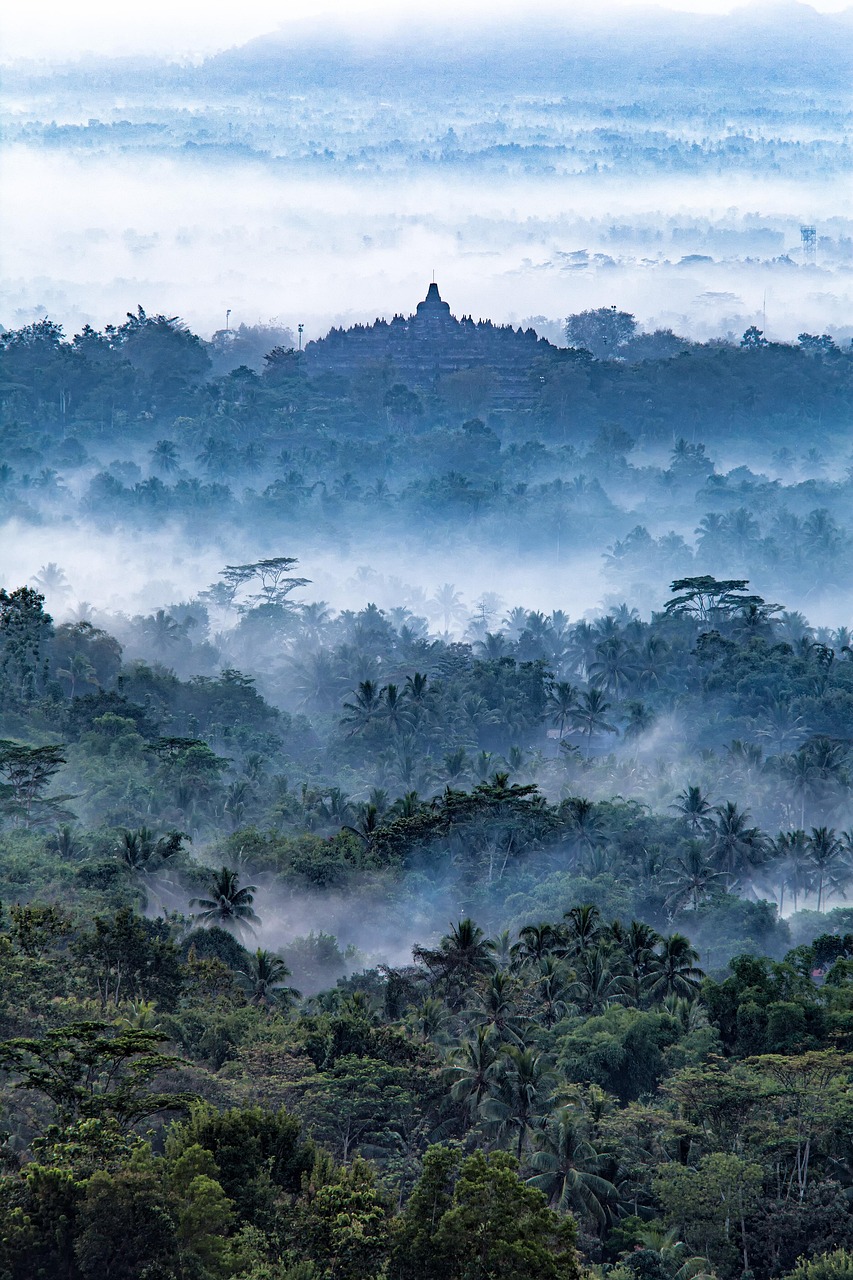
Without a sound, the sky turned grey. Mount Merapi growled low, and soon a fine volcanic ash began to fall, quiet as snow. Into the gaps between the stone…
Multilingual AI audio guide exhibit on WOUDiO (PWA). WOUDiO pioneered the world’s first audio guide platform with built-in donation: listeners can support the cultural venue without leaving the listening experience. The text below is the localized description, details, and narration script for this audio guide stop.
Without a sound, the sky turned grey.
Mount Merapi growled low, and soon a fine volcanic ash began to fall, quiet as snow. Into the gaps between the stone steps, deep into the carved lines of the reliefs, into the hollows of a Buddha's fingers joined in prayer — the ash settled, slowly but surely.
This vast sanctuary was built between the
8th and 9th centuries. Yet within a mere hundred-odd years, the sound of human footsteps had faded away. The heart of the kingdom moved east, and the shape of faith quietly changed. As the voices of prayer drew farther off, the stonework on the hill did nothing but gaze up at the heavens and listen to the wind.
And then the jungle reached out its hands. Vines wrapped themselves around the stones, moss dyed the galleries green, and the roots of trees crept slowly over the reliefs that told the life of the Buddha. Under a blanket of volcanic ash, cradled in the arms of the forest, this place fell asleep. Well over a thousand panels of story, the three-world structure rising toward enlightenment — all of it sank beneath the green and the ash.
That sleep lasted nearly a thousand years. While the forest swallowed these stones, dynasties across the world were born and fell, and new faiths and trade crossed the seas. The ancestors of people living now, dozens of generations back, were living out their lives, each beneath a sky of their own — and all of that long, long time, this hill simply received in silence.
In time, the local villagers came to fear this green hill. A place not to be approached, a mound of stones that brought bad luck — only tales like these were handed down, thinly, and no one knew any longer what lay sleeping beneath.
To be forgotten is not the same as to vanish. Beneath the ash and the green, the stones were only waiting, quietly, for the morning they would wake.
Subject: Borobudur Temple ruins / Candi Borobudur
Location:
Magelang, Central Java, Indonesia
Built: 8th–9th century (Shailendra dynasty)
Theme: A dormancy of about a thousand years, buried under volcanic ash and jungle
Natural factors: Volcanic activity of Mount Merapi; burial by tropical rainforest vegetation
Why it was forgotten: The eastward shift of the dynasty's center, changes in religion, and the dispersal of the population
Official Site:
Borobudur Park
Photo: Kanenori /
Pixabay (pixabay)