Multilingual AI audio guide exhibit on WOUDiO (PWA). WOUDiO pioneered the world’s first audio guide platform with built-in donation: listeners can support the cultural venue without leaving the listening experience. The text below is the localized description, details, and narration script for this audio guide stop.
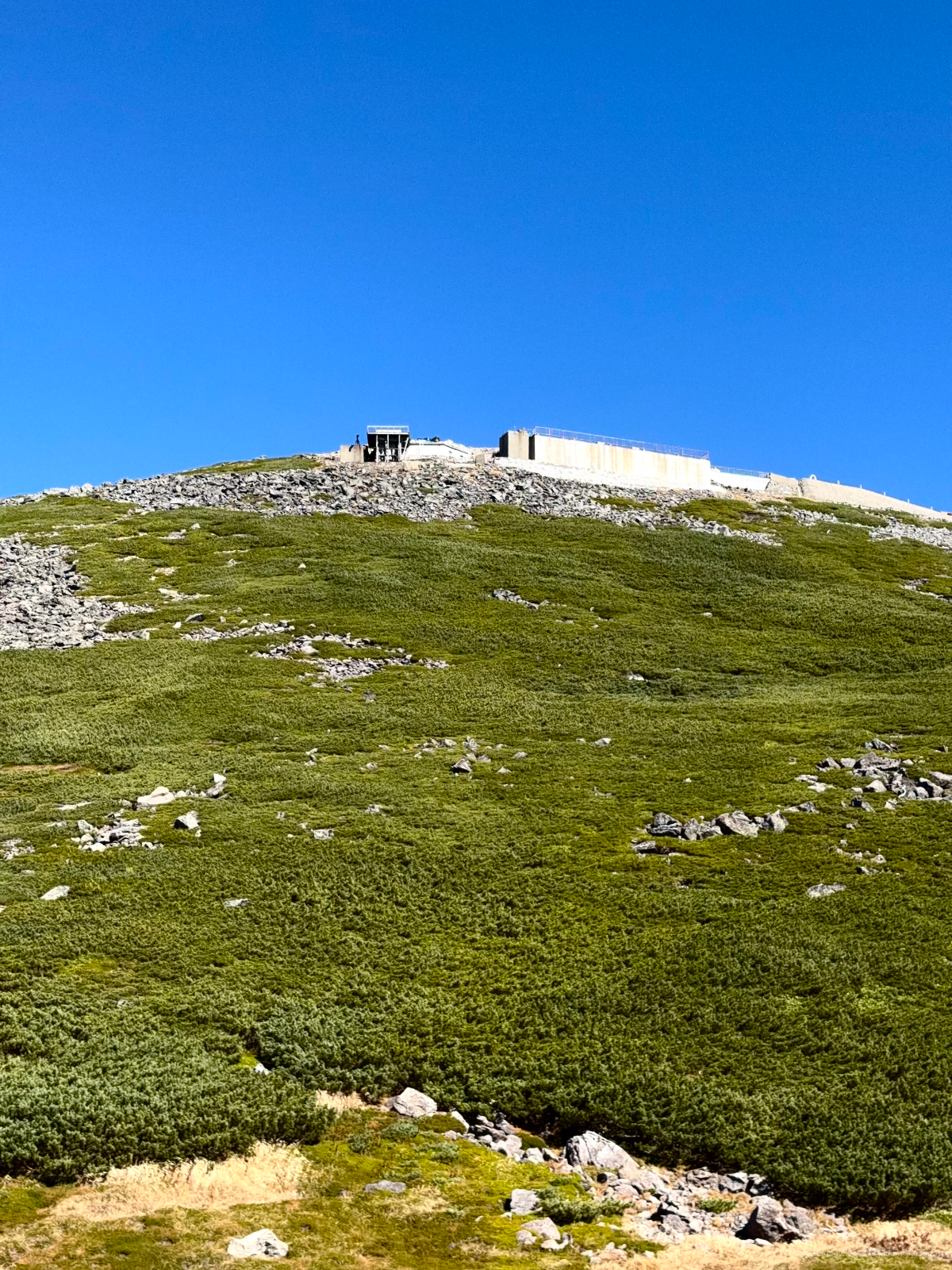
In 1949, an observatory of the Tokyo Astronomical Observatory of the University of Tokyo opened on the summit of Marishitendake, 2,876 meters high. It would become the Norikura Corona Observatory.
What it watched was the Sun. To see the corona, which spreads thin only at the edge of that blinding light, the observatory held a telescope called a coronagraph. A disk blocks the Sun and makes an artificial eclipse, so the corona, visible only during a real eclipse, can be seen in an ordinary sky.
The higher the place, the thinner the air that clouds the light. In search of clear air, the observatory was carried up to a summit.
Observations went on for more than half a century. From 1998 the winter operation was dropped, and observing took place only in summer, from mid-May to the end of October. The last actual observation was on October 31, 2009. Citing its age, the observatory ended its service as an observatory on March 31, 2010.
The names of the eighty-four people who worked there since it opened are carved into a plaque.
Afterward it was used for research as a shared-use facility. The hut that followed the Sun still stands on the summit, after its people have gone.
The corona observatory
- Opened in 1949 on the summit of Marishitendake, 2,876 m. It observed phenomena at the edge of the Sun, such as the corona, flares, and prominences.
- From 1998 winter operation was dropped, and observations were made in summer (mid-May to the end of October). The last actual observation was on October 31, 2009. Citing its age, it ended its service as an observatory on March 31, 2010.
Summit temperatures (monthly averages, 1971-2000)
- Warmest: late July to mid-August, about 11 degrees.
- Coldest: late January to early February, about minus 16 degrees.
- Temperatures rise above 0 degrees from early to mid-May, and begin to fall below it from mid to late October.
- Winds come mainly from the northwest; in midwinter the average wind speed is about 10 m/s.
- Over these 30 years the average temperature rose about 0.7 degrees, and global warming has been suggested as a possible cause.
Keep listening
- The history of the road to the observatory:
How a Military Road Became a Tourist Road
- The shrine on the summit:
To the Summit With a Shrine