Multilingual AI audio guide exhibit on WOUDiO (PWA). WOUDiO pioneered the world’s first audio guide platform with built-in donation: listeners can support the cultural venue without leaving the listening experience. The text below is the localized description, details, and narration script for this audio guide stop.
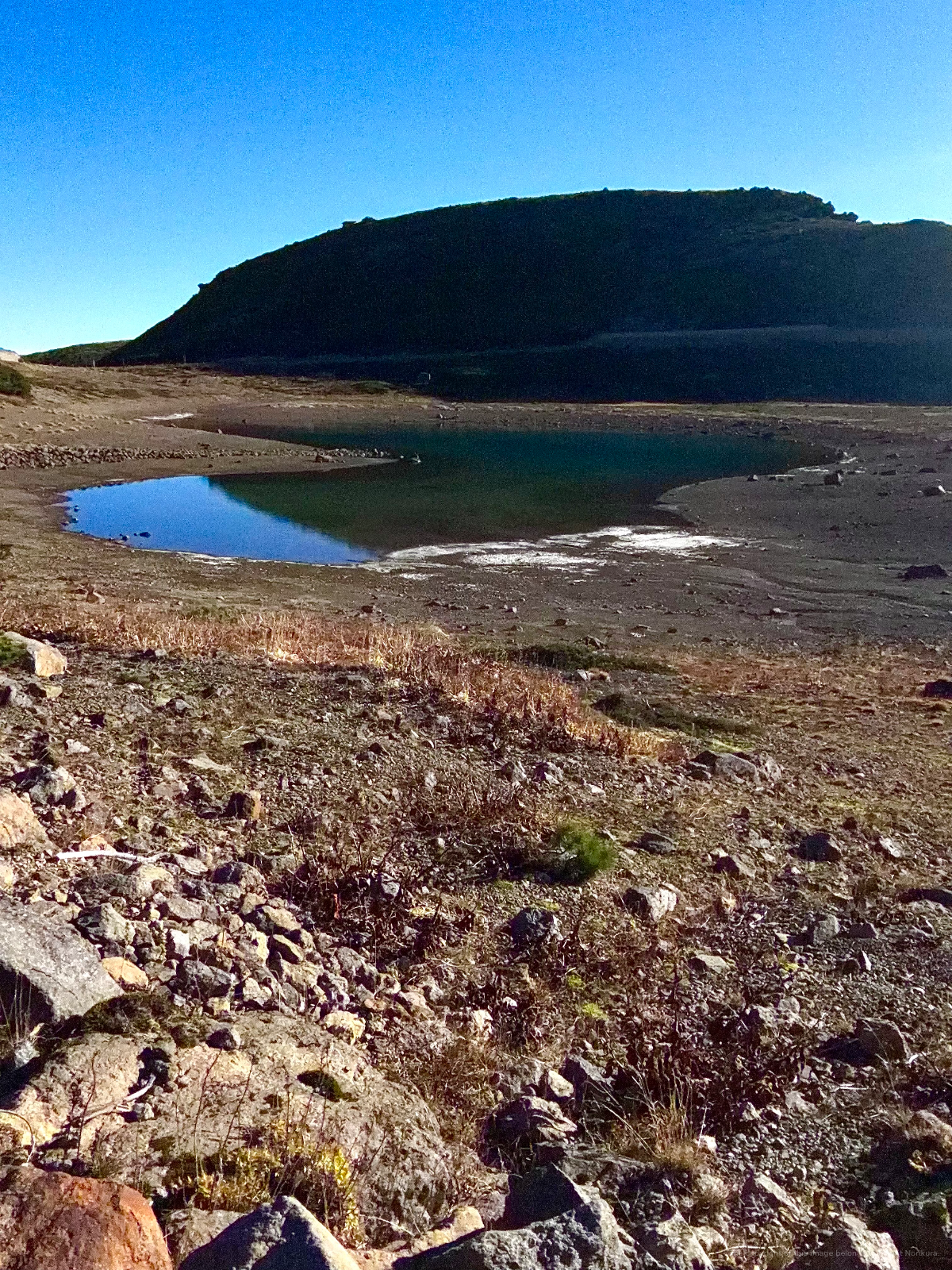
Seven ponds, each a hollow left behind by fire, water, or ice.
Gongen Pond and Kamegaike are crater lakes, water gathered in old vents. Around Kamegaike, repeated freezing and thawing has cracked the ground into hexagons, a pattern like a tortoise shell. It is called kikko sareki, tortoiseshell gravel.
Gonoike, the Five Ponds, is five ponds in fact, and in a heavy rain they merge into one. Tsuchitoigaike formed when lava flowing from the west of Eboshidake dammed a valley like a natural wall. Oonyu Pond was also made by damming. Legend says Enku sank a thousand Buddha statues in it to calm a great serpent.
Kiezugaike keeps its snow all summer, drifted there by the north wind. Tsurugaike is said to be named for a shape like a crane, its present outline carved by earth that slid down from Daikokudake.
Mikumaridake takes its name from a god of water. At 2,896 meters, it stands on the divide between the Sea of Japan side and the Pacific side. Rain and snow that fall from the same sky reach different seas, depending on which side of this line they land.
Along the ridge, the water still parts toward two oceans and runs down the mountain.
The ponds and their names
- Gongen Pond: also called Magari-ike, the curved pond, for its resemblance to a magatama bead. Water gathered in a former crater.
- Kamegaike: repeated freezing and thawing cracks the ground into hexagons, making a tortoiseshell pattern (kikko sareki).
- Gonoike: as the name says, five ponds, which merge into one in heavy rain.
- Tsuchitoigaike: formed when lava from the west of Eboshidake dammed the valley like a natural wall.
- Oonyu Pond: legend says Enku sank a thousand Buddha statues here to calm a great serpent.
- Kiezugaike: the snow does not melt, even in summer.
The watershed
- Mikumaridake is named for a god of water. It lies on the divide between the Sea of Japan side and the Pacific side.
Keep listening
- The stories behind the peak names:
The Names Written Into Twenty-Three Peaks
- Life beyond the tree line:
Beyond the Tree Line