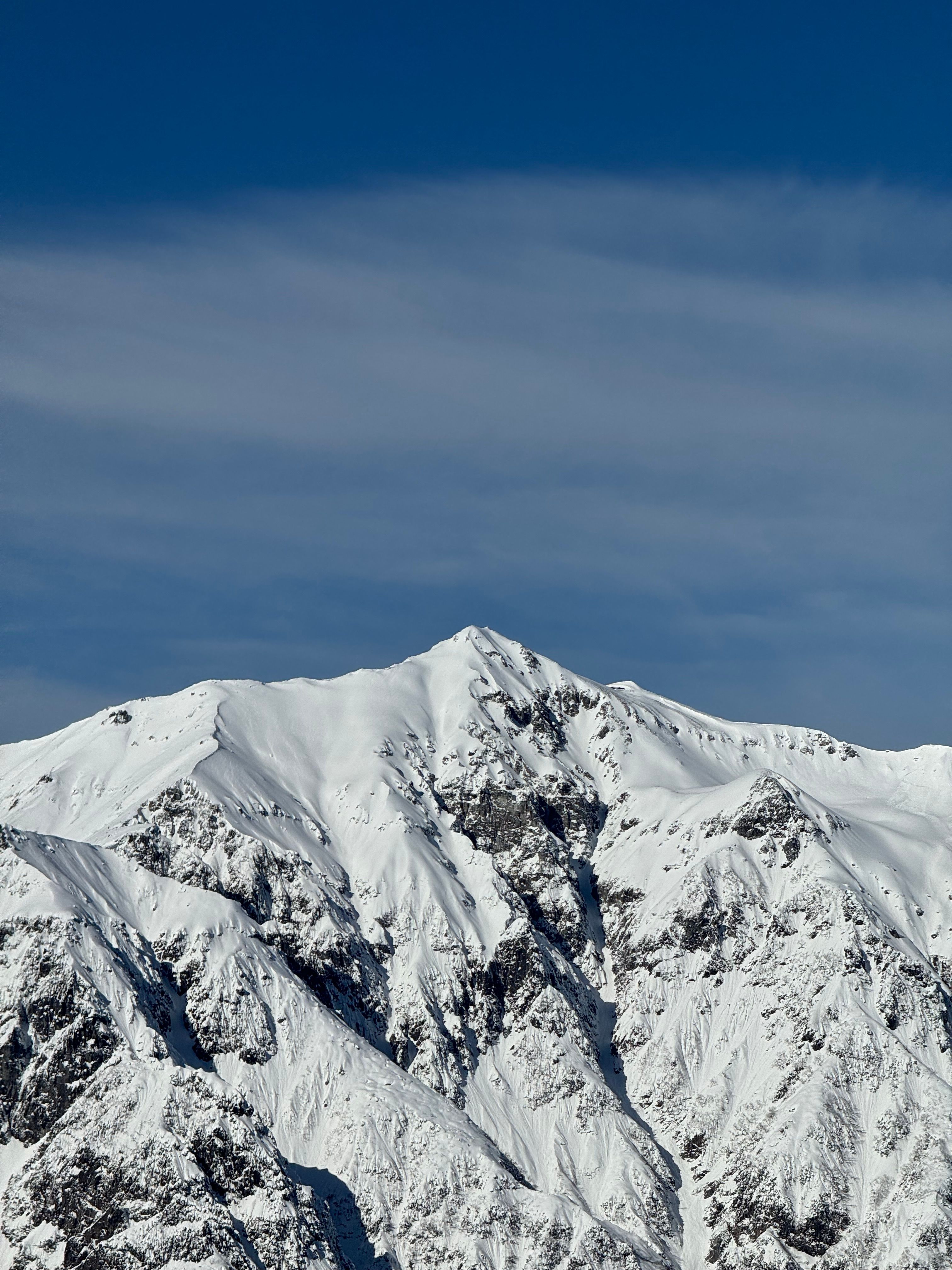
Multilingual AI audio guide exhibit on WOUDiO (PWA). WOUDiO pioneered the world’s first audio guide platform with built-in donation: listeners can support the cultural venue without leaving the listening experience. The text below is the localized description, details, and narration script for this audio guide stop.
Mount Norikura is not one mountain. It is two volcanoes, stacked across time.
The first to rise was Old Norikura. It stayed active for more than four hundred thousand years, from about 1.28 million to 860,000 years ago. A stratovolcano of andesite and dacite, built from layer upon layer of lava domes and lava flows, its restored volume is estimated at about sixteen cubic kilometers.
Then it fell apart. After the eruptions ended, huge landslides tore away its northern and southeastern flanks, and the giant cone was left about half its former shape.
On what remained, a new volcano began to grow about 320,000 years ago. New Norikura. Takamagahara, Yotsudake, Ebisu, Gongen Pond: one volcanic body after another piled lava from its own vent onto the old mountain, and together they built a different mountain on top of the ruin. In all, the rock thrown out by the Norikura volcano is said to total some twenty-six cubic kilometers.
The highest point, Kengamine, stands at 3,026 meters. The time that crumbled away and the time that was stacked back up together hold the ridgeline at that height.
On a mountain that lost half of itself, a road of rebuilt rock still climbs to the summit, and people still walk it.
Numbers in this chapter
- Old Norikura was active from about 1.28 million to 860,000 years ago. New Norikura began to grow about 320,000 years ago.
- The last lava flow was about 9,000 years ago. The Japan Meteorological Agency says there have been at least 14 eruptions in the past 10,000 years, roughly one every 700 to 800 years.
- The highest point, Kengamine, is 3,026 m above sea level.
Keep listening
- The stories behind the peak names:
The Names Written Into Twenty-Three Peaks
- The shrine on the summit:
To the Summit With a Shrine
For climbing safety, please check the latest official information.