Multilingual AI audio guide exhibit on WOUDiO (PWA). WOUDiO pioneered the world’s first audio guide platform with built-in donation: listeners can support the cultural venue without leaving the listening experience. The text below is the localized description, details, and narration script for this audio guide stop.
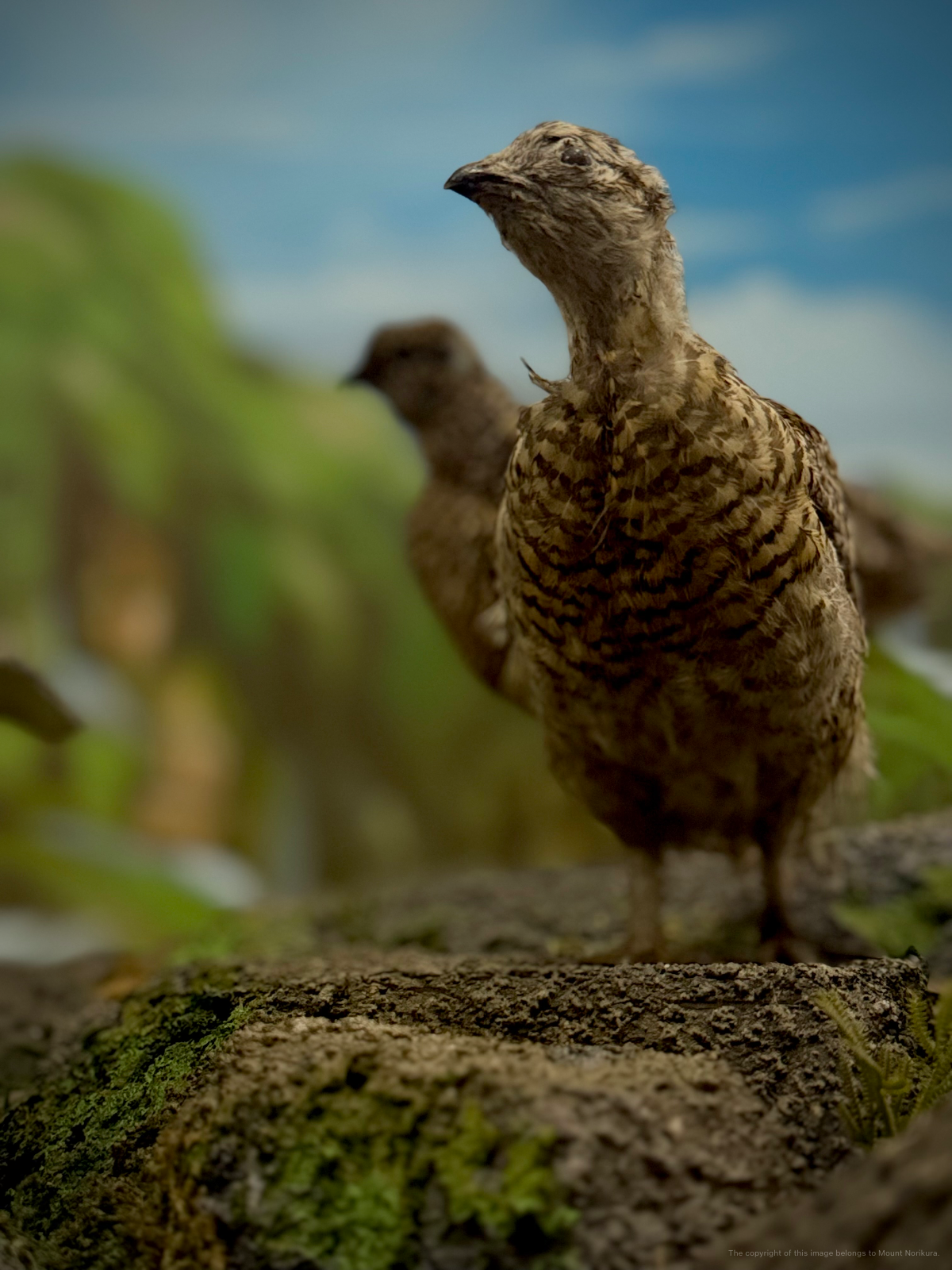
A rock ptarmigan chick's odds of survival are low. On Mount Norikura, a survey running since 2001 has reported that, from hatching to independence, about thirty percent of chicks survive on average.
For about a month after hatching, the death rate is especially high. Bad weather in the rainy season and predators such as foxes, martens, and stoats are thought to be the causes.
So caging was devised. Chicks and their mother are put in a cage together, allowed outside by day, and protected from predators at night.
In 2012 the Ministry of the Environment's Red List raised the rock ptarmigan to Endangered, Class IB. It is a Special Natural Monument, and a bird found only in the alpine zone of central Honshu. Norikura stands alone at the southern end of the Northern Alps, and its ptarmigan form a group nearly cut off from the populations on other mountains.
Predators are not the only threat. Sika deer have entered the alpine zone and eaten the alpine plants the birds feed on, damaging their habitat. The Ministry's plan names this as one cause of decline.
Norikura's ptarmigan have been carried to the Central Alps too. Since 2020, three families and one hen, twenty birds in all. Birds that crossed to another mountain have begun to live there.
Above 2,500 meters, in a world of grass and rock, the work of protecting small lives goes on.