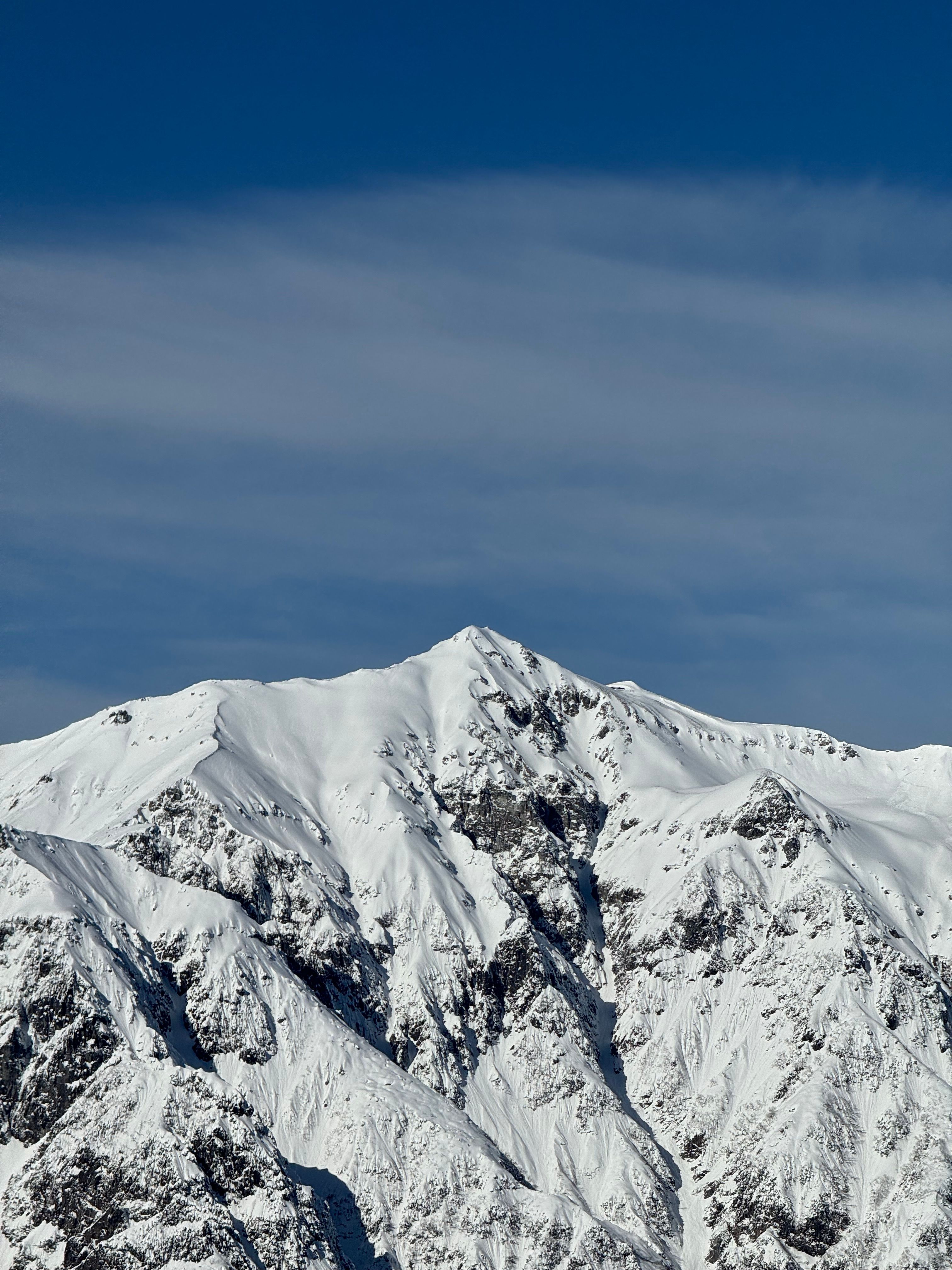
Multilingual AI audio guide exhibit on WOUDiO (PWA). WOUDiO pioneered the world’s first audio guide platform with built-in donation: listeners can support the cultural venue without leaving the listening experience. The text below is the localized description, details, and narration script for this audio guide stop.
Mount Norikura is the collective name for twenty-three peaks strung along the border of Gifu and Nagano. The highest, Kengamine, stands at 3,026 meters.
Iodake is Iodake because sulfur hangs in the air there. Nekodake takes its name from a rock that crouches on the slope like a cat. Eboshidake is shaped like the eboshi hat that Heian-period nobles wore. Byobudake is named for the sheer cliff near its summit, which looked like a folding screen. Many of the names simply keep what travelers took in with their eyes and noses.
Some names come from footsteps. Tradition says that Enku drove a monster that appeared on Oonyudake out to Maodake and sealed it there, and that he built a temple on Marishitendake. Mokujiki trained on Asahidake, and just below the summit of Dainichidake lies Amanoiwaya, a cave said to have been used for his austerities. Yukiyamadake keeps a legend that the Buddha himself once visited.
Other peaks were named for the measures of ordinary life. Jukkokuyama takes its name from an old unit for the rice a household eats, and that name went to the oldest mountain in the Norikura volcanic group. Ebisudake and Daikokudake borrow the names of two of the Seven Lucky Gods.
Maodake carries one more story. It is said that the old Imperial Japanese Army named it during the war, wanting to keep people away. A monk who drove out a monster, and a name meant to turn people back: the wishes of two eras, laid over a single peak.
On a clear day, Mount Fuji can be seen to the southeast from the summit of Fujimidake.
The ridge that the namers walked still runs on, peak after peak.
Where the peak names come from
- Iodake: from the smell of sulfur.
- Nekodake: from a rock crouching on the slope like a cat.
- Eboshidake: from the shape of the eboshi hat worn by Heian-period nobles.
- Byobudake: from the sheer cliff near the summit that looked like a folding screen.
- Jukkokuyama: from an old unit of rice consumption. It is said to be the oldest mountain in the Norikura volcanic group.
- Ebisudake and Daikokudake: names borrowed from the Seven Lucky Gods.
Legends
- Enku is said to have driven a monster that appeared on Oonyudake out to Maodake and sealed it there, and to have built a temple on Marishitendake.
- Mokujiki trained on Asahidake. Just below the summit of Dainichidake is Amanoiwaya, a cave said to have been his place of austerities.
- Maodake also has a story that it was named by the old Imperial Japanese Army during the war.
Keep listening
- The ponds and the flow of water:
Seven Ponds and Where the Water Goes
- How the volcano was made:
Two Volcanoes, One Mountain