Look at the plain spreading far into the distance below this dam. A century ago, most of this land was dry ground that could do nothing but wait for rain.…
Multilingual AI audio guide exhibit on WOUDiO (PWA). WOUDiO pioneered the world’s first audio guide platform with built-in donation: listeners can support the cultural venue without leaving the listening experience. The text below is the localized description, details, and narration script for this audio guide stop.
Look at the plain spreading far into the distance below this dam. A century ago, most of this land was dry ground that could do nothing but wait for rain.
Beginning in 1920 and over the course of ten years, an engineer named Hatta Yoichi built this dam and its irrigation channels — the Chianan Irrigation Canal. The waterways stretched beyond ten thousand kilometers, bringing water to farmland on the scale of a hundred thousand hectares.
But the water did not reach everyone.
Because the supply was insufficient, a three-year rotation system was adopted. The land was divided into three sections: rice one year, sugarcane the next, and a crop requiring no irrigation the year after that. Farmers did not choose what to plant — that was determined by the order in which water was allotted.
The sequence set by the authorities decided what would be grown. And farmers themselves bore part of the cost of construction.
Gaining water certainly transformed this plain. But at the same time, it also handed over to the authorities the freedom to choose what to plant. To tell only one side of this story is to leave the story of this dam unfinished.
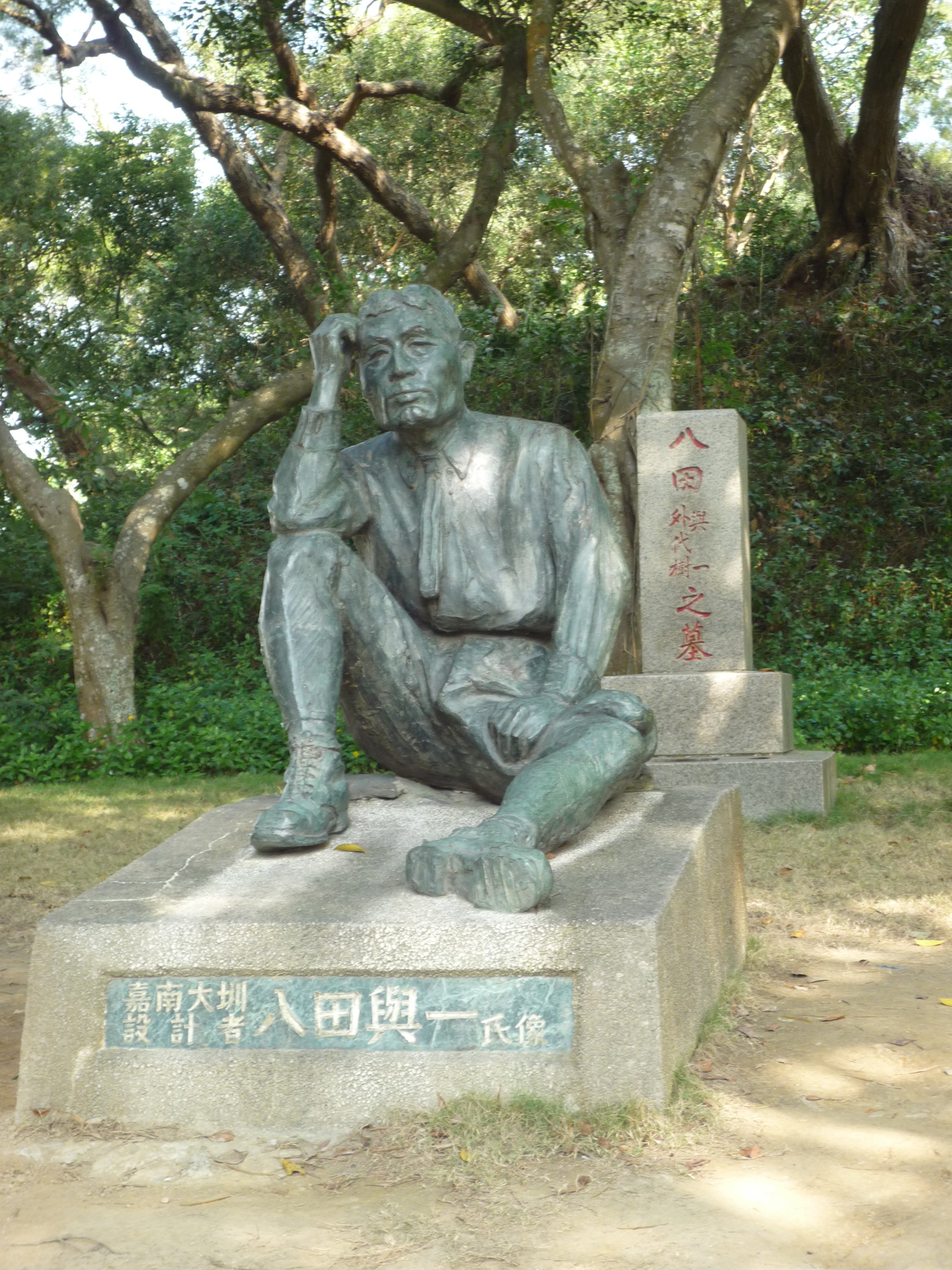
The statue of Hatta is seated — not standing. He is shown deep in thought at the construction site, his gaze turned toward the dam.