Tainan once had city walls. Now, almost nothing remains of them. When you stand before the Great South Gate, don't walk straight through — try circling to the…
Multilingual AI audio guide exhibit on WOUDiO (PWA). WOUDiO pioneered the world’s first audio guide platform with built-in donation: listeners can support the cultural venue without leaving the listening experience. The text below is the localized description, details, and narration script for this audio guide stop.
Tainan once had city walls. Now, almost nothing remains of them.
When you stand before the Great South Gate, don't walk straight through — try circling to the left or right instead. In front of the gate, you'll find another wall, curved in a half-circle, enclosing the space before it. Even if the gate itself were breached, an attacker would be stopped there, then surrounded from above. This double structure is called a "jiancheng" — a gate fortress.
After the Zhu Yigui Rebellion of 1722, the Qing court finally permitted city walls to be built in Taiwan. Before that, walls had not been allowed at all — the court feared that in the event of rebellion, insurgents might barricade themselves inside a walled city. A wall, after all, can serve to protect a city, but just as easily serve those who rise up against it.
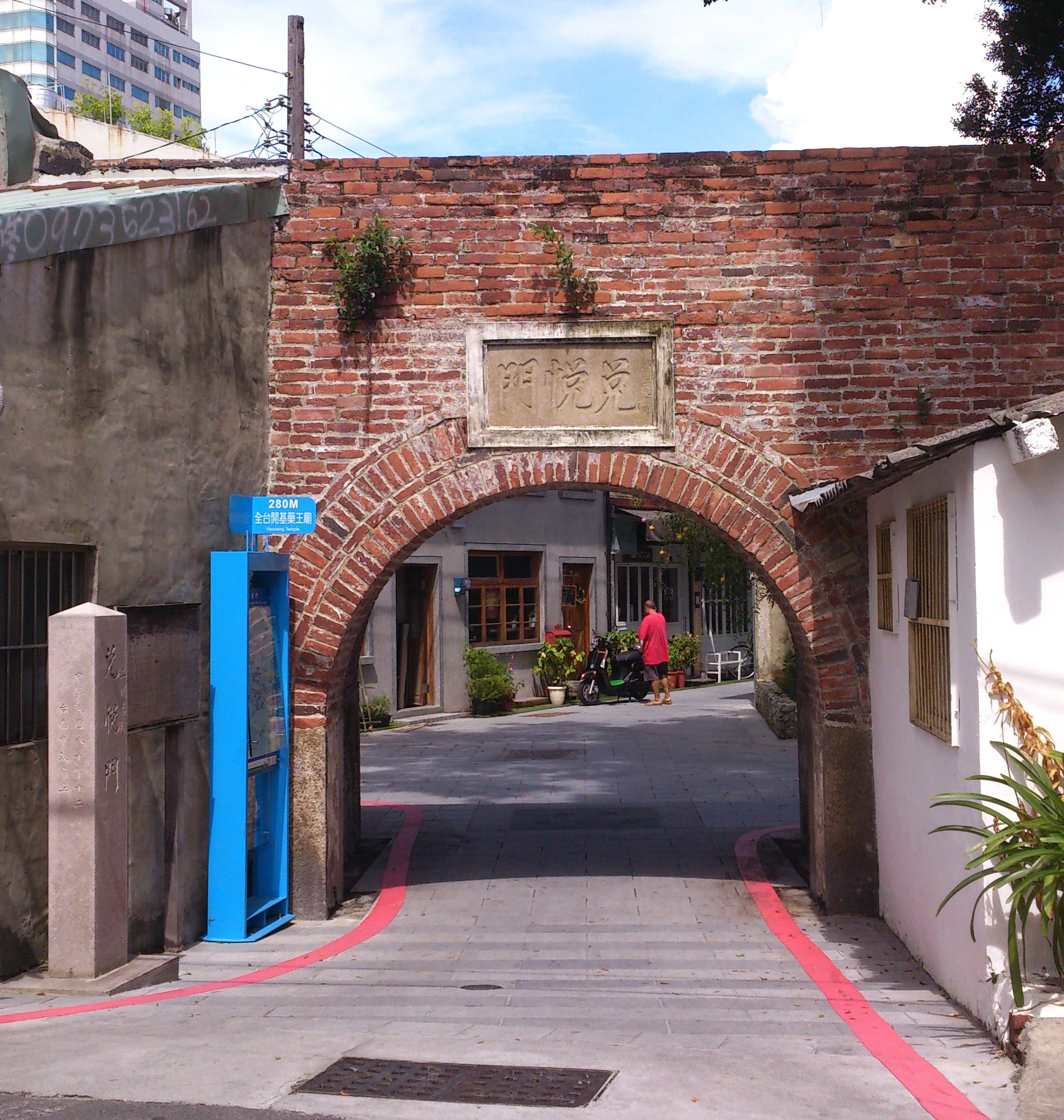
There is another gate worth seeking out: Duiyue Gate. On the western side of Wutiao Port, tucked among houses, a small gate still stands. Even today, people and motorbikes pass through it as a matter of course. It was not preserved as a historic monument — it survives precisely because it never stopped being used.
So where did the rest of the wall go?
During the Japanese colonial era, it was torn down to widen the roads. The stones and bricks were carried off, becoming the foundations of other buildings, or the walls of private homes.
The city wall did not vanish. It simply scattered, and now lies embedded, in fragments, throughout the city.