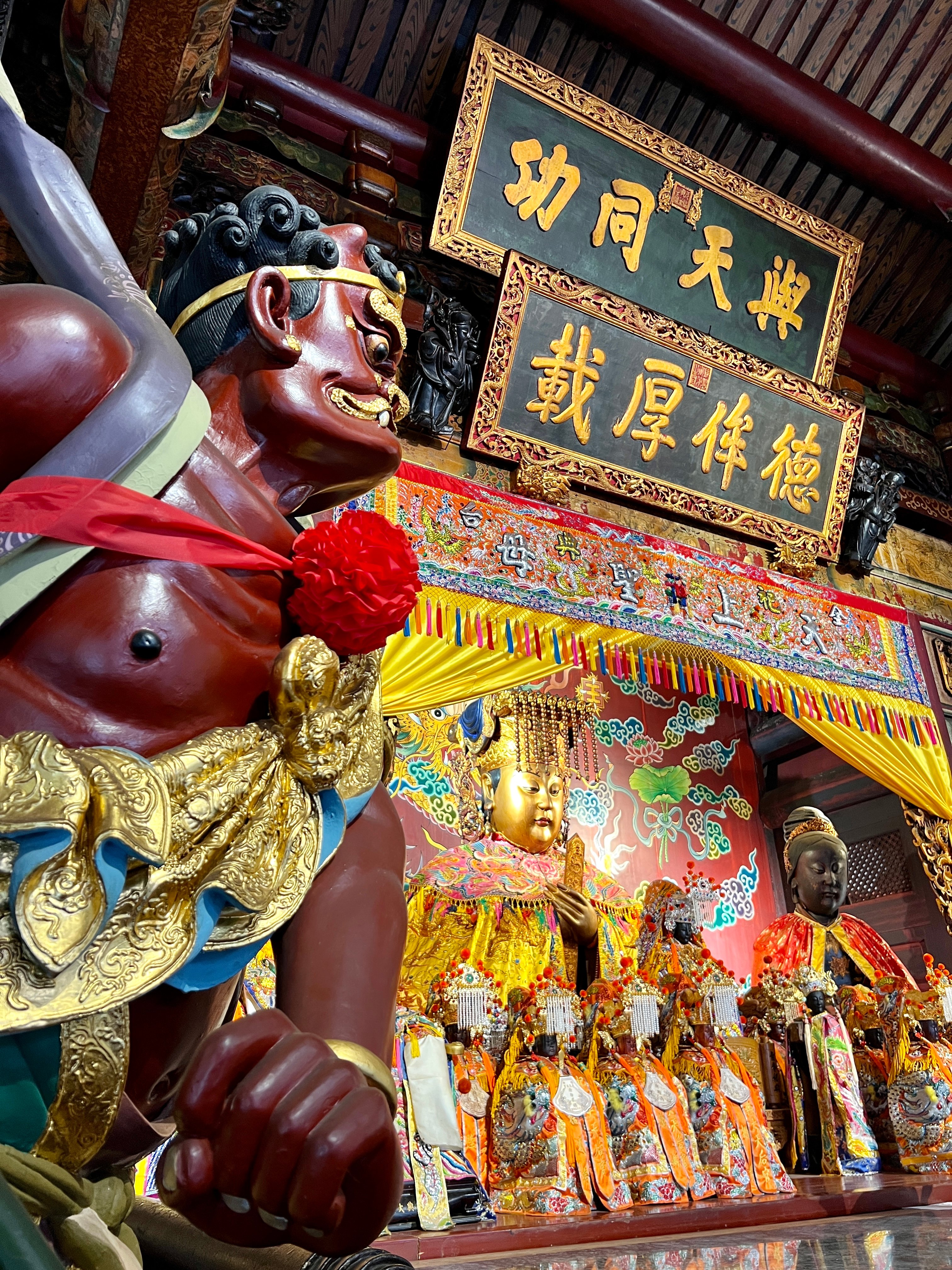
This building was originally someone's private residence. As you step into the temple grounds, take note of the slope of the ground beneath your feet. As you…
Multilingual AI audio guide exhibit on WOUDiO (PWA). WOUDiO pioneered the world’s first audio guide platform with built-in donation: listeners can support the cultural venue without leaving the listening experience. The text below is the localized description, details, and narration script for this audio guide stop.
This building was originally someone's private residence.
As you step into the temple grounds, take note of the slope of the ground beneath your feet. As you move deeper inside, the floor rises, little by little. This was not a slope built for a temple—it is a remnant of the mansion's reception hall.
The man who once lived here was Zhu Shugui, Prince of Ningjing, a member of the Ming imperial family who fled the mainland and crossed over to Taiwan. The Zheng regime championed him, hoping to show that they carried on the legitimate line of the Ming.
In 1683, the Qing navy defeated the Zheng forces' fleet at the Penghu Islands. When surrender became certain, the Prince of Ningjing took his own life within this very mansion. Five of his consorts had already chosen the same path before him. They are now enshrined at the Five Consorts Temple to the south.
The Qing general Shi Lang, who took over the mansion, did not tear it down. Instead, he transformed it into a temple dedicated to Mazu, the goddess of the sea. He reported to the imperial court that Mazu had protected his crossing of the strait, and thus received official recognition. It became the first Mazu temple in Taiwan to be sanctioned by the state.
A sea goddess was placed at the very spot where a prince had died. Without demolishing the building, only its meaning was rewritten—the cheapest, and surest, way to rule.
Beneath the feet of those who now raise incense here lies the very floor level of the prince's reception hall.