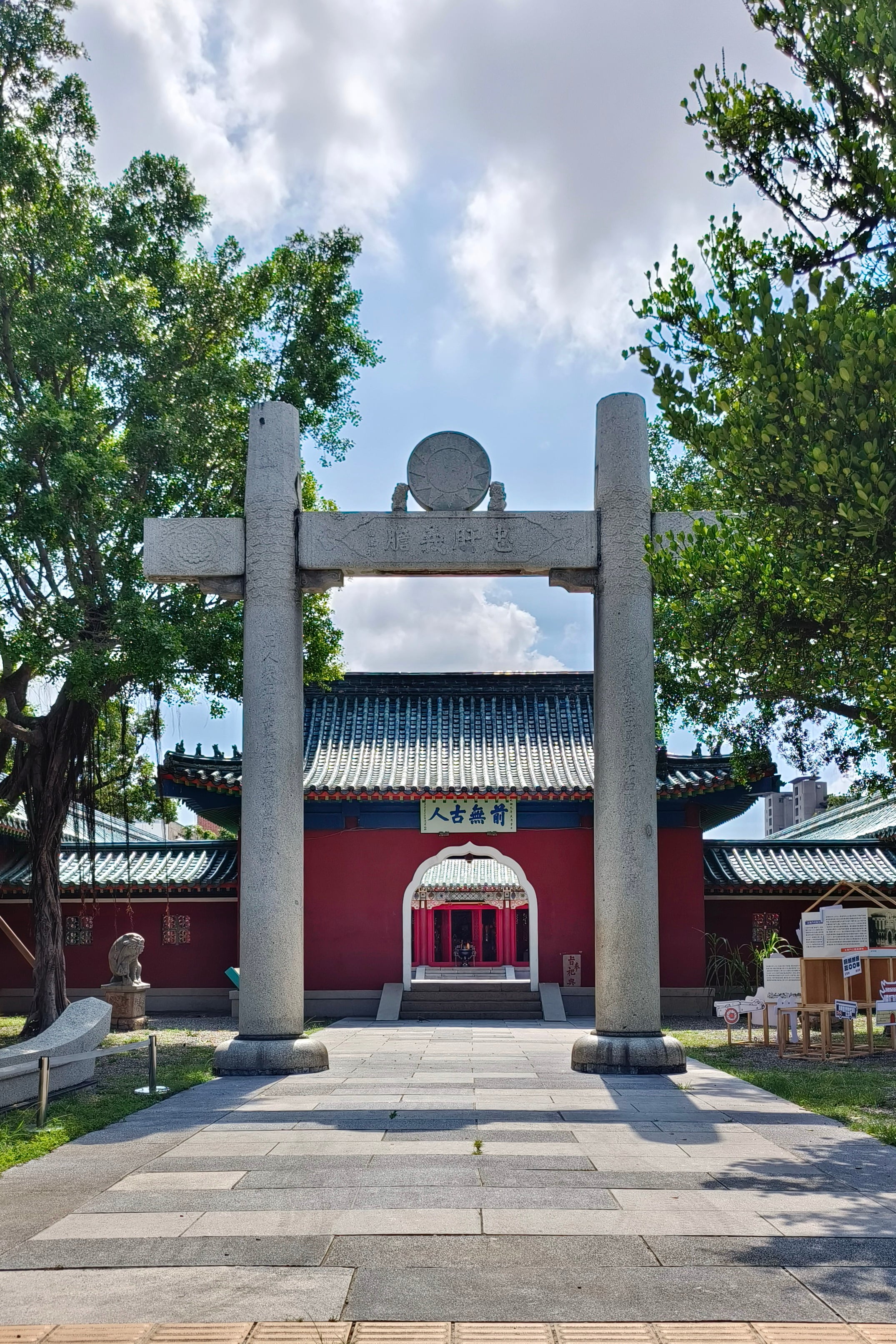
The man enshrined here as a god lived on this island for only a little more than a year. Koxinga died at thirty-eight, the year after he drove out the Dutch.…
Multilingual AI audio guide exhibit on WOUDiO (PWA). WOUDiO pioneered the world’s first audio guide platform with built-in donation: listeners can support the cultural venue without leaving the listening experience. The text below is the localized description, details, and narration script for this audio guide stop.
The man enshrined here as a god lived on this island for only a little more than a year.
Koxinga died at thirty-eight, the year after he drove out the Dutch. To him, Taiwan was never a place to live, but a foothold from which to reclaim the mainland.
How, then, did such a man come to be a god of this place?
At first, it was a shrine that could not speak his name. To the Qing court, the Zheng family were enemies. People called him only "Kaisan Ō" — the King Who Opened the Mountain — and worshipped him without ever saying whose spirit it was.
In 1874, Shen Baozhen petitioned the imperial court, and it became an official shrine. A man once branded an enemy was, two hundred years later, recognized as a loyal subject.
Under Japanese rule, it became Kaisan Shrine. The fact that his mother came from Hirado was conveniently made use of. After the war, it was torn down and rebuilt into the building that stands here now — which is why this place, for all its historical weight, looks so new.
One man has been called by four different names — rebel, loyal subject, god, national hero. And each time, it was power that changed what he was called.
The grounds here are quiet. But this quiet is the quiet that remains after being rewritten, again and again.