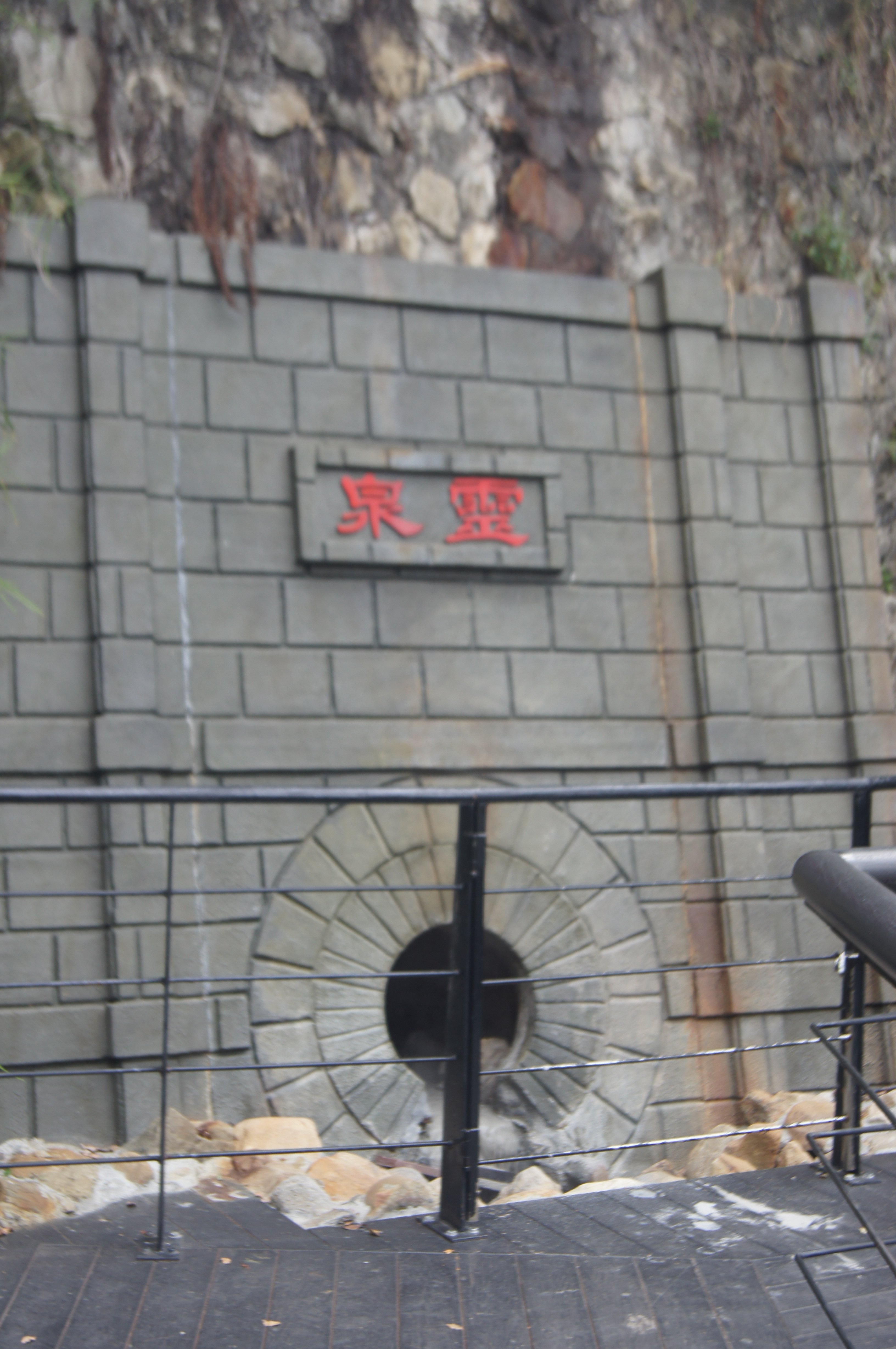
This water is cloudy. It is not dirty — it is mud. Dip your hand in and rub your fingers together. You'll feel a smooth, silky texture. This is a rare quality…
Multilingual AI audio guide exhibit on WOUDiO (PWA). WOUDiO pioneered the world’s first audio guide platform with built-in donation: listeners can support the cultural venue without leaving the listening experience. The text below is the localized description, details, and narration script for this audio guide stop.
This water is cloudy. It is not dirty — it is mud.
Dip your hand in and rub your fingers together. You'll feel a smooth, silky texture. This is a rare quality of hot spring, in which mudstone from the local strata mingles with the water as it rises.
This hot spring was developed during the Japanese colonial era. Inns bearing the character for "hospice" lined the streets, and a rest facility for soldiers was even built here. The sight of people strolling outside in yukata is a custom that was brought into these mountains from that time.
Descend the mountain, and another face of Tainan awaits.
In Baihe, lotus fields stretch wide. Autumn is their season, and since the flowers close up by morning, early hours are best for viewing. The roots become lotus root, the seeds become sweets, and the leaves are used for wrapping food.
Yujing is a producer of mangoes. Saplings were brought in during the Japanese era, and after the war, varieties were selected and took root in the soil of these hills. Summer is their season.
In Dongshan, coffee is grown. This too began in the Japanese era, fell into decline once, and was replanted by local growers some twenty years ago.
On the plains, there is rice and sugar. In the mountain valleys, lotus, fruit, and beans. The city of Tainan is not only its urban streets.
When you rise from the bath, try breathing in the scent of your hands. You'll catch a faint smell of earth.