The water holds the color of the sky. On the western bank of the Chao Phraya River, as dusk draws near, the surface slowly deepens to amber — and across it, the shadow of
Wat Chaiwatthanaram stretches long and still. At the center rises a single prang, a Khmer-style spire tapering skyward like an ear of corn. Around it, eight smaller towers stand in quiet attendance.
This temple was built in
1630, in the name of a king. The central tower was said to embody the sacred mountain at the axis of the universe, while the eight surrounding towers represented the worlds that encircle it. Bricks were laid, plastered over, and into those walls, bas-reliefs depicting the life of the Buddha were carved in careful detail. One wonders what thoughts passed through the minds of the craftsmen as they worked — whether they sensed, in every course of brick they set, that they were upholding both the king's prayer and the very order of the cosmos.
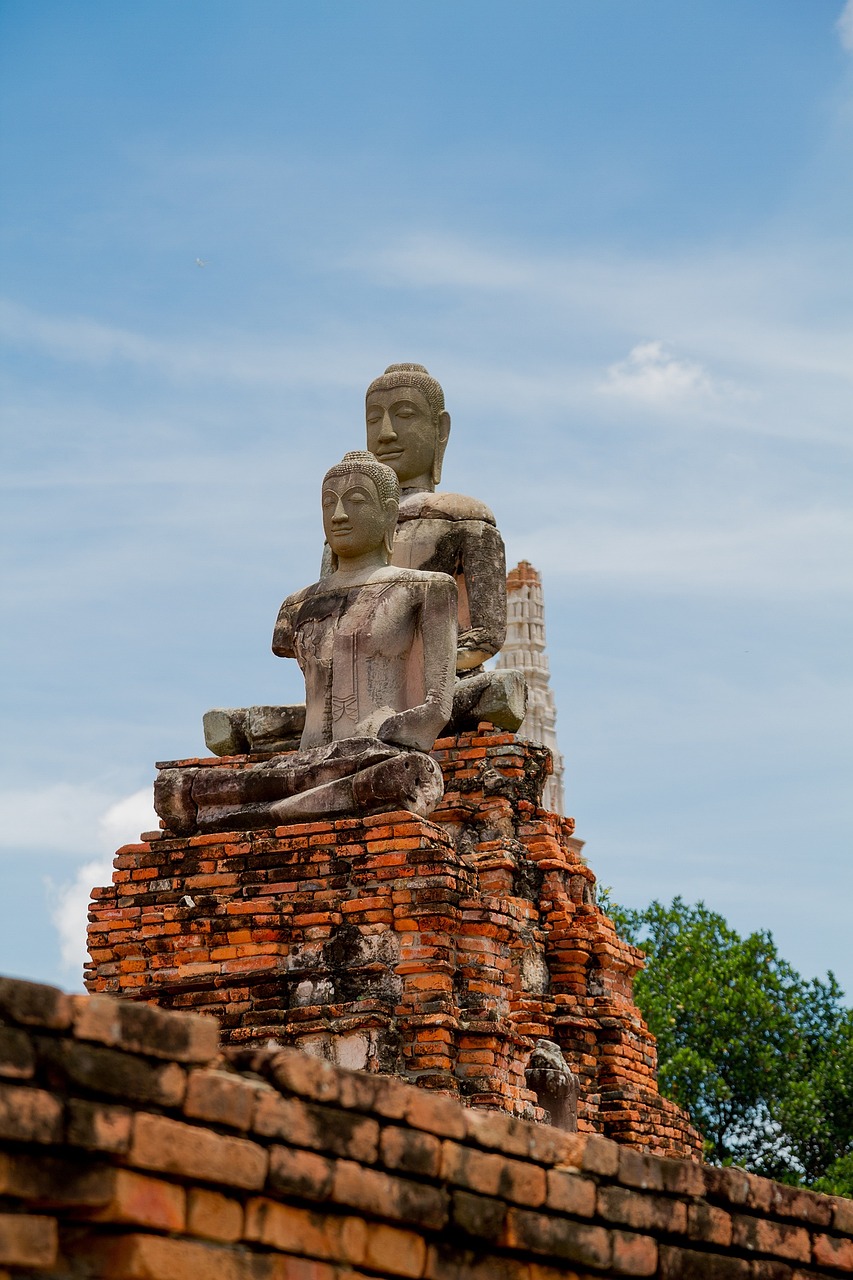
What strikes the imagination are the rows of Buddha images that once lined the galleries. Fashioned from plaster, draped in gold leaf, they looked down upon those who came to worship. Now, many are headless — only their torsos remain, still seated. In
1767, when the capital fell, fire licked the walls, the gold was stripped away, and the towers crumbled. What flourishes is reduced to ash — that arc of fate, repeated so many times across this island, is inscribed here too.
And yet the river flowed on, unchanged. It mirrored the spires, rose with the rains of monsoon, and drew back its banks in the dry season. Now, new plaster is pressed into the gaps between fallen bricks, and tilted Buddhas are gently braced upright. There is no pretending that what was lost was never there. There are hands at work here — hands that choose to raise the wounded once more, scars and all.
When the evening sun traces the silhouette of the eight spires, their reflection on the river quietly folds together two things into one shimmering surface: a prayer offered four hundred years ago, and the hands of someone living now.
Site: Wat Chaiwatthanaram
Founded: 1630, during the reign of King Prasat Thong
Architectural style: Central Khmer-style prang surrounded by eight subsidiary towers
Location: Western bank of the Chao Phraya River, within the Ayutthaya Historical Park
Damage: Burned and destroyed in the fall of Ayutthaya in 1767; many Buddha images decapitated
Highlights: Spires glowing at sunset, rows of seated Buddhas in the galleries, reflections on the river
Map:
Historic City of Ayutthaya — Map
Official Site:
Ayutthaya Historical Park (Fine Arts Department)
Photo: kaigraphick /
Pixabay (pixabay)