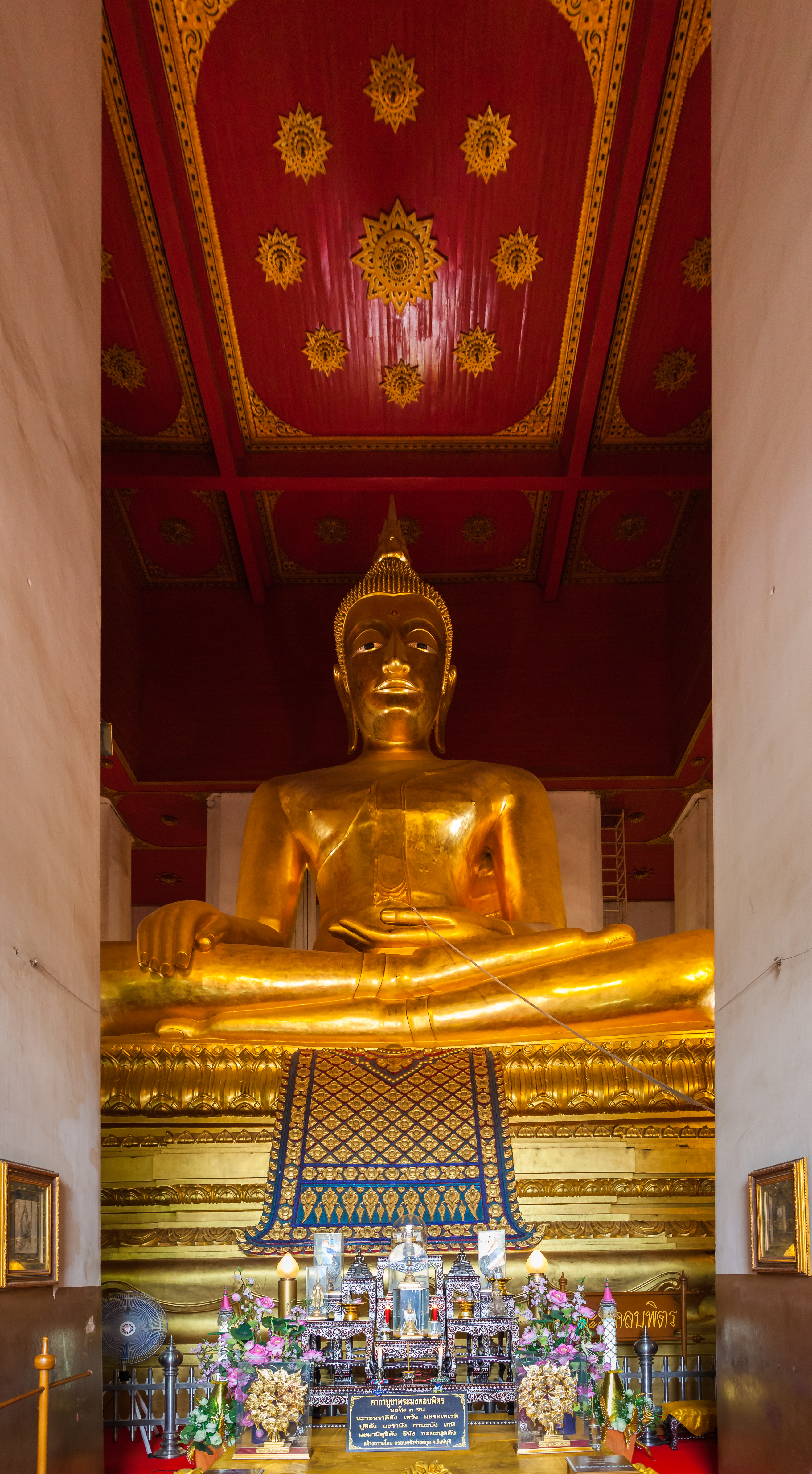
Flames swept through this place twice. The first time, lightning struck and the hall burned. The second time was in 1767, on the night the royal capital was…
Multilingual AI audio guide exhibit on WOUDiO (PWA). WOUDiO pioneered the world’s first audio guide platform with built-in donation: listeners can support the cultural venue without leaving the listening experience. The text below is the localized description, details, and narration script for this audio guide stop.
Flames swept through this place twice. The first time, lightning struck and the hall burned. The second time was in 1767, on the night the royal capital was reduced to ash. And yet, this great Buddha did not melt away. Now, within a quiet hall of white walls,
Phra Mongkhon Bophit sits in stillness. One of the largest bronze seated Buddhas in Thailand — its width, measured from knee to knee, spans the height of several people standing side by side.
I find myself thinking, just for a moment, about the craftsmen who cast this figure. They melted bronze, poured it in sections, and joined the pieces together. A form of this size could not be cast all at once. They prepared mold after mold, read the temperature of molten metal, and poured in a race against the moment it would harden. A single failure could turn days of labor into nothing but a lump of metal in an instant. And yet, piece by piece, they assembled this Buddha — which stood just beside
Wat Phra Si Sanphet, at the heart of the royal capital, receiving the prayers of the people.
When the city fell, the hall burned, the roof collapsed, and the Buddha's body was left scarred. For a long stretch of time, it sat exposed to the rain, surrounded by fallen tiles. But the face was never lost. The lowered eyelids, the lips barely closed, the serene expression that seems to receive all things — these passed through the fire and remained, exactly as they were.
What burned, and what endured. The story of this royal city has swayed between those two things ever since. Towers crumbled, gold was plundered, and many Buddhas lost their heads. Through all of that, this bronze form kept its seat. In later ages, people came and rebuilt the ruined hall — raised the roof once more, and wrapped the figure in white walls.
To reclaim a place for joined hands after the ashes settle — that is a different kind of act from simply counting what was lost. Still seated, even after the flames — perhaps that fact itself is the quietest answer this place can give to those who come here.
Formal name: Wihan Phra Mongkhon Bophit
Enshrined image: Phra Mongkhon Bophit (one of the largest bronze seated Buddhas in Thailand)
Location: Immediately south of Wat Phra Si Sanphet, within Ayutthaya Historical Park
History of damage: Destroyed by a lightning-caused fire, and subsequently damaged during the fall of the capital in 1767; later rebuilt in the modern era
Map:
Ayutthaya Historical Park Map
Official Site:
Ayutthaya Historical Park (Tourism Authority of Thailand)
Photo: Diego Delso /
Wikimedia Commons (CC-BY-SA-3.0)